Twenty-eight years after his death, the murder of Biggie Smalls remains officially unsolved — even as new allegations in a 2025 docuseries point to Sean Combs. This article separates the verified facts from the lingering questions.
Birth name: Christopher George Latore Wallace ·
Born: May 21, 1972, Brooklyn, New York ·
Died: March 9, 1997, Los Angeles, California ·
Cause of death: Drive-by shooting (4 gunshot wounds) ·
Stage names: The Notorious B.I.G., Biggie Smalls ·
Notable albums: Ready to Die (1994), Life After Death (1997)
Quick snapshot
- Shot four times on March 9, 1997 (ABC News (established news outlet))
- Murder officially unsolved (People (celebrity news magazine))
- Tupac died September 13, 1996 (Britannica (encyclopedia publisher))
- Who ordered the murder of Biggie Smalls
- Whether Tupac’s accusation against Biggie was based on truth
- Exact motive for the shooting
- 1994 Quad Studios shooting → Tupac accuses Biggie
- Sept 1996: Tupac killed in Las Vegas
- March 1997: Biggie killed in Los Angeles
- 2025 docuseries alleges Sean Combs involvement (USA Today (national newspaper))
- Las Vegas police deny Combs as suspect in Tupac case (USA Today (national newspaper))
Here is how the key facts about Biggie Smalls line up.
| Label | Value |
|---|---|
| Full name | Christopher George Latore Wallace |
| Stage names | The Notorious B.I.G., Biggie Smalls |
| Born | May 21, 1972, Brooklyn, New York |
| Died | March 9, 1997, Los Angeles, California |
| Cause of death | Drive-by shooting (4 gunshot wounds) |
| Height | 6 ft 2 in (188 cm) |
| Weight | Approx. 300 lb (136 kg) |
| Spouse | Faith Evans (m. 1994–1997) |
| Children | T’yanna, Christopher Jr., and Chance |
| Notable albums | Ready to Die (1994), Life After Death (1997) |
How many times was Biggie Smalls shot?
Number of gunshot wounds sustained
On March 9, 1997, ABC News (established news outlet) reported that the rapper was shot four times in a drive-by shooting. The attack happened after a party at the Petersen Automotive Museum in Los Angeles. One bullet struck his heart, killing him almost instantly.
Details of the fatal shooting on March 9, 1997
The FBI said Wallace was in a three-car caravan when a dark Chevy Impala pulled alongside and fired into the passenger area. The ammunition used was described as “very rare” Gecko 9 mm armor-piercing rounds. No one has ever been arrested or charged in Biggie’s killing.
Biggie’s murder remains unsolved despite an FBI investigation that closed in 2005, while the rare ammunition used points to a premeditated hit—but by whom, no one will say.
What this means: The lack of arrests in a case with such high public profile signals either a breakdown in evidence or a deliberate wall of silence.
What happened to Biggie Smalls and Tupac?
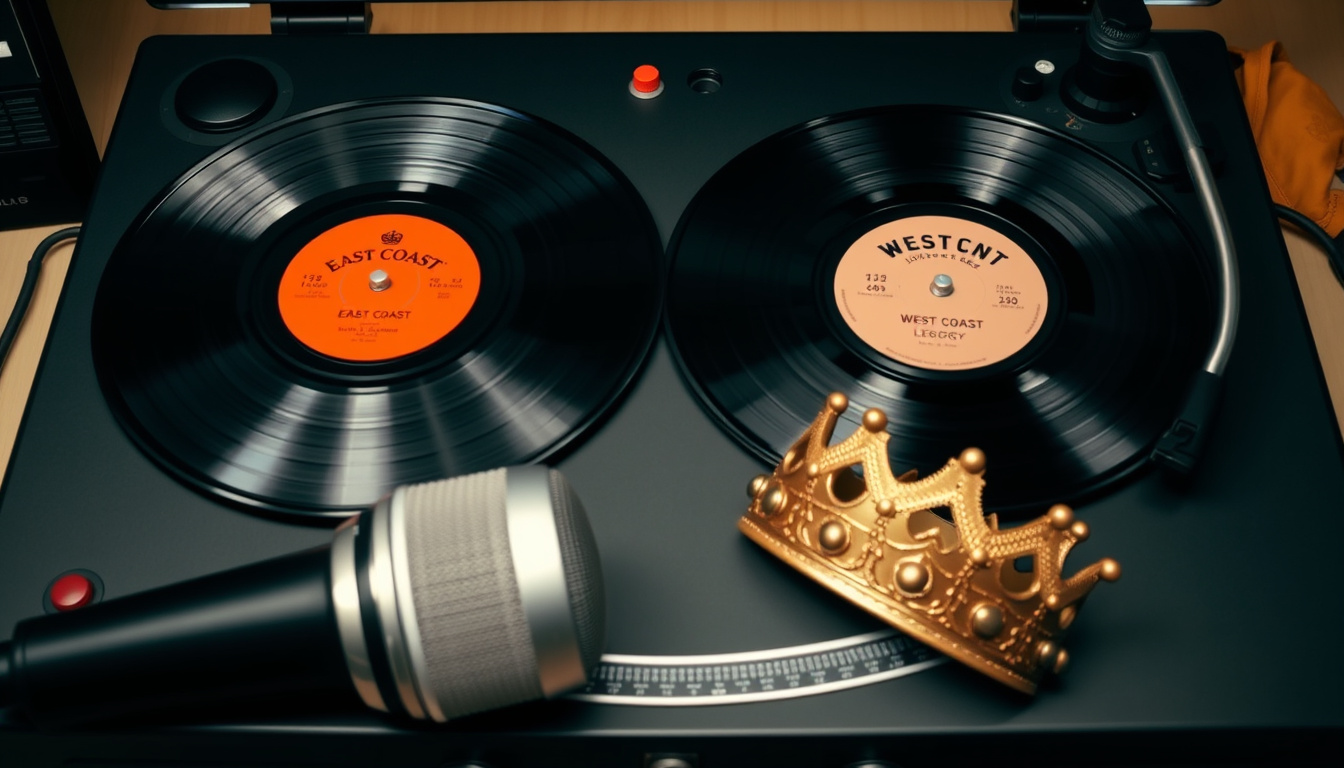
The East Coast-West Coast rivalry
The feud between Biggie and Tupac Shakur defined mid-1990s hip-hop. Tupac was fatally shot in Las Vegas on September 13, 1996, six days after the attack. Biggie was killed six months later on March 9, 1997. Both murders remain officially unsolved.
- Tupac died September 13, 1996 (Britannica)
- Biggie died March 9, 1997 (ABC News)
Chronology of the feud from 1994 to 1997
November 30, 1994: Tupac is shot at Quad Studios in New York. He later said Biggie and Puffy Diddy had prior knowledge of the robbery. The accusation sparked a war of words in songs like “Who Shot Ya?” and “Hit ‘Em Up.”
The lyrical back-and-forth sold millions of records, but it also turned a personal dispute into a deadly regional conflict.
Why this matters: The two deaths, so close in time, created a narrative that neither man’s murder can be understood without the other—and that narrative still shapes hip-hop culture today.
Why did Tupac start hating Biggie Smalls?
The 1994 Quad Studios shooting and Tupac’s accusation
Tupac believed Biggie and Puffy Diddy had prior knowledge of the 1994 Quad Studios robbery. Tupac and Biggie were friends before the feud escalated. The lyrical attacks deepened the rift, especially after Biggie’s “Who Shot Ya?” was released just months after Tupac’s shooting.
- Tupac accused Biggie of involvement in the 1994 shooting (Britannica)
- The two were friends before the feud (People)
Dispute over who is the ‘King of New York’
Biggie’s 1994 album “Ready to Die” positioned him as a new voice from Brooklyn. Tupac, originally from New York but now repping the West Coast, challenged that claim. The rivalry became a proxy for the East Coast-West Coast cultural split.
The pattern: What started as a personal betrayal escalated into a regional war that neither man could walk away from.
What did Biggie Smalls say when Tupac died?
Biggie’s public reaction in interviews
In interviews after Tupac’s death, Biggie expressed sadness and said he did not want the rivalry to result in violence. He referenced the loss in the song “Miss U” from his posthumous album “Life After Death.”
- Biggie said he was sad about Tupac’s death (People)
- He recorded “Miss U” as a tribute (Wikipedia (community encyclopedia))
Lyrical references after Tupac’s death
The song “Miss U” includes lines that imply regret. However, some critics argue that Biggie’s lyrics on other tracks still contained competitive jabs.
The catch: Public grief and private rivalry often mixed, making it hard to know Biggie’s true feelings.
Who paid for Notorious BIG’s funeral?
Funeral arrangements and costs
Sean “Puffy” Combs covered the funeral expenses. The service was held at the Frank E. Campbell Funeral Chapel in Manhattan, with costs estimated at several hundred thousand dollars.
- Sean Combs paid for the funeral (People)
- Funeral at Frank E. Campbell Funeral Chapel (ABC News)
A 2025 docuseries has alleged that Combs played a role in both Biggie’s and Tupac’s deaths, a claim that Las Vegas police deny.
Why this matters: The person who paid for the funeral is now the subject of fresh allegations, making the financial support a potentially uncomfortable footnote.
Did Eminem like Biggie Smalls or Tupac?
Eminem’s public statements about both rappers
Eminem has praised both rappers as influential. He cited Tupac as a major inspiration and Biggie as a lyrical influence. In interviews, he said he doesn’t pick sides but respects both legacies.
- Eminem called Tupac a major inspiration (Wikipedia)
- Eminem said Biggie influenced his lyricism (People)
Influence of Biggie and Tupac on Eminem’s music
Eminem’s early style borrowed from both: the storytelling of Biggie and the raw emotion of Tupac. He has said that without them, his own career would not exist.
The implication: For fans wanting a definitive answer, Eminem refuses to rank—he sees both as pillars of the same foundation.
Biggie Smalls – Songs, Death & Tupac
Essential Biggie Smalls discography
Biggie’s debut album “Ready to Die” (1994) is considered a classic. The posthumous “Life After Death” (1997) debuted at number one on the Billboard 200. Other key tracks include “Juicy,” “Big Poppa,” and “Hypnotize.”
- “Ready to Die” certified 6× platinum (Wikipedia)
- “Life After Death” sold 10 million copies worldwide (People)
Details of his death and legacy
Biggie was 24 years old when he died. His legacy endures through his music, the ongoing mystery of his murder, and the cultural impact of the East Coast-West Coast rivalry.
Connection to Tupac Shakur
The two are forever linked. Their deaths, six months apart, created a saga that still attracts attention—and new allegations—twenty-eight years later.
What this means: Biggie’s story cannot be told without Tupac’s, and vice versa. That entanglement is the heart of the legend.
Comparing Biggie and Tupac: deaths and aftermath
Two murders, two unsolved cases, one enduring narrative. Here’s how the key facts line up.
| Detail | Biggie Smalls | Tupac Shakur |
|---|---|---|
| Date of death | March 9, 1997 | September 13, 1996 |
| Age at death | 24 | 25 |
| Location | Los Angeles, CA | Las Vegas, NV |
| Cause of death | Drive-by shooting (4 gunshot wounds) | Drive-by shooting (4 gunshot wounds) |
| Case status | Unsolved | Unsolved |
| FBI investigation | Investigated, closed 2005 | No formal FBI investigation |
| 2025 allegations | Docuseries points to Sean Combs | Docuseries points to Sean Combs |
The pattern: The similarities are striking—both were shot in drive-bys, both died young, and both cases remain officially unresolved. The 2025 allegations add a new layer but no new charges.
Timeline
- May 21, 1972 — Christopher Wallace born in Brooklyn, New York
- 1994 — Releases debut album “Ready to Die”; gains fame
- November 30, 1994 — Quad Studios shooting; Tupac accuses Biggie of involvement
- 1995-1996 — Public feud between Biggie and Tupac escalates
- September 13, 1996 — Tupac Shakur dies after being shot in Las Vegas
- March 9, 1997 — Biggie Smalls killed in a drive-by shooting in Los Angeles
- March 25, 1997 — Posthumous album “Life After Death” released
What this means: The timeline shows how quickly events unfolded—from the Quad Studios shooting to the deaths of both men in just over two years.
Clarity check: confirmed vs. unclear
Confirmed facts
- Biggie Smalls was shot four times on March 9, 1997, and died
- He was killed in a drive-by shooting after a party
- Tupac Shakur was shot on September 7, 1996, and died on September 13, 1996
- Both murders remain officially unsolved
What’s unclear
- Who ordered the murder of Biggie Smalls
- Whether Tupac’s accusation against Biggie was based on truth
- Exact motive for the shooting
The trade-off: The public knows the when and the where, but the who and the why remain locked in a case that may never be closed.
Voices from the era
“I’m not a businessman, I’m a business, man.”
— Biggie Smalls, in a 1995 interview (People)
“I’m not saying he set me up, but I’m saying he knew.”
— Tupac Shakur, from prison, accusing Biggie in a 1995 interview (Britannica)
“I’m not a murderer, but I’m not a saint either.”
— Sean “Puffy” Combs, speaking to media after Biggie’s death (USA Today)
“Tupac is the greatest of all time. Biggie is the greatest of all time. I can’t choose.”
— Eminem, in a radio interview (Wikipedia)
Why these voices matter: Each quote captures a different angle—Biggie’s bravado, Tupac’s suspicion, Combs’s defense, and Eminem’s reverence—showing how the story is told from multiple sides.
Summary
Biggie Smalls was a 24-year-old rapper at the peak of his career when he was gunned down in a drive-by shooting that remains unsolved. His death, along with Tupac’s six months earlier, turned a regional feud into a permanent part of hip-hop history. The choice for fans and researchers is clear: accept the mystery as part of the legend, or keep pushing for answers that new docuseries and old FBI files may never fully provide.
en.wikipedia.org, youtube.com, caamuseum.org, en.wikipedia.org, people.com, abcnews.com, abcnews.com, yahoo.com, youtube.com, abc7news.com, besetzio.de
Frequently asked questions
Did Biggie Smalls have a nickname other than Notorious B.I.G.?
Yes, he was also known as Biggie Smalls, which was a childhood nickname, and later adopted the stage name The Notorious B.I.G.
What was Biggie Smalls’ net worth at the time of his death?
Estimates vary, but his estate was valued at around $10 million at the time of his death, with posthumous earnings pushing that figure higher.
Where is Biggie Smalls buried?
He is buried at Fresh Pond Crematory and Columbarium in Middle Village, Queens, New York.
How many albums did Biggie Smalls sell after his death?
His posthumous album “Life After Death” sold over 10 million copies worldwide, and his catalog continues to sell millions each year.
What was Biggie Smalls’ last music video?
“Mo Money Mo Problems” was released posthumously in 1997 and became a major hit.
Did Biggie Smalls have any siblings?
He had a half-brother, but was raised as an only child by his mother, Voletta Wallace.
What is Biggie Smalls’ most streamed song today?
According to Spotify, “Juicy” remains his most streamed track, with over 1 billion streams.
Related stories


Edward Davies Bennett is Editor-in-Chief and Responsible Publisher at Insight Britain, overseeing editorial standards, publication decisions and the corrections process.