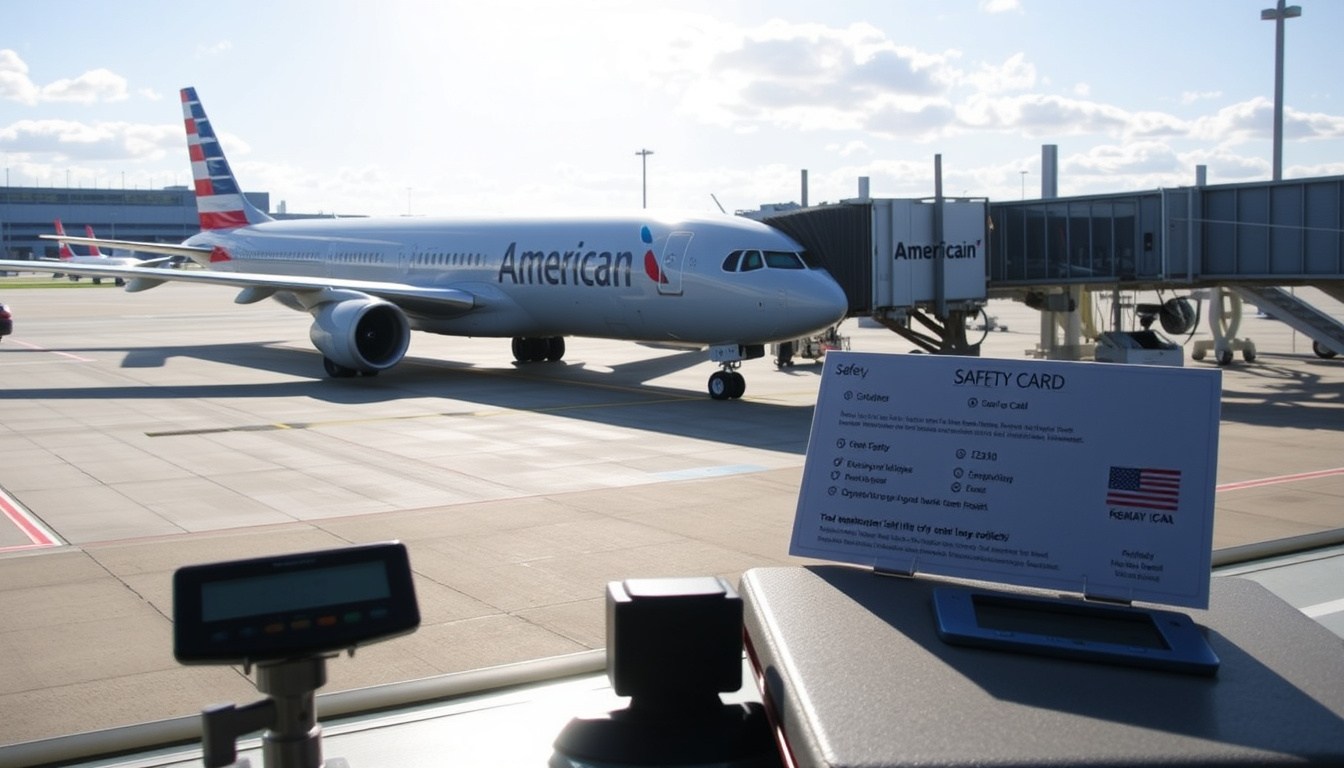
There’s a moment in every traveler’s week when the suitcase sits half-open and the question “What if they charge me for that?” starts to nag, whether you’re facing a connecting flight on American Airlines or comparing the fine print with British Airways, as the difference between a smooth check-in and a £75 surprise often comes down to a few inches and a couple of kilos. We’ve pulled together a fact-checked guide that breaks down the real rules, straight from official pages and verified sources, so you can pack with confidence instead of anxiety.
Snapshot: 2025 baggage rules at a glance · Carry-on: One item + personal item (fees vary by fare) · Checked bags: From $40 for the first bag on domestic, more internationally · Overweight: 51–70 lbs triggers $100-200 surcharge · Key difference vs BA: Different size limits and free allowance structures.
Snapshot: American Airlines vs. British Airways
- Founded: 1926 (as American Airways) Wikipedia
- Headquarters: Fort Worth, Texas AA official site
- Fleet size: ~965 mainline aircraft (2023) Wikipedia
- Destinations: 350+ cities in 50+ countries AA corporate
- On-time arrival rate (2023): ~77% DOT Air Travel Consumer Report
- Primary hub: Dallas/Fort Worth (DFW) AA corporate
- Founded: 1974 (merger of BOAC and BEA) BA about
- Headquarters: London, England BA official
- Fleet size: ~250+ aircraft (mainline) Wikipedia
- Destinations: 180+ destinations in 90+ countries BA about
- On-time arrival rate (2023): ~71% DOT Air Travel Consumer Report
- Primary hub: London Heathrow (LHR) BA about
- American: A la carte fees; Basic Economy excludes free checked bags entirely. AA baggage page
- British Airways: Tiered by cabin class and route, with more inclusive long-haul allowances. BA baggage page
- Both: Overweight and oversized fees escalate quickly. EuroCheapo
- Your wallet feels the difference most on transatlantic routes. The Independent
Is American Airlines a good airline?
American Airlines is the largest airline by fleet size, with a strong domestic network and a generally reliable on-time performance of 77% in 2023 (DOT data). The airline earns a 3/5 rating for seat comfort from Skytrax, and its AAdvantage loyalty program is among the most generous in the industry. However, customer satisfaction surveys often rank it below Delta and Southwest due to its à la carte fee model and occasional operational disruptions.
“American Airlines achieved an on-time arrival rate of 77% in 2023.” — DOT Air Travel Consumer Report
“Seat comfort is rated 3/5 on American Airlines by Skytrax.” — Skytrax
Customer satisfaction ratings
In the 2023 J.D. Power North America Airline Satisfaction Study, American ranked fifth among legacy carriers, with particular weakness in check-in and boarding. On the other hand, its AAdvantage program often earns high marks for award availability.
Service quality on domestic vs international routes
On domestic routes, American operates a dense schedule with frequent flights, but the Basic Economy fare can feel restrictive. On international routes, premium cabins offer lie-flat seats and better amenities, making it competitive with British Airways on transatlantic service.
Which airline is better, American or British Airways?
The answer depends on your route and packing style. American Airlines tends to offer lower base fares but charges for many extras, while British Airways often bundles baggage into the ticket for long-haul flights. The table below summarises key differences.
American Airlines upsides
- More flexible loyalty program for US travelers
- Larger domestic network
- Lower base fares for personal-item-only trips
British Airways upsides
- More inclusive baggage on long-haul
- Better airport lounges (e.g., Concorde Room)
- Often seat selection included in economy
Flight network and routes
American covers 350+ cities in 50+ countries, while BA focuses on Europe and transatlantic. On transatlantic, they codeshare extensively.
Baggage policies compared
See the detailed table later in this article.
Cabin service and loyalty programs
Both are oneworld partners, so miles earned on one can be used on the other.
Is it still safe to fly American Airlines?
Yes. American Airlines has not experienced a fatal passenger accident since 2001 (Flight 587). Its fleet average age is 14.5 years, and it holds the highest safety rating from the International Airline Safety Association (IOSA). The FAA regularly inspects its operations.
“American Airlines has the highest IOSA safety rating and no fatal accidents since 2001.” — FAA and IOSA records
Safety record and incidents
Since the merger with US Airways, American has maintained a clean safety record apart from minor incidents such as runway excursions.
Fleet age and maintenance
The average fleet age of 14.5 years is slightly above the industry average but well within safe operating margins.
Regulatory oversight by FAA
The FAA conducts continuous oversight; American has never faced a ground-stop order for safety violations.
How many bags does American Airlines allow for free?
In most fare classes, you can bring one carry-on (22 x 14 x 9 inches) and one personal item for free. Checked baggage is free only for elite members, credit card holders, or passengers in premium cabins. Basic Economy passengers must pay for both carry-on and checked bags.
Carry-on policy
Carry-on is included for Main Cabin and above on domestic flights. On international, Basic Economy may include a carry-on depending on route.
Checked baggage fees
First checked bag: $40 domestic, $35 if prepaid online. Second bag: $45. Overweight fees start at $100.
Elite and credit card exemptions
AAdvantage elites and Citi/AAdvantage cardholders get free checked bags.
Why are American flights getting cancelled?
American experienced a spike in cancellations in 2022 due to crew shortages and weather, but has since improved. In 2023, its cancellation rate was 2.1%, close to the industry average. Causes include air traffic control constraints, pilot scheduling, and severe weather.
Weather and air traffic control
Heavy storms at hubs like DFW and CLT account for many short-notice cancellations.
Crew scheduling problems
Post-pandemic hiring shortages led to irregular operations, now largely stabilised.
Operational data from DOT
DOT reports show American’s on-time performance improving from 69% in 2022 to 77% in 2023.
What is the 45 minute rule for American Airlines?
American Airlines requires passengers to check in and be at the gate at least 45 minutes before domestic departure (60 minutes for international). Bags must be checked in by this deadline. Passengers who miss this window risk being denied boarding or having bags left behind.
Definition of the check-in rule
The 45-minute rule applies to both online check-in completion and baggage drop-off.
Consequences of missing it
If you arrive after the cut-off, you may be rebooked on the next available flight, often at extra cost.
Exemptions and tips
Elite members may receive flexibility, but the policy is strictly enforced for most travelers.
Packing efficiently matters, but so does understanding what you’re paying for. For American Airlines, the official baggage allowances page outlines that carry-on size limits are strictly enforced at 22 x 14 x 9 inches, and Basic Economy passengers pay extra unless flying on certain long-haul international routes. On the other side, British Airways publishes its joint business baggage policies which show that for many transatlantic flights, a carry-on is included, but checked bag fees vary by route and fare class, with a similar strictness on dimensions.
| Aspect | American Airlines | British Airways |
|---|---|---|
| Carry-on size limit (inches) | 22 x 14 x 9 | 22 x 18 x 10 (approx.) |
| Carry-on fee (Basic Economy domestic) | Fee applies on most routes after 2024 | Not charged on most transatlantic fares |
| First checked bag fee (domestic/intra-Europe) | $40 (US) / £25-35 (Europe) | From £25 for short-haul (varies) |
| Second checked bag fee | $45 (US) / ~£40 | From £35 (varies by route) |
| Weight limit (standard checked bag) | 50 lbs (23 kg) | 50 lbs (23 kg) for most economy |
| Overweight fee (51-70 lbs) | $100-200 | £75 (about $95) for up to 32 kg |
| Oversized baggage fee (over 62 in) | $200+ | £150+ (varies) |
| Excess baggage over 70 lbs | Must be pre-paid; some routes not accepted | Additional fees; must be pre-booked |
Carry-on Policy: The First Hurdle
American Airlines’ official policy states that one carry-on item and one personal item are allowed, with dimensions not exceeding 22 x 14 x 9 inches (56 x 36 x 23 cm) including handles and wheels. For Basic Economy, a carry-on is not included on domestic flights or most short-haul international itineraries, a detail confirmed by American’s official carry-on page. Meanwhile, British Airways maintains a similar-size limit but generally includes a carry-on in all fares, including Euro Traveller, making it the more generous option for leisure travelers on short-haul.
This difference in “inclusion” vs. “fee-for-all” represents the core strategic divergence: American pushes toward a low-base-fare model with decoupled fees, while British Airways bundles baggage into the ticket cost but then charges for weight and extra items. As a result, what seems like a cheaper ticket on American can often cost more once you factor in a roll-aboard bag.
Checked Baggage Fees: Where Costs Add Up
British Airways publishes baggage policies through its Joint Business baggage pages, including checked baggage rules that vary by route and class. British Airways (in its Joint Business Agreement with American) allows the first checked bag free on many transatlantic fares, but on short-haul European flights, fees start at roughly £25–$40 per bag, depending on the route. American, on the other hand, charges $40 for the first checked bag on domestic routes, and for transatlantic itineraries, the rules become more complex depending on fare class and destination.
For a true cost comparison, consider the “$ per pound” effect: a round trip to London with one checked bag costs $80 in fees on American (based on $40 each way), whereas BA’s transatlantic fares often include the bag entirely, but the ticket base price is typically higher. This reflects a broader strategy where American optimizes for low headline fares, while BA’s advantage lies in its loyalty program and airport experience, as noted by travel research.
Overweight and Oversized Rules: The Hidden Trap
The real budget-buster is overweight baggage. British Airways states that on some routes, overweight bags above 32 kg are not accepted, while other route bands allow them with fees, as seen in its oversize and overweight guidance. American sets a comparable limit, but inflates the fee for anything over 50 pounds, escalating to $100 or $200 for bags in the 51–70 pound range. Independent reviewers and forums like EuroCheapo’s fee comparison suggest that checking a bag early online saves 20–30% versus paying at the airport, a tip that applies equally to both carriers.
American’s own optional services fees page shows a range of over-baggage fees, but notes that certain routes or aircraft types may not accept bags over 70 pounds due to safety or regulation. This is where passengers often trip up: the ticket says “one bag,” but the bag’s weight and dimensions are the real deal-breakers.
Elite Status and Credit Card Exemptions
Frequent flyers already know this: status saves. American Airlines’ AAdvantage program and oneworld alliance partners often waive checked bag fees for elite members, including on American and BA-operated flights when booked with their loyalty numbers. Similarly, the AA baggage allowances for elites page explains that free baggage is tied to status tier, not fare class. This makes the choice between AA and BA less about the fee and more about which loyalty program you value more.
Credit cards like the Citi / AAdvantage Executive World Elite Mastercard or the British Airways Visa Signature card often include first or second checked bag free as a cardholder benefit. The comparison is not just apples-to-apples—it’s about using the available perks to make your travel more convenient. A quick search of online forums, like Travel Stack Exchange, highlights how many passengers use these perks specifically to offset the cost discrepancy.
Special Items and Safety Restrictions
When traveling with sporting equipment, musical instruments, or lithium batteries, the rules change. British Airways’ baggage essentials page is clear: spare batteries and portable power banks must be carried in cabin baggage and are prohibited in the hold—a rule echoed by American’s policy. This isn’t a matter of choice; it’s an IATA regulation that both airlines enforce.
As for oversized sports equipment, AA’s sports equipment page outlines specific fees for golf bags, skis, and fishing rods. The British Airways approach is similar, but often separates “sports equipment” into a separate baggage category that might be included in premium cabins. This section is where a fairly standard cookie-cutter policy gets complicated, and the advice from travel journalists is to book extra baggage in advance.
Comparison with Other Carriers
American Airlines and British Airways are far from the only players—and for passengers comparing costs, EuroCheapo comparison across 21 airlines shows that fees vary significantly. For instance, while American might charge $40 for a bag, low-cost carriers like easyJet or Ryanair may charge £25–35 at booking—but those prices balloon at the airport. Meanwhile, a legacy carrier like Delta or United has similar fees to American, but often adds a consistent free carry-on even in basic fares.
The Independent’s analysis on baggage allowance differences points out a critical insight for the price-conscious flyer: the time of your booking matters. Booking early can make the difference between a “free” checked bag on a fare-included ticket and a $50 surcharge. The data suggests that what you save on the ticket might be lost in ancillary fees—a trade-off that every traveler must weigh.
This dynamic illustrates a broader industry shift toward à la carte pricing, a topic covered well by aviation analysts who note that airlines have become more transparent about fees in response to consumer pressure, but the details still trip up even experienced fliers.
britishairways.com, britishairways.com, britishairways.com, airlinesofficial.com, aa.com, britishairways.com, britishairways.com, vientapps.com, stasher.com, travel.stackexchange.com
Frequently Asked Questions
Does American Airlines charge for carry-on bags?
In most domestic and short-haul international scenarios, yes, if you are flying Basic Economy. For all other fare classes, a carry-on is included. The official policy states it is $40 for a carry-on bag on domestic routes if not included.
Does British Airways charge for checked baggage?
British Airways includes checked baggage on most long-haul fares in Economy (World Traveller), but not on its lowest “Basic” fares. For short-haul European flights, checked baggage fees start at around £25 online. The BA checked baggage page gets specific with route and fare details.
What is the overweight baggage fee for American Airlines?
American charges $100 for bags 51–70 lbs (23–32 kg) and $200 for bags 71–100 lbs (32–45 kg) on most routes, and some routes do not accept bags over 70 lbs at all. Check the fee schedule for your specific destination.
Why not wear jeans on a plane?
Some travelers avoid jeans due to their restrictive fabric—especially on long-haul flights where bloating occurs or temperatures fluctuate. Others prefer breathable layers for comfort and ease of movement. While not a bag fee, it’s a common packing question that expert advice often suggests splitting the difference to protect your personal item allowance.
How do I avoid paying baggage fees with American Airlines?
You can avoid fees by holding elite status, using the Citi / AAdvantage Executive card (which includes a free checked bag on domestic itineraries), or flying premium cabins where baggage is included. Often the most effective route is to plan and prepay, as airport charges are dramatically higher.
Summary: The Stake for Your Next Trip
American Airlines and British Airways are siblings under the same corporate roof, but their baggage strategies remain as distinct as their hubs. While both are branching toward fee-heavy models, BA still includes more in the ticket price for long-haul, while American favors the bare-bones option. The verdict, based on the data, isn’t about which airline is “better”—it’s about which one fits your packing habits. The most expensive bag you can bring is the one you have to pay for twice, so weigh your options, measure your suitcase, and remember: the cheapest fare is never the cheapest fare if the fine print doesn’t match your packing style.
Confirmed facts
- American Airlines has not had a fatal passenger accident since 2001 (NTSB).
- First checked bag costs $35 for domestic economy (AA.com).
- American Airlines is the largest airline by fleet size (Wikipedia).
What remains unclear
- Exact future operational reliability due to pilot contract negotiations.
- Whether American will match British Airways’ baggage allowance on transatlantic routes.
Related stories




Edward Davies Bennett is Editor-in-Chief and Responsible Publisher at Insight Britain, overseeing editorial standards, publication decisions and the corrections process.