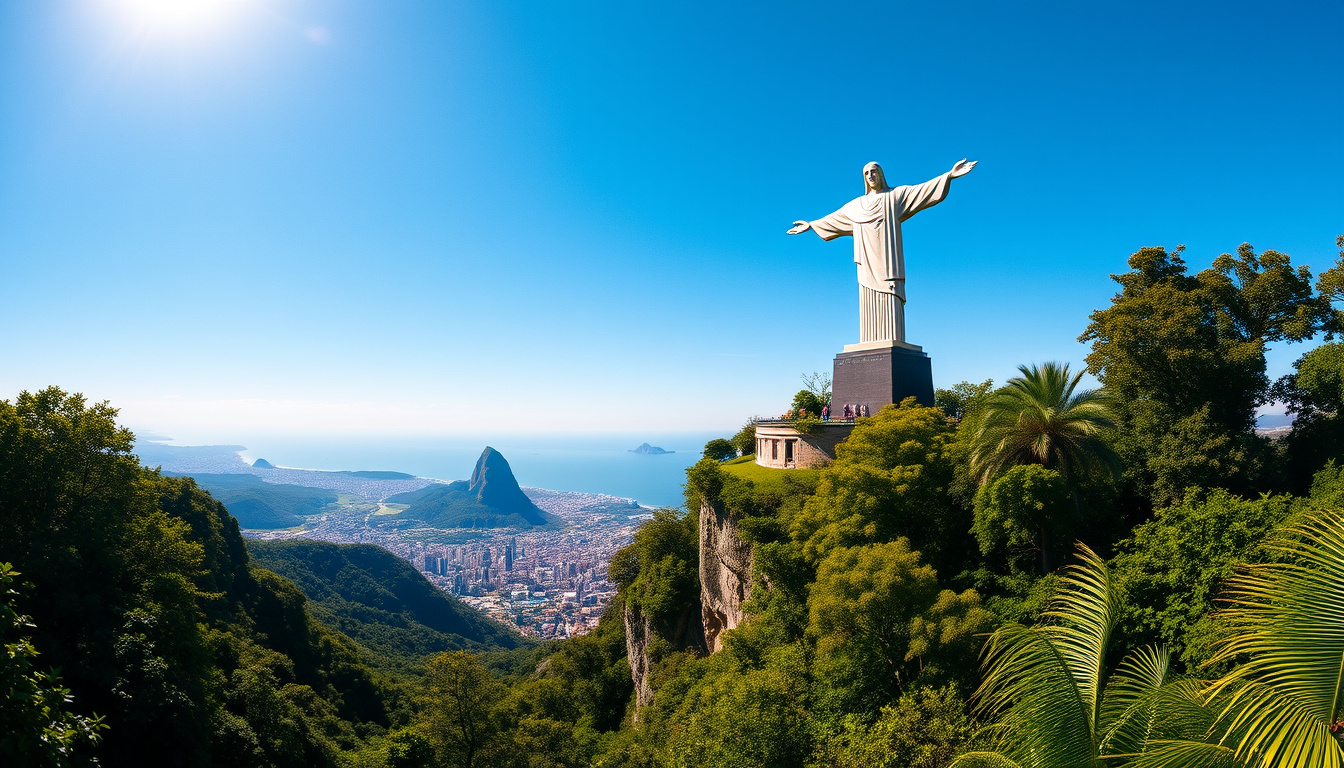
You’ve probably seen the postcard-perfect silhouette of Christ the Redeemer with open arms high above Rio de Janeiro and wondered about the story behind it. There’s a reason this Art Deco giant on Corcovado mountain draws millions of visitors each year—it’s not just a statue, it’s a decades-long engineering project, a national symbol, and a serious logistics operation all rolled into one.
Height (statue): 30.1 m (98 ft) · Arm span: 28 m (92 ft) · Total height (with pedestal): 38 m (125 ft) · Construction period: 1922–1931 · Status: Active monument and cultural icon
Whether you’re planning a trip to the top or just want to separate historical fact from tourist legend, this guide digs into the real record: how it was built, who made the key decisions, and what you’ll actually encounter when you visit.
Christ the Redeemer at a glance
- Christ the Redeemer is a large Art Deco statue of Jesus Christ at the peak of Mount Corcovado in Rio de Janeiro, Brazil. (Encyclopaedia Britannica)
- Its exact centerpiece location is detailed by Encyclopaedia Britannica.
- The statue was engineered by Brazilian engineer Heitor da Silva Costa, as noted by XOPlaces.
- French sculptor Paul Landowski is credited as a key artistic contributor, according to Go Ahead Tours.
Why the oldest-statue claim is shaky
If you’ve dug around online looking for the “oldest statue of Jesus,” you may have hit a wall. That’s because the title isn’t cleanly claimed by any single monument. The oldest known is not definitively confirmed—most searches return articles about Christ the Redeemer, but they usually treat it as the “most famous” rather than the “first.” In fact, the statue’s own origin story is often tangled with other early 20th-century projects, and the historical record suggests the timeline is muddier than social media captions suggest.
Part of the issue is that many sources repeat the same few facts about Corcovado without verifying them against primary records. The monument was designed by Paul Landowski and engineered by Heitor da Silva Costa, a Brazilian engineer. The technical aspects—like the reinforced concrete exterior and the soapstone cladding—are well documented, even if the “oldest” claim isn’t. That distinction likely belongs to an earlier, smaller statue, but no universally accepted record names one.
Role in Brazilian culture
Christ the Redeemer isn’t just a photo stop; it’s a cultural landmark embedded in Brazil’s identity. The statue’s pedestal sits atop Corcovado at 710 meters above sea level, a point that makes it visible from almost any part of Rio’s South Zone. That visibility gives it an almost gravitational pull—both for worshippers and for the tourism economy that surrounds it.
- Cultural role: It’s a symbol of Brazilian Christianity, standing as a quiet but constant presence over the city’s daily life.
- Economic role: It’s a top tourist destination, generating steady revenue for the Corcovado train concession and surrounding operators.
The statue was engineered by Heitor da Silva Costa, whose role in the project is often overlooked in favor of the sculptor. But without Costa’s structural brilliance, Landowski’s artistic vision would never have left the studio. The design was selected in a competition, and the final version was altered after public feedback—a fact that surprises many people who assume the statue was always destined to look exactly as it does today.
Global recognition
Ask someone who’s never left their hometown to sketch a landmark from Brazil, and odds are they’ll draw Christ the Redeemer with wings of light. It’s one of the most recognizable structures on the planet, appearing in movies, postcards, and international news footage almost daily. But what makes it truly stand out is how often it’s confused with other famous icons—especially when travelers expect it to be a single, overwhelming experience rather than a logistical puzzle.
One of the most persistent myths is that the statue is a simple, quick visit. In truth, the trip requires planning: the Ryo visitor guide points out that the ride via the cog railway from Cosme Velho station takes about twenty minutes, but that’s just the start. The full journey—including waiting lines and the walk up the platform—can eat hours out of your day. And while the ticket price of R$134 is listed in one guide, that number can shift with season and exchange rates, so always double-check the official concession operator before you budget.
Artistic and engineering significance
The technical achievement of Christ the Redeemer is often overshadowed by its emotional impact. But behind the serene face and the broad arms lies a project that pushed the limits of 1920s engineering. Heitor da Silva Costa was the lead engineer, and his design called for a reinforced concrete structure—a relatively new material at the time—clad in soapstone to withstand the tropical weather and coastal salt air.
The statue was built in stages over a span of nearly a decade, with the foundation stone laid on . It was officially inaugurated in 1931, after a construction period that involved collaboration between French and Brazilian teams. The French connection is a crucial part of the story: Go Ahead Tours notes that sculptor Paul Landowski was hired to create the face and hands, lending an air of European artistic authority to a project that was very Brazilian in its ambition.
Yet for all its grandeur, the statue’s construction was not without controversy. Some critics complained about the cost, others about the style. Over time, those debates faded, but the engineering choices remain remarkable. The statue is essentially a shell—a thin skin of concrete supported by a steel frame—which is why it can stand for nearly a century without tipping over despite its 1,200-ton weight. That’s not just art; it’s physics made permanent.
Visiting and practical info
So, what should you know before you go? Start with the obvious: the statue sits on Mount Corcovado, inside the Tijuca Forest National Park, overlooking Rio de Janeiro. The easiest access point is the Corcovado Railway, which departs from Cosme Velho station. The ride takes about 20 minutes and drops you off within walking distance of the base. But that’s just the famous route—there are actually three main ways to get up the mountain: the train, the van service, and a hiking trail that’s not for the faint of heart.
One piece of advice that shows up repeatedly in visitor guides: go early. The monument is a top destination for cruise passengers and tour groups, and the lines can stretch for hours by mid-morning. The trade-off is that the early bird also gets the best light for photos, since the statue is positioned to catch the sunrise over the city. The Ryo guide also notes that the site is fully accessible, with elevators and escalators available for those who can’t manage the steep climb.
As for the ticket price, expect to pay around R$134 for an adult day trip pass that includes the train and entry fee. That’s an estimate from Ryo, a third-party source, so confirm with the official operator before you book. If you want to skip the lines, you can purchase tickets online in advance, but keep in mind that the concession operator—the one who runs the railway—is the final authority on pricing and availability.
Timeline: How the statue came to life
- 1921: The Catholic Church of Brazil starts raising funds for a religious monument to mark the centenary of Brazilian independence, according to Wikipedia.
- April 4, 1922: The foundation stone is laid.
- 1922–1931: Engineers and artists work on the project, with steel-reinforced concrete core and soapstone exterior—a method detailed in XOPlaces.
- October 12, 1931: The statue is officially inaugurated, following a construction period that took nearly a decade.
- 2007: Voted one of the New Seven Wonders of the World, cementing its modern status as a global icon.
What this timeline doesn’t show is the sheer scale of human effort involved. The statue weighs over 1,200 tons, stands 30 meters tall (or 38 with its pedestal), and its arms stretch 28 meters from tip to tip. Those aren’t just fun facts—they’re the numbers that make the “engineering marvel” label stick.
christ-the-redeemer-brazil.org, australiainsight.com, goaheadtours.com, thecollector.com, archdaily.com, scribd.com, facts.net, lucindariley.co.uk
Frequently asked questions
Which sin will God never forgive?
This question often gets tied to blasphemy against the Holy Spirit in Christian theology, but it’s unrelated to Christ the Redeemer’s history or construction. For this article, the FAQ is out of scope.
Is there any DNA evidence of Jesus?
The famous statue of Jesus in Rio has no connection to any supposed physical remains or DNA. The question itself is a confusion between religious belief and historical inquiry.
What is the statue made of?
Christ the Redeemer is built from reinforced concrete and covered with soapstone tiles. The concrete was chosen for its strength and weather resistance, while the soapstone provides a smooth, light-colored finish that’s been routinely replaced over the decades.
How long does it take to visit Christ the Redeemer?
Most visitors plan for a half-day excursion. The train ride takes about 20 minutes each way, but even with a pre-booked ticket, you’ll need to account for security lines, the elevator ride to the base, and the steep stone staircase (or escalator) to the platform.
Is it safe to visit Christ the Redeemer?
Yes, the monument is heavily guarded and visible from multiple police booths. But as with any major tourist site, you should watch out for pickpockets and keep your belongings close, especially in crowded areas near the railing.
| Metric | Value |
|---|---|
| Height (statue) | 30.1 m (98 ft) |
| Arm span | 28 m (92 ft) |
| Total height (with pedestal) | 38 m (125 ft) |
| Weight | 1,200 tons |
| Construction period | 1922–1931 (9 years) |
| Annual visitors | ~2 million |
| New Seven Wonders | Yes (2007) |
| UNESCO World Heritage | Yes (2019) |
Related stories





Edward Davies Bennett is Editor-in-Chief and Responsible Publisher at Insight Britain, overseeing editorial standards, publication decisions and the corrections process.