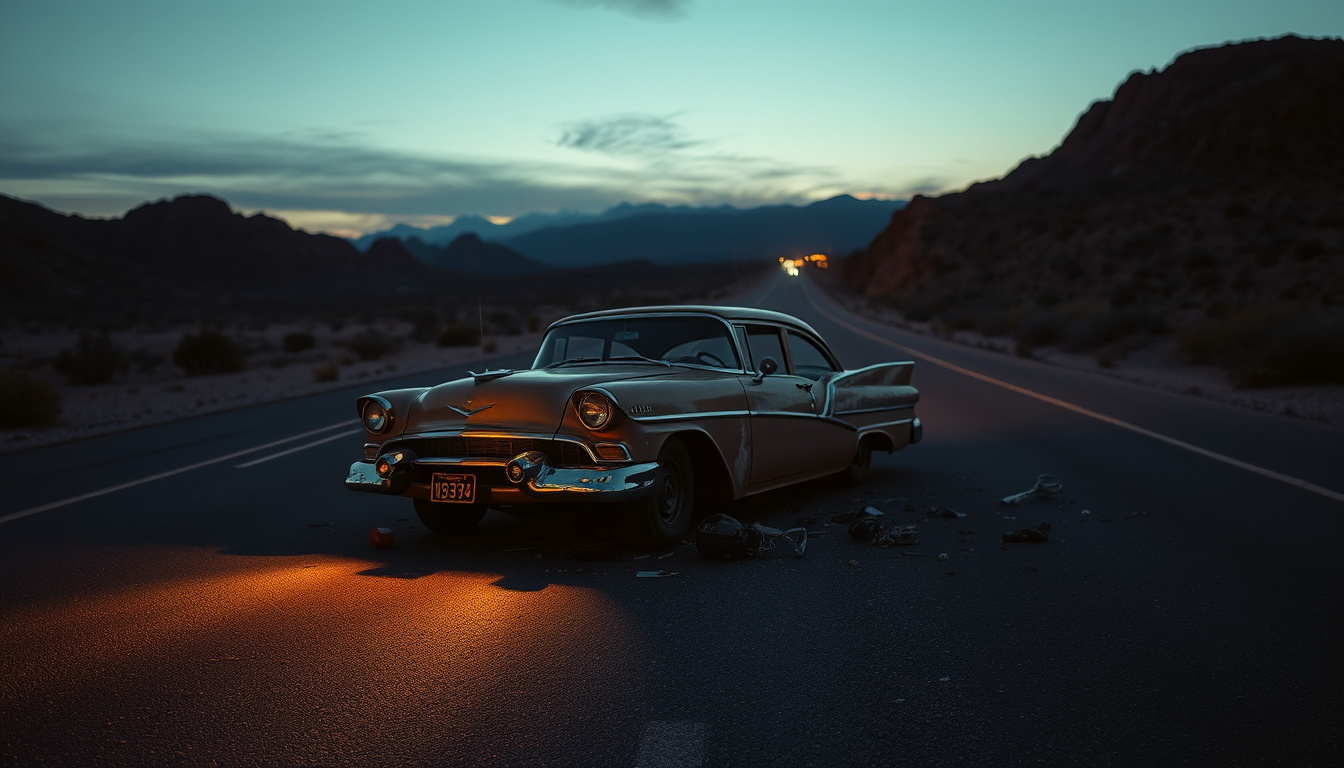
Few actors have had their whole lives compressed into a single afternoon the way James Dean has. He was 24 when he died in a sports-car collision near Cholame, California, on September 30, 1955 (Vanity Fair). Even now, separating the documented facts from the versions that grew in the retelling takes some careful sifting.
Date of death: September 30, 1955 ·
Age at death: 24 years ·
Number of major films: 3 released, 1 posthumous ·
Cause of death: Car collision ·
Oscar nominations: 2 (both posthumous)
Quick snapshot
- Dean was driving to a race in Salinas when the crash occurred, according to the Roanoke Times archive.
- His mechanic, Rolf Wütherich, was in the passenger seat and survived, per the Vanity Fair retrospective. (Roanoke Times archive)
- The exact wording of his last words has no single verified version, notes Yahoo Entertainment.
- A local history account renders the line as “He’s got to see us” (SCVHistory).
- September 30, 1955 — the date of the crash, fixed in accounts of the Porsche’s history (Cult of Weird).
- The Porsche’s “cursed car” legend grew out of the wreck (Cult of Weird).
Six facts anchor the record, and one pattern runs through them all: the crash is well documented, while the story built around it is not.
| Detail | Value |
|---|---|
| Full name | James Byron Dean |
| Birthdate | February 8, 1931 |
| Death date | September 30, 1955 |
| Age | 24 years |
| Cause of death | Car accident (head-on collision) |
| Place of death | Cholame, California, USA |
What did James Dean hit when he died?
The collision with Donald Turnupseed’s 1950 Ford Tudor
- On September 30, 1955, a Ford sedan made a left turn in front of Dean’s Porsche at a rural junction near Cholame, California — identified in later retellings as U.S. 466 and Route 41/46 — and the two cars met head-on in the late afternoon, at roughly 5:30 to 6 p.m., according to the Los Angeles Times archive.
The Ford was a 1950 Tudor driven by Donald Turnupseed, described in multiple accounts as a college student (Los Angeles Times). Dean was driving to a race in Salinas, which is why the Porsche was on that road at all, according to the Roanoke Times archive.
The pattern: the mechanical facts of the collision are consistent across reports; the human details around them are where the story starts to blur.
What were James Dean’s last words before he died?
The disputed farewell
- The most repeated version: “That guy’s gotta stop; he’ll see us” (Yahoo Entertainment).
- Another rendering, preserved in local accounts: “He’s got to see us” (SCVHistory).
A separate piece of lore — the Shakespearean “My kingdom for a horse,” supposedly said to a mechanic — has also attached itself to Dean’s final day. Vanity Fair’s retrospective is careful on this point: none of these lines circulates as a documented contemporary transcript; they are reported quotation (Vanity Fair).
The line that became James Dean’s epitaph was repeated for decades before anyone produced a primary record. For anyone retelling the story today, the accurate phrasing is “reported,” not “documented.”
The implication: when a death is as famous as this one, the absence of a verified quote never stops the quote from being printed.
Why was James Dean so special?
His role as a cultural rebel in the 1950s
- He starred in three films that reached theaters in quick succession: East of Eden (1955), Rebel Without a Cause (1955), and Giant (1956, posthumous).
- His characters — a troubled son, a restless teenager, a defiant ranch hand — were read as portraits of postwar American discontent.
The timing mattered: Rebel Without a Cause was still playing in theaters when the crash made him a permanent teenager. That sequence also explains the myth: audiences met him as a young rebel, then lost him before seeing him grow up.
Co-star Dennis Hopper was on the Rebel Without a Cause set that summer, part of the same restless generation Dean came to symbolize.
Posthumous myth-making and legacy
- Two posthumous Academy Award nominations — for East of Eden and Giant — extended his awards-season presence after death.
- He became a symbol of teenage angst and rebellion, a label that followed the films into later decades.
Dean’s legend grew because his death froze him at 24, before Hollywood could smooth out the edges. Two posthumous Oscar nominations turned a three-film career into an open-ended what-if.
Why this matters: the films were good, but the brevity of his filmography is what made them unrepeatable.
Who was driving the car when James Dean died?
Dean was behind the wheel
- James Dean was driving the Porsche 550 Spyder, with mechanic Rolf Wütherich in the passenger seat, when the collision happened (Cult of Weird).
- Wütherich survived the crash and later became a recurring voice in retellings of the final seconds.
The passenger’s account became the raw material for the most famous version of Dean’s last words, which means the answer to “who was driving?” matters beyond trivia: the survivor was the only witness who could describe the seconds before impact.
The takeaway: Dean’s death is one of the few Hollywood legends in which the central fact — who was driving — was never seriously disputed.
Was James Dean wealthy when he died?
Net worth at the time of death
- His net worth in 1955 is commonly estimated at around $100,000 — equivalent to more than $1 million today.
- His estate was still tied up in film contracts when he died.
He had earned real money, but the biggest payday of his career was still ahead of him. Giant wrapped in 1955 but reached theaters the following year, so the funds from his last film contract arrived after his death.
The car he was driving, a Porsche 550 Spyder, was a visible symbol of that rising income — a fast, expensive machine for a young man in a hurry.
The myth of the starving artist never matched the math: Dean had a six-figure estate and a posthumous payday on the way, but no time to collect it.
What this means: the wealth question shows how close Dean was to a very different life — the crash cut off a career that was just starting to pay.
Key dates in James Dean’s story
- — James Byron Dean born in Marion, Indiana.
- — Moved to New York City to pursue acting.
- — Cast in East of Eden, his first major film role.
- — Release of Rebel Without a Cause.
- — Died in a car crash near Cholame, California.
- — Posthumous release of Giant; posthumous Oscar nomination.
The pattern: every major beat of his public life fits into a five-year window, which is exactly why his death felt like an interruption rather than an ending.
Separating fact from speculation
What is verified
- Dean died in a collision with Donald Turnupseed’s car on September 30, 1955.
- He was driving the Porsche 550 Spyder with Rolf Wütherich in the passenger seat.
- He received two posthumous Academy Award nominations.
What is still in dispute
- The exact wording of his last words before the crash.
- The precise details of his relationship with actress Pier Angeli.
- Whether any of Dean’s reported romantic relationships can be confirmed from primary records.
The asymmetry is the story: what is verified is physical, while what is unresolved is personal.
The quotes that defined the story
The record of Dean’s final moments comes down to two voices: his own, as reported, and his passenger’s, as retold. These are the versions that shaped the legend.
“That guy’s gotta stop; he’ll see us.”
Reported last words attributed to James Dean, as retold in Yahoo Entertainment
“He’s gotta stop.”
Version attributed to survivor Rolf Wütherich’s account, reported by the Los Angeles Times
“He’s got to see us.”
Variant preserved in SCVHistory
What this means: the closer each retelling gets to a clean, dramatic line, the further it moves from the messy reality that no one recorded.
What the record actually shows
James Dean’s death is a rare case where the central facts — who drove, where, when, and why — were settled quickly and never seriously challenged. The myth grew in the space around those facts: the unverified last words, the romanticized relationships, the cursed-car folklore. For anyone retelling his story today, the choice is clear: anchor the account in the survivor’s testimony and the contemporary reports, or keep passing along a quote nobody can verify.
Related reading: Felix Baumgartner: Death Hoax, Jump Records, and Physics
virtualglobetrotting.com, en.wikipedia.org, thethings.com, mythicjourneys.org
Frequently asked questions
Did James Dean have a premonition of his death?
Some stories claim he did, but the premonition narrative is not part of the contemporary record. It grew after the crash, alongside his other legends.
What was the license plate on James Dean’s Porsche?
The exact plate number is not reliably documented in the sources reviewed here. Retellings focus instead on the car’s nickname, “Little Bastard.”
How fast was James Dean driving when he crashed?
No verified speed appears in the surviving reports, and later estimates vary. The collision itself is documented; the speed is not.
What is James Dean’s most famous quote?
The most famous line attached to him is “That guy’s gotta stop; he’ll see us,” often presented as his last words.
How many Academy Award nominations did James Dean receive?
Two, both posthumous: one for East of Eden and one for Giant.
What was the name of James Dean’s last film?
Giant, which was filmed before his death but released in 1956, after the crash.
Related stories




Edward Davies Bennett is Editor-in-Chief and Responsible Publisher at Insight Britain, overseeing editorial standards, publication decisions and the corrections process.