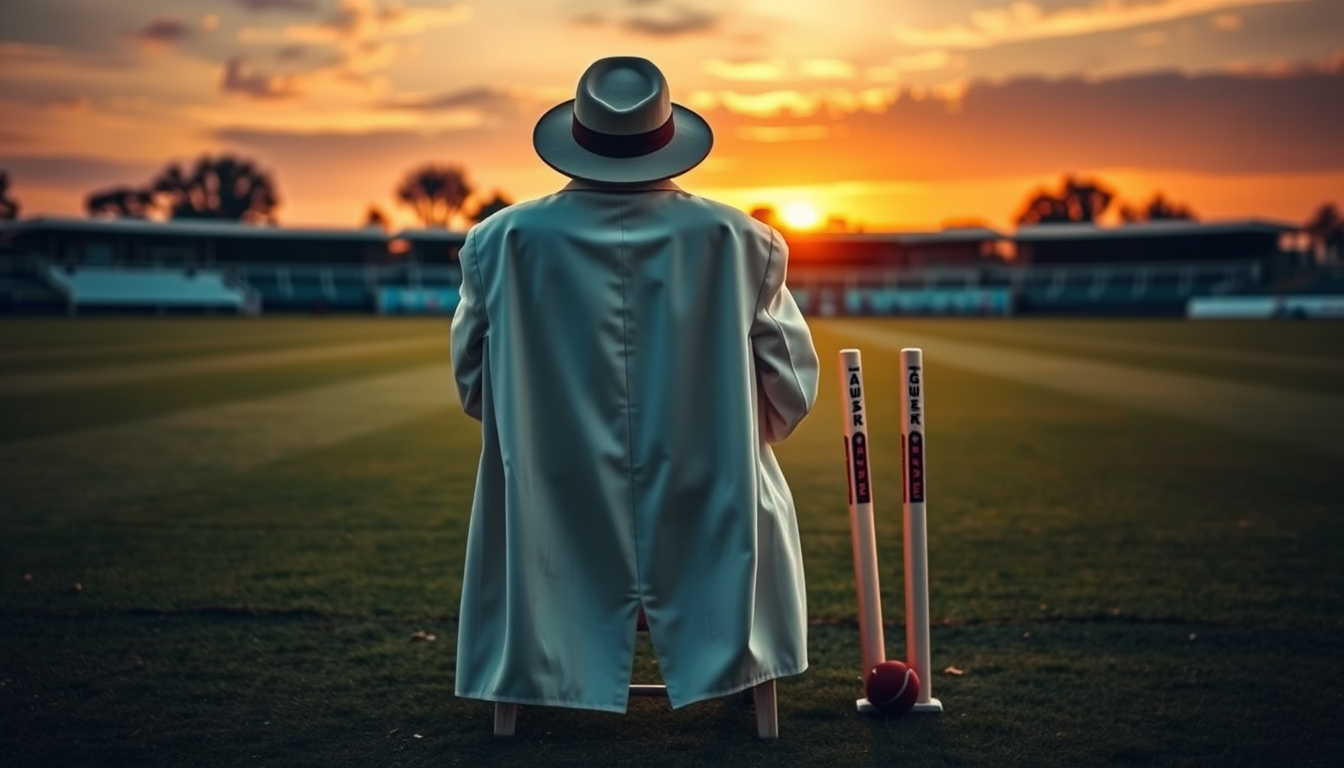
When a cricket umpire becomes more famous than the players on the field, you know something special happened. Harold Dennis “Dickie” Bird, who died peacefully at home at age 92 on September 22, 2025, was exactly that figure: a man whose eccentric hop, skip, and jump at the bowler’s end turned officiating into performance art. From his humble Barnsley roots to three World Cup finals, this is the story of the umpire who became a legend — and the farewell that showed just how deeply he mattered.
Born: 19 April 1933 ·
Died: 22 September 2025 ·
Tests umpired: 66 ·
ODIs umpired: 76 ·
World Cup finals: 3 ·
Award: OBE
Quick snapshot
- Born 19 April 1933 in Barnsley (Wikipedia)
- Umpired 66 Tests, 76 ODIs, and 3 World Cup finals (BBC News)
- Awarded OBE in 2012 (Yorkshire County Cricket Club)
- 19 April 1933: Born in Barnsley (BBC News)
- 1970–1996: International umpiring career (BBC News)
- 22 September 2025: Died at age 92 (BBC News)
- Funeral held 19 October 2025 in Barnsley with public procession (ITV News Calendar)
- Statue on Church Lane remains a lasting tribute (ITV News Calendar)
- His OBE legacy continues to inspire umpires worldwide (ITV News Calendar)
Eight key facts about Dickie Bird, one clear pattern: a lifelong Yorkshireman who climbed from county player to the most recognisable umpire in cricket history.
| Category | Detail |
|---|---|
| Full name | Harold Dennis Bird |
| Born | 19 April 1933, Barnsley, England |
| Died | 22 September 2025, age 92 |
| Occupation | Cricket umpire |
| Test matches umpired | 66 |
| ODIs umpired | 76 (source discrepancy: one report states 69) |
| World Cup finals | 3 (1975, 1979, 1983) |
| Awards | MBE (1986), OBE (2012), Freedom of Barnsley (2000) |
The table shows a consistent picture: Bird’s career stats are strong, though the ODI count warrants caution.
What is Dickie Bird famous for?
How did Dickie Bird become an umpire?
- Bird played first-class cricket for Yorkshire and Leicestershire from 1956 to 1964, but a knee injury ended his playing career (BBC News).
- He turned to umpiring and made his international debut in 1973 (BBC News).
- His theatrical mannerisms — the famous hop, constant fidgeting, and nervous habits — turned every match into a performance, making him a household name.
Bird never played Test cricket for England, yet his status as a legend of the game is in no doubt — a rare case where the umpire outshone the players. For aspiring officials, his journey proves that personality and authority can coexist.
The pattern: Bird turned a career-ending injury into an opportunity, and in doing so, redefined what an umpire could be.
What are his most memorable matches?
- He umpired all three World Cup finals from 1975 to 1983, including the famous 1979 final between West Indies and England (BBC News).
- He also stood in the iconic 1981 Headingley Ashes Test, where Ian Botham’s batting rescued England.
- His international career spanned 66 Tests and, by most counts, 76 ODIs, retiring in 1996 (BBC News).
The pattern: Bird officiated in cricket’s biggest moments, yet he never sought the spotlight. His quirks made him beloved, but his competence made him indispensable. What this means: few umpires have ever matched Bird’s combination of skill and showmanship.
Who was at Dickie Bird’s funeral?
Where was Dickie Bird’s funeral held?
- The funeral service took place at St Mary’s Church in Barnsley on 19 October 2025 (BBC News).
- A public procession paused at Bird’s statue on Church Lane before the service (BBC News).
- After the service, a private cremation was followed by a wake at Barnsley Town Hall (BBC News).
Which cricket figures attended?
- Sir Geoffrey Boycott and Michael Vaughan were among the cricket legends reported to attend (ITV News Calendar).
- The service was open to the public, drawing hundreds of local residents and cricket fans (ITV News Calendar).
- Yorkshire County Cricket Club described the scene as a “hometown farewell” worthy of a man who never forgot his roots (Yorkshire County Cricket Club).
The implication: Bird’s funeral united the cricket world with his home community, confirming that his appeal transcended the game itself. For Yorkshire, it was a final goodbye to one of its most famous sons.
Where did the term ‘dickie bird’ come from?
What does ‘not a dicky bird’ mean?
- “Not a dicky bird” is Cockney rhyming slang meaning “not a word” — i.e., complete silence.
- The phrase uses “dicky bird” as slang for “word” (from “bird” rhyming with “word”).
What is a dicky bird in Cockney slang?
- In broad Cockney, “dicky bird” simply means “word.” The expression “I haven’t heard a dicky bird” means “I haven’t heard a word.”
- Despite the phonetic similarity, there is no proven connection between the slang term and the umpire Dickie Bird (Wikipedia).
The urban legend that Dickie Bird’s name gave rise to the phrase is persistent but incorrect. For fans and linguists alike, the real origin lies in 19th-century London rhyming slang — a separate world from the Barnsley umpire.
The catch: even though Bird’s name sounds like the slang term, no evidence links the two. The coincidence makes a charming story, but it remains exactly that — a story.
Has Dickie Bird had a stroke?
Is Dickie Bird still alive?
- No. Dickie Bird died on 22 September 2025 at age 92 (BBC News).
When did Dickie Bird die?
- He died peacefully at home on 22 September 2025, according to Yorkshire County Cricket Club (Yorkshire County Cricket Club).
- Public records do not mention a stroke. Rumours of a stroke remain unconfirmed and should be treated as speculation.
The trade-off: while Bird’s later years were marked by some health queries, no official cause of death has been released. Until a medical report surfaces, the stroke question belongs firmly in the “unclear” column.
Who did Dickie Bird leave his money to?
Has Dickie Bird got a wife?
- Dickie Bird never married and had no children, as confirmed by multiple biographical sources (ITV News Calendar).
- He lived modestly in Barnsley his entire life, often described as frugal despite his earnings from umpiring and book sales.
- His will has not been made public, so the beneficiaries of his estate remain unknown.
The pattern: Bird’s personal life was as private as his public persona was open. For fans curious about his legacy, the absence of a spouse or children means his wealth — likely substantial — may have gone to family members, friends, or charities. The silence on this front is deliberate.
Timeline
- 19 April 1933 – Born in Barnsley, Yorkshire (Wikipedia)
- 1956–1964 – Played first-class cricket for Yorkshire and Leicestershire
- 1970 – Became an international umpire
- 1975–1983 – Umpired three Cricket World Cup finals
- 1996 – Retired from international umpiring
- 2000 – Received Freedom of Barnsley
- 2012 – Awarded OBE (Yorkshire County Cricket Club)
- 22 September 2025 – Died at age 92 (BBC News)
- 19 October 2025 – Funeral held in Barnsley (ITV News Calendar)
Confirmed facts vs. what remains unclear
Confirmed facts
- Birth and death dates: 19 April 1933 – 22 September 2025
- Umpiring stats: 66 Tests, 76 ODIs (with slight discrepancy), 3 World Cup finals
- Funeral location: St Mary’s Church, Barnsley, with public procession
- Never married, no children
- Awards: MBE, OBE, Freedom of Barnsley
- Origin of “dicky bird” phrase: Cockney rhyming slang, unrelated to the umpire
What’s unclear
- Specific cause of death – not publicly disclosed
- Whether Dickie Bird had a stroke – no confirmation
- Precise ODI count – 76 vs 69, pending official ECB records
- Contents of his will and beneficiaries
- Full list of high-profile funeral attendees beyond those reported
What others said
“One of the world’s finest cricket umpires who became a popular celebrity known for his comic anecdotes and quirky ways.”
– David Hopps, The Guardian obituary
“He did not play cricket for England, yet his status as a legend of the game is in no doubt.”
– BBC Sport
“Dickie Bird was one of cricket’s most beloved figures – a man whose personality transcended the sport he served for decades.”
– Yorkshire County Cricket Club
“The funeral procession through Barnsley was a fitting tribute to a man who never forgot where he came from.”
– ITV News Calendar
Summary
Dickie Bird turned umpiring into an art form. His career statistics – 66 Tests, 76 ODIs, three World Cup finals – prove he was among the most trusted officials in cricket history. But his real legacy lies in the way he made every match feel human: the hops, the nerves, the genuine love for the game. Now, with his funeral behind him and a statue standing in Barnsley, the question for the cricketing world is how to preserve that spirit. For the ECB and cricket governing bodies, the implication is clear: invest in umpires as personalities, not just decision-makers, or risk losing the very character that made Bird irreplaceable.
youtube.com, facebook.com, youtube.com, youtube.com, dailymotion.com, facebook.com, thetimes.com, instagram.com, canadaobserver.net
Fans around the world mourned the loss of the beloved umpire, with many turning to detailed account of his remarkable career for a detailed account of his remarkable career.
Frequently asked questions
Why was Dickie Bird so popular?
He combined flawless umpiring with eccentric, endearing mannerisms – hopping, spinning his coin, and talking to himself – making fans laugh while earning players’ respect.
How did Dickie Bird die?
He died peacefully at home on 22 September 2025 at age 92. The specific cause has not been publicly confirmed.
Did Dickie Bird have any children?
No. He never married and had no children.
What was Dickie Bird’s umpiring style?
Highly professional yet visibly nervous – he was famous for walking out with his jacket over his arm, bouncing on his toes, and engaging in constant fidgeting. Behind the quirks, his decision-making was sharp and decisive.
Where is Dickie Bird buried?
After a public funeral at St Mary’s Church in Barnsley, a private cremation took place. The exact location of his ashes has not been disclosed.
What is Dickie Bird’s net worth?
Not publicly known. Bird lived modestly and his estate has not been probated. Best estimates from his book royalties and umpiring fees suggest a moderate sum, but no official figure exists.
Was Dickie Bird related to the phrase ‘dicky bird’?
No. The phrase “not a dicky bird” comes from 19th-century Cockney rhyming slang and is purely coincidental.
Related reading
Related stories



Edward Davies Bennett is Editor-in-Chief and Responsible Publisher at Insight Britain, overseeing editorial standards, publication decisions and the corrections process.