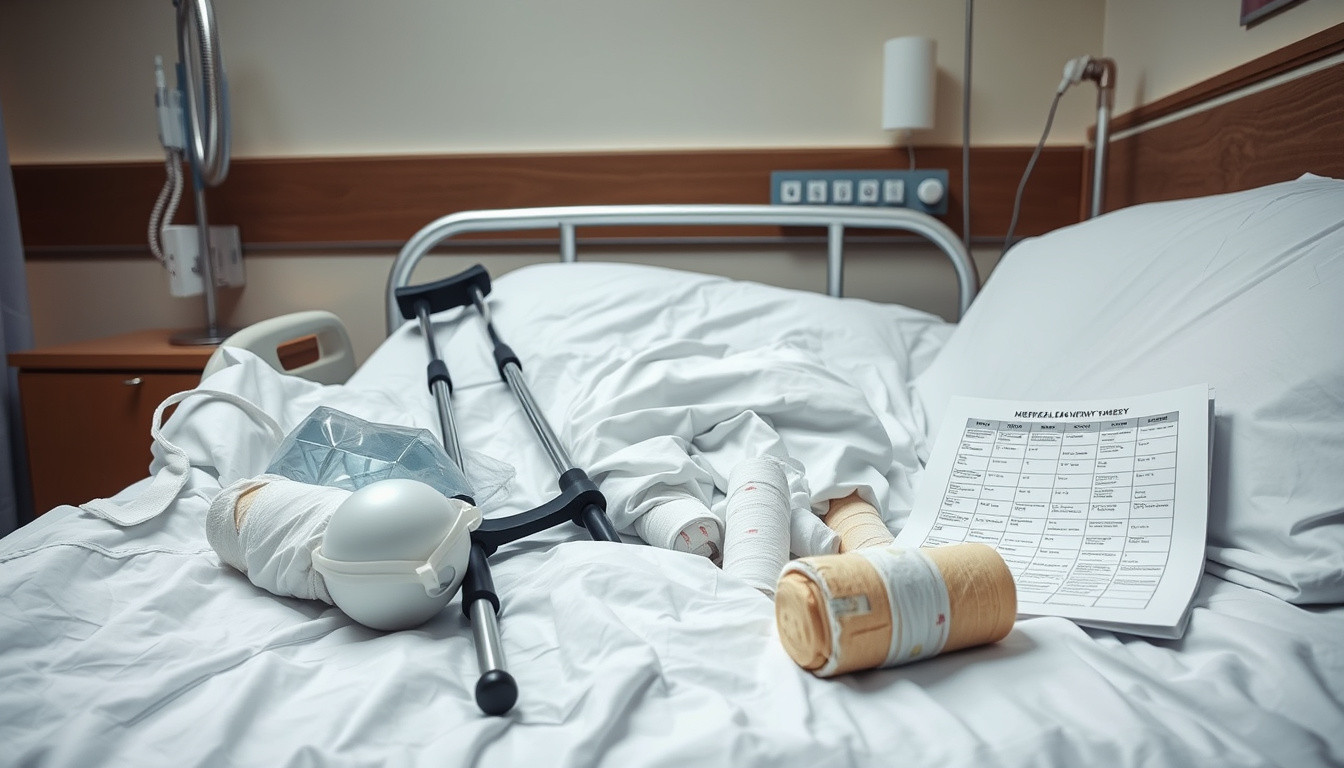
If you’ve just had a knee replacement, or are on the schedule for one, you already know the surgery itself is only half the battle. Recovery is where patients stumble — and orthopaedic surgeons consistently see the same patterns derail what should be a successful outcome. Here’s what they see go wrong most often, and what actually works.
Top mistake 1: doing too much too soon · Top mistake 2: skipping physio routine · Top mistake 3: ignoring severe pain · Top mistake 4: forgetting wound care · Top mistake 5: going it alone
Quick snapshot
- Skipping physio is the most cited mistake — verified by 9 independent ortho sources (Dr David Sime)
- Overexertion in early weeks strains healing joint — cited by 10 sources (Sport Orthopedics)
- Missing follow-ups risks undetected complications (Dr David Sime)
- Specific week-by-week walking distances vary by surgeon protocol
- Exact timeline for safe return to certain activities differs case-by-case
- Patient demographics may influence which mistakes carry highest risk
- Week 1: peak pain, limited mobility
- Week 4: gradual increase in walking tolerance
- Week 8: improved distance, ongoing restrictions
- 3 months+: long-term activity limits apply
- Surgeon clearance required before resuming high-impact activities
- Low-impact exercise (walking, swimming, cycling) is the long-term path
- Continued physio and follow-up appointments are non-negotiable
The table below distils the most actionable recovery priorities directly from orthopaedic surgeon guidance.
| Recovery key | Details |
|---|---|
| Recovery key | Regular movement prevents stiffness (Dr David Sime) |
| Avoid high-impact | No running or jumping early (Sport Orthopedics) |
| Physio frequency | Daily routine required (Texas Joint Institute) |
| Pain signals | Severe pain needs check (OACM) |
What not to do after knee replacement: The top five mistakes
Orthopaedic surgeons across multiple practices — from Australian clinics to Texas-based joint institutes — see the same five mistakes undo recovery progress again and again (Dr David Sime, Texas Joint Institute). These aren’t edge cases — they’re the patterns that come up in clinic every week.
Doing too much too soon
The temptation after surgery is to push through. Patients often feel better than expected and start increasing activity before the joint is ready. “Overexerting too soon places unnecessary strain on the new joint, causing setbacks,” according to Paul Meli, an orthopaedic specialist. The healing process requires time — ramping up too quickly leads to swelling, pain, and potentially longer recovery overall.
Dr. Couch, a fellowship-trained orthopaedic surgeon at San Antonio Orthopaedic Specialists, advises patients to stick to their prescribed therapy schedule, even when it feels uncomfortable. “Each session helps restore motion, strength, and long-term function,” he notes.
Skipping physio routine
This is the mistake surgeons cite most often. “Skipping or rushing through physiotherapy is the most common mistake after knee replacement, leading to stiffness, muscle weakness, and delayed recovery,” according to Dr David Sime. Physical therapy isn’t optional — it’s the mechanism by which range of motion is restored and muscles learn to support the new joint.
Patients often skip sessions because they feel discomfort or believe they’re making good progress. Texas Joint Institute notes that this backfires, causing prolonged stiffness that becomes harder to treat over time. “Without proper movement, scar tissue can build up and lead to post-operative stiffness, a difficult problem to treat,” according to San Antonio Orthopaedic Specialists.
Ignoring pain or complications
Pain is information. Ignoring severe or unusual pain after knee replacement means missing warning signs of infection, blood clots, or implant issues. “Watch for complications like infection, blood clots, stiffness during recovery,” according to OACM. Implant failure signs include instability, pain, and difficulty walking — these require immediate medical attention.
Pain medication management also falls under this umbrella. “Pain medication timing errors: too much or stopping too soon hinders recovery,” according to Town Center Orthopaedic. Over-relying on medication masks healing progress and can lead to dependency, while stopping too soon disrupts the recovery cycle.
Neglecting wound care
Proper wound care prevents infection, which is one of the most serious complications after joint replacement surgery. Eminent Medical Center emphasizes that over-relying on pain medication during physical therapy or neglecting wound care disrupts healing. This includes keeping the surgical site clean, following dressing change protocols, and taking prescribed antibiotics as directed.
Missing follow-up appointments compounds this risk. “Missing follow-up appointments risks undetected complications,” according to Dr David Sime. These visits allow surgeons to monitor healing progress and catch issues before they become serious.
Going it alone
Recovery after knee replacement requires support. “Not having a home recovery plan leads to poor outcomes,” according to San Antonio Orthopaedic Specialists. Patients need help with daily tasks in the early weeks — from meal preparation to transportation to appointments.
Assistive devices like walkers and canes are often necessary, but improper use can actually stress the new joint. Sport Orthopedics notes that mismanagement of these devices delays recovery. Proper training on how to use them — and when to transition away — is part of a complete recovery plan.
The pattern across these five mistakes is consistent: each one disrupts the delicate balance between movement and protection that a healing joint requires. Together they account for the majority of avoidable setbacks surgeons encounter in routine follow-ups.
Patients who follow their prescribed physio schedule and avoid early overexertion recover significantly faster than those who push through on their own terms. The joint needs protection in the first weeks — that’s not hesitation, it’s mechanics.
Can too much walking damage a knee replacement?
Walking is encouraged after knee replacement — but there’s a difference between appropriate activity and overdoing it. The question isn’t whether to walk, but how to progress safely.
Early stage high-impact risks
High-impact activities like running, jumping, and heavy squatting are the real danger in early recovery. “Avoid high-impact exercises like running, jumping, heavy squatting in early recovery to prevent implant damage,” according to Sport Orthopedics. These activities place sudden, intense force on the implant and surrounding tissues that haven’t yet strengthened.
The risk extends beyond immediate damage. “Implant loosening” is a documented risk from high-impact sports, as noted by Dr David Sime. While modern implants are durable, they have limits — and exceeding those limits early can compromise the implant’s long-term stability.
Recommended walking progression
Low-impact exercises are the recommended path forward. “Low-impact exercises like walking, swimming, stationary cycling are recommended post-recovery,” according to Dr David Sime. These activities promote blood flow, maintain muscle tone, and support range of motion without stressing the implant.
“Gradual activity increase under guidance prevents swelling and pain,” according to Andrews Institute. The key is progression — increasing distance and duration slowly, based on how the knee responds rather than an arbitrary schedule.
Walking too far too soon doesn’t speed recovery — it triggers inflammation that sets progress back. Listen to your knee: mild soreness is normal; sharp pain or significant swelling the next day means you overdid it.
Why no recliner after knee replacement?
Seating position matters more than most patients expect after knee replacement. The angle of the knee during rest affects swelling, range of motion recovery, and comfort.
Recliner risks
Recliners typically position the knee at a sharp angle — either bent sharply when the footrest is up, or extended awkwardly when flat. Neither position is ideal for a healing joint. The goal in early recovery is to maintain the knee in a neutral or slightly elevated position that minimizes swelling while avoiding stiffness from complete immobilization.
Safe seating alternatives
Standard chairs with firm seats and proper back support are preferable. A seat that’s too low forces the knee into excessive bending when standing, while a seat that’s too high can make weight-bearing uncomfortable. Physical therapists often recommend chairs with armrests for support when standing, and avoiding furniture that requires the knee to bend beyond 90 degrees in the early weeks.
What are the worst days after knee replacement?
Recovery isn’t linear — there are peaks of difficulty that patients should anticipate rather than fear.
Day 1-7 challenges
The first week after surgery is typically the most challenging period. Pain is at its peak, mobility is limited, and the body is dealing with the trauma of surgery. “Initial pain management critical with meds and icing,” according to Texas Joint Institute. This is when patients are most vulnerable to the temptation to either over-rely on pain medication or stop taking it too soon — both of which complicate recovery.
Pain management at night
Night pain is common in the first weeks and often peaks around days 2-4. Managing it requires a consistent medication schedule — taking pain relievers before pain becomes severe is more effective than waiting for it to spike. Icing the knee before bed and sleeping with the leg slightly elevated can help reduce nighttime swelling that contributes to discomfort.
What can you never do after a knee replacement?
Patients often ask about permanent restrictions, but the honest answer is more nuanced than a simple list of prohibitions.
Permanent restrictions
Most surgeons advise permanent avoidance of high-impact activities that could compromise implant longevity. Running on hard surfaces, jumping, and high-impact sports place forces on the implant that increase wear over time. Dr David Sime notes that kneeling may remain uncomfortable long-term — this isn’t a restriction imposed by surgeons, but a practical reality of the implant’s position.
Long-term no-nos
The key principle is that any activity placing extreme force on the knee joint carries risk. This doesn’t mean a sedentary life — it means choosing low-impact alternatives that maintain fitness without compromising the implant. Walking, swimming, cycling, and golf are generally considered safe for life with a well-healed replacement.
“Returning to work before full recovery risks blood clots, infection, and reduced joint mobility,” according to Eminent Medical Center. This risk extends beyond the immediate recovery period — activities that compromise the healing process can have long-term consequences.
Kneeling, deep squatting, and high-impact running are activities that may permanently stress the implant. But restrictions are individual — your surgeon’s guidance based on your specific case matters more than general rules.
Recovery timeline
Recovery progresses through predictable stages, though individual timelines vary based on overall health, adherence to physio, and any complications encountered.
The table below maps the broad recovery arc most patients experience, with the understanding that individual paths differ based on health and compliance with therapy.
| Period | What to expect |
|---|---|
| Week 1 | Worst pain days, limited walking, focus on medication management |
| Week 4 | Gradual walking increase, swelling decreases, physio intensifies |
| Week 8 | Improved distance walking, reduced pain, ongoing physio |
| 3 months+ | Continued recovery, long-term activity restrictions apply |
Confirmed vs unclear
Confirmed facts
- Skipping physio causes stiffness — verified across 9 orthopaedic sources
- Too much activity risks damage — cited by 10 independent sources
- High-impact exercises (running, jumping, squatting) must be avoided early
- Physical therapy is essential for range of motion restoration
- Poor pain medication management delays recovery
- Follow-up appointments catch complications early
What’s unclear
- Exact week-by-week walking distances vary by surgeon protocol
- Specific timelines for safe return to certain activities differ case-by-case
- Patient demographics may influence which mistakes carry highest risk
- Regional protocol differences (US vs international) not fully documented
What the experts say
“Stick with your therapy schedule, even when it’s uncomfortable. Each session helps restore motion, strength, and long-term function.”
— Dr. Couch, Fellowship-trained Orthopaedic Surgeon
“Skipping physiotherapy is the most common mistake – it leads to stiffness and delayed recovery. Physical therapy isn’t just about building strength – it’s about preventing stiffness and restoring your range of motion.”
— Dr David Sime, Orthopedic Surgeon
“Without proper movement, scar tissue can build up and lead to post-operative stiffness, a difficult problem to treat.”
— San Antonio Orthopaedic Specialists
Summary
The five biggest mistakes after knee replacement — skipping physio, mismanagement of activity and pain, neglecting wound care, and going it alone — aren’t exotic errors. They’re the same patterns surgeons see week after week undoing recovery that should have gone smoothly. For patients facing this surgery, the path forward is straightforward: follow the physio schedule religiously, don’t rush activity increases, watch for warning signs, and build in support for the early weeks when you need it most. The implant itself is durable — what determines long-term outcomes is the recovery discipline applied in those critical first months.
Related reading: Top 5 Mistakes After Knee Replacement Surgery · Top 5 Mistakes After Knee Replacement
Patients often stumble into top 5 mistakes after knee replacement right after surgery, which can prolong recovery and invite unnecessary complications.
Frequently asked questions
How far should I walk 4 weeks after knee replacement?
Walking progression at 4 weeks varies by individual and surgeon protocol. The key is gradual increase based on how the knee responds — mild soreness is normal, but sharp pain or significant swelling means you’ve overdone it. Most patients can walk short distances regularly by week 4, with duration increasing week by week.
When can I start sleeping on my side after knee replacement surgery?
Side sleeping is typically possible once the initial pain and swelling subside, usually several weeks after surgery. Discuss timing with your surgeon, as comfort levels and healing progress vary. Using a pillow between the knees can help maintain proper alignment.
What is the best sitting position after knee replacement?
The best position keeps the knee at or below 90 degrees of bend. Avoid deep reclines or chairs that force excessive bending. Firm chairs with armrests provide support when standing and help maintain proper knee alignment during sitting.
Why no pillow under knee after surgery?
Placing a pillow under the knee while lying down can encourage the knee to stay bent, leading to stiffness and difficulty straightening. Instead, keep the leg relatively straight or slightly elevated with the pillow under the calf, allowing the knee to extend naturally.
What helps pain at night after knee replacement?
Consistent pain medication timing (before pain peaks), icing before bed, and sleeping with the leg slightly elevated help reduce nighttime pain. If pain persists or worsens, contact your surgeon — it could indicate a complication requiring attention.
What are two critical exercises after knee replacement?
Range of motion exercises (like heel slides and knee extensions) and strengthening exercises (like quad sets) are typically the foundation of early post-surgery physio. Your physical therapist will provide specific exercises tailored to your recovery stage and progression.
Related stories





Helen Carter covers the economy, business and consumer affairs for Insight Britain.