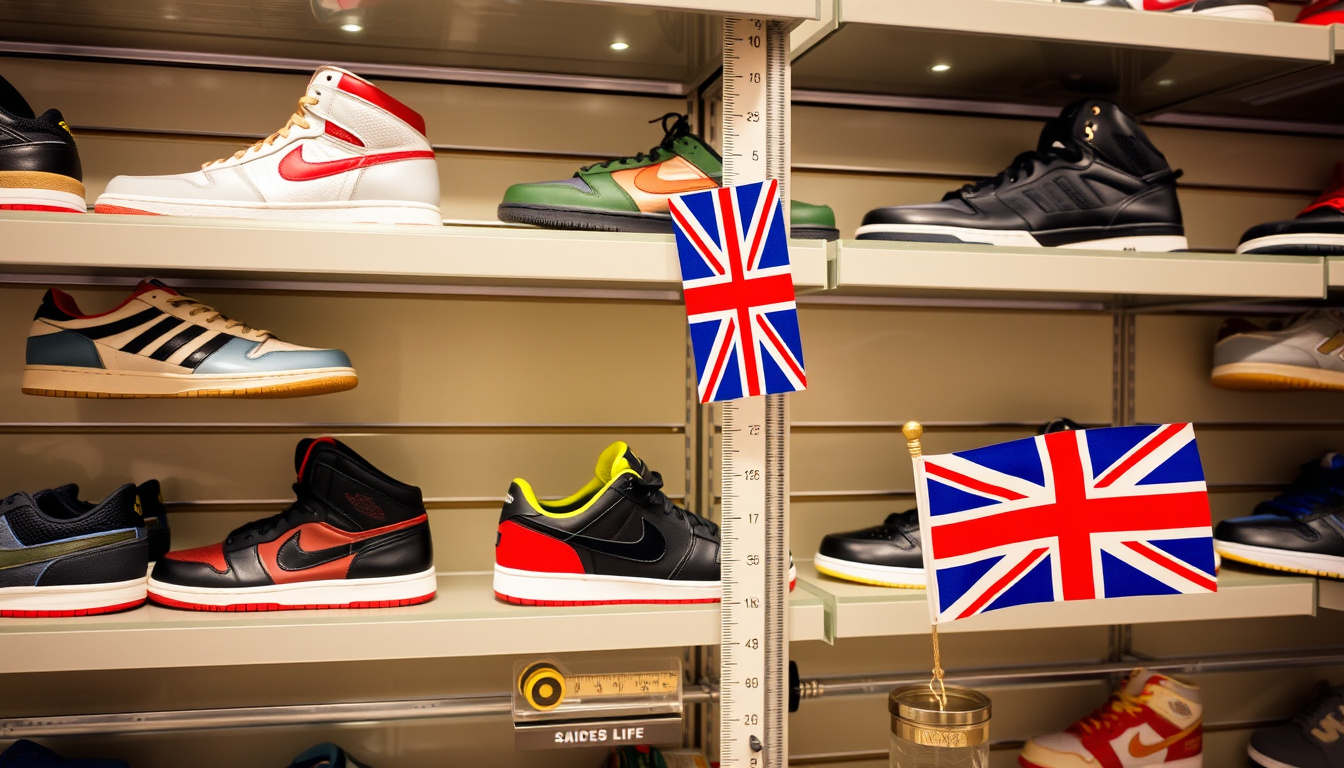
Anyone who has tried to stop on a court in fashion trainers knows the shoe changes everything. Basketball shoes are built for explosive cuts, fast breaks, and repeat jumps — Nike UK’s own description of the category — and that purpose shows up in fit, traction, and collar height.
First purpose-built basketball shoe: Converse All Star (1917) ·
UK retailers in top 5 organic results: 5 ·
Nike UK performance promise: Explosive cuts, fast breaks, repeat jumps ·
Foot Locker basketball shoe brands: Nike, PUMA, adidas, Reebok
Quick snapshot
- Lockdown — a heel locked into the back, no side-to-side midfoot movement — is the single most important factor (Foot Locker UK, basketball shoe retailer)
- Higher-cut shoes (mid or high) are usually best for kids just starting out because they add comfort and stability (adidas UK, sportswear brand)
- Fit is the best starting point: a secure heel, a snug midfoot, and enough room at the toe (Pro:Direct Sport, sports retailer)
- The meaning of “BCNR” in related searches is not defined in the available data
- Official sales or performance rankings for basketball shoe brands are not published in the research sources
- Specific cushioning technologies used by each brand are not described in the SERP data
- Nike UK separates kids’ basketball shoes into Older Kids (7–15 yrs), Younger Kids (3–7 yrs), and Babies & Toddlers (0–3 yrs) (Nike UK, sportswear brand)
- Jordan retro lines now appear in UK junior categories, including the Spizike Low (JD Sports UK, sports retailer) (Nike UK, sportswear brand)
- Pro:Direct’s kids’ basketball range spans Nike, Jordan, adidas, PUMA, New Balance, Under Armour, and Converse (Pro:Direct Sport, sports retailer)
- Foot Locker warns that dust and dirt reduce the outsole’s bite, so cleaning becomes part of the routine (Foot Locker UK, basketball shoe retailer)
Key facts at a glance
Ten facts, one pattern: the UK market is easy to map, but no source settles which shoe is best for your game.
| Fact | Value |
|---|---|
| First purpose-built basketball shoe | Converse All Star (1917) |
| UK retailers in the top 5 organic results | Nike, Sports Direct, adidas, Under Armour, Foot Locker |
| Nike UK performance promise | Explosive cuts, fast breaks, repeat jumps (Nike UK, sportswear brand) |
| Foot Locker basketball shoe brands | Nike, PUMA, adidas, Reebok (Foot Locker UK, basketball shoe retailer) |
| Nike junior size bands | Older Kids (7–15), Younger Kids (3–7), Babies & Toddlers (0–3) |
| Junior construction | High-spec materials and engineered details from Nike’s adult range |
| Kids’ basketball brands (Pro:Direct) | Nike, Jordan, adidas, PUMA, New Balance, Under Armour, Converse (Pro:Direct Sport, sports retailer) |
| Example junior price | Jordan Spizike Low Junior at £95.00 (JD Sports UK, sports retailer) |
| Collar height definition | High-top over the ankle; low-top below the ankle (Under Armour, athletic brand) |
The pattern: the facts line up with the retailer pages, and the gaps line up with the advice. Everything else is brand marketing.
What are basketball shoes and how do they differ from everyday trainers?
What is the purpose of a basketball shoe?
- Quick changes of direction, sudden stops, and repeated jumps — the movement pattern that defines a basketball game (Pro:Direct Sport, sports retailer)
- Cushioning, grip, and ankle support designed specifically for basketball (adidas UK, sportswear brand)
- Lockdown, so the foot stays contained with no internal slipping during sharp cuts (Foot Locker UK, basketball shoe retailer)
Basketball shoes are the only footwear category whose entire design brief is built around a hardwood court: repeated jumps, lateral pushes, and hard landings. Everyday trainers are made for walking comfort, not for sudden stops and direction changes, which is why the two are not interchangeable on court.
The category has been doing this job for more than a century; the Converse All Star, first released in 1917, is widely regarded as the first purpose-built basketball shoe.
Can you wear basketball shoes for casual use?
Casual wear won’t break a basketball shoe, but it will cover the outsole in dust and dirt. Foot Locker UK says that reduces the outsole’s ability to bite the court — so the pair that looks great on the street may slide when you need it most.
You can wear basketball shoes off the court, and plenty of people do. Just know that the grip that helps you cut is the first thing a dusty outsole loses, so the same pair needs a wipe-down before it goes back to playing basketball.
The takeaway: a basketball shoe is built for hardwood movement, not pavement strolling. If you want one pair that does both, the maintenance burden is real — clean the outsole or lose the grip.
How should basketball shoes fit?
How much space should be in the toe box?
- Secure heel: the shoe locks the heel into the back of the collar (Foot Locker UK, basketball shoe retailer)
- Snug midfoot: no side-to-side movement when you change direction (Foot Locker UK)
- Toe room: enough space for the toes to move comfortably without jamming the end of the shoe (Pro:Direct Sport, sports retailer)
A practical rule of thumb is a thumb’s width between the longest toe and the end of the shoe. That gives the foot room to spread on landings without sliding forward on stops.
Lockdown is the bigger idea. Foot Locker UK (basketball shoe retailer) says the single most important factor is lockdown: the foot feels secure and contained, with the heel locked firmly into the back and no side-to-side midfoot movement.
Should you size up or down for basketball shoes?
The number on the box matters less than how the shoe holds the foot. Pro:Direct Sport starts with a secure heel and snug midfoot; Foot Locker UK calls lockdown the single most important factor — both beat a “correct” size label.
Don’t size down for a snugger look: your toes need room to spread when you land. Don’t size up for extra length either, because a shoe that doesn’t lock the heel creates its own movement problems. Sizing also varies by brand, so the same foot can sit differently in a Nike and an adidas.
- Try shoes on with the same basketball socks you plan to wear on court.
- If you’re buying for a junior who is still growing, remeasure the foot before every new pair.
- Check the heel during a lunge or side-step, not just standing still.
High-top, mid-top, or low-top: which basketball shoe should you choose?
Do high-tops provide more ankle support?
- High-top: the collar extends over the ankle (Under Armour, athletic brand)
- Mid-top: the collar sits between the ankle and the lower leg, balancing coverage and freedom
- Low-top: the collar stops before the ankle, allowing more range of motion around the joint (Under Armour)
That extra collar coverage is why many players reach for high-tops, especially beginners. adidas UK says higher-cut shoes such as mid-tops or high-tops are usually best for kids just starting out because they provide additional comfort and stability.
The research angle is more surprising. Under Armour (athletic brand) cites research that found no difference in the incidence of ankle sprains in basketball players based on shoe collar height. Collar height, in other words, is a feel and movement preference, not a proven safety upgrade.
Are low-top basketball shoes better for speed?
Low-tops trade ankle coverage for range of motion. Under Armour says that extra freedom can help with fast cuts, and its cited research shows no collar-height difference in ankle sprain rates. The speed advantage is real; the safety story is not.
- Low-tops allow more range of motion around the ankle, which can help with fast cuts (Under Armour, athletic brand)
- Mid-tops are the all-around option for players who want both coverage and freedom
- Whichever height you choose, lockdown and traction still do the heavy lifting (Foot Locker UK, basketball shoe retailer)
The implication: choose the collar that lets you move with confidence. Under Armour’s advice is the most honest in the market — the right shoe is the one that feels best and helps you move comfortably, regardless of collar height.
Nike, Jordan, adidas, Under Armour, or Way of Wade: which basketball shoe brand should you choose?
What makes Nike basketball shoes unique?
- Nike UK markets basketball shoes for explosive cuts, fast breaks, and repeat jumps (Nike UK, sportswear brand)
- Junior basketball shoes carry high-spec materials and engineered details from Nike’s adult range (Nike UK, sportswear brand)
- Nike UK separates kids’ basketball shoes into Older Kids (7–15 yrs), Younger Kids (3–7 yrs), and Babies & Toddlers (0–3 yrs) (Nike UK)
Nike’s basketball identity is performance-first: cuts, breaks, jumps. The brand repeats that movement promise across its UK category and extends the engineering down to junior sizes, which is why its kids’ shoes look like adult performance models.
What is Jordan basketball known for?
- Jordan is a Nike brand named after Michael Jordan, and it carries the biggest lifestyle halo in basketball footwear
- JD Sports UK lists the Jordan Spizike Low Junior at £95.00 in its kids’ basketball category (JD Sports UK, sports retailer)
Jordan’s popularity means the retro lines, like the Spizike Low, cross from the NBA to UK junior playgrounds. The £95 price point is a useful reference for parents: junior basketball shoes are no longer a budget category.
What is Way of Wade?
- Way of Wade is the signature basketball shoe line of Dwyane Wade, the former NBA guard
It is a smaller name in the UK than Nike or adidas, but it shows how a player’s identity can carry an entire product line.
adidas and Under Armour round out the comparison. adidas UK emphasizes game-specific design in its kids’ basketball shoes — cushioning, grip, ankle support, and breathable uppers that keep feet cool and dry. Under Armour’s playbook is the most research-led of the group, with collar-height guidance and a candid note that the right shoe feels best.
What this means: brand choice is a tiebreaker, not a starting point. The same fit rules apply to every logo, and the £95 Jordan won’t help if the heel slides.
What are the best basketball shoes for juniors?
What should parents look for in junior basketball shoes?
- Fit first: a secure heel, a snug midfoot, and enough toe room — the starting point Pro:Direct Sport uses for its kids’ range (Pro:Direct Sport, sports retailer)
- Cushioning, grip, and ankle support designed specifically for basketball (adidas UK, sportswear brand)
- Grippy outsoles, supportive cushioning, and light, breathable uppers — the same ingredients Nike UK puts in its junior shoes (Nike UK, sportswear brand)
- Jordan retro models like the Spizike Low Junior, available through JD Sports UK’s kids’ basketball category (JD Sports UK, sports retailer)
Junior basketball shoes have stopped being scaled-down fashion shoes. Nike UK says its junior line uses high-spec materials and engineered details from its adult range, which means a growing player can get real performance features without paying adult prices.
Do junior basketball shoes need different support?
- For beginners, yes: adidas UK says higher-cut shoes (mid or high) are usually best for kids just starting out because they add comfort and stability (adidas UK, sportswear brand)
- Low-cut kids’ basketball shoes exist for quicker, lighter movement once the player has basic footwork (adidas UK)
- Nike UK groups junior sizes into Older Kids (7–15 yrs), Younger Kids (3–7 yrs), and Babies & Toddlers (0–3 yrs) — a reminder that “kids” is not one size (Nike UK, sportswear brand)
For growing players, support means a shoe that holds the foot securely and a size that leaves room to grow. Since sizing varies by brand, measuring the child’s foot before buying is essential.
Where can you buy basketball shoes in the UK?
Which UK retailers sell basketball shoes?
- Sports Direct sells basketball shoes from Nike, Air Jordan, and adidas, with next-day delivery options
- Foot Locker UK sells basketball shoes from Nike, PUMA, adidas, Reebok, and more (Foot Locker UK, basketball shoe retailer)
- JD Sports UK runs a dedicated kids’ basketball footwear category, with junior models like the Jordan Spizike Low Junior (JD Sports UK, sports retailer)
- Pro:Direct Sport’s kids’ basketball range covers Nike, Jordan, adidas, PUMA, New Balance, Under Armour, and Converse (Pro:Direct Sport, sports retailer)
The UK market is concentrated: a handful of specialists plus the brands selling direct. All of them compete on stock and delivery speed; none competes on fit education, so the homework is still yours.
Can you buy Nike and Jordan basketball shoes online in the UK?
- Nike UK sells direct through its basketball category and a separate kids’ basketball category (Nike UK, sportswear brand)
- adidas UK sells basketball shoes direct, including kids’ silhouettes in mid and low cuts (adidas UK, sportswear brand)
- For Jordan, JD Sports UK and Pro:Direct Sport are the practical routes, with the Spizike Low Junior a current example (JD Sports UK, Pro:Direct Sport)
The same category pages that dominate search results are the ones doing the selling. That is convenient for delivery, but it leaves sizing guidance, collar-height trade-offs, and surface care to the buyer.
The pattern: the UK basketball shoe market is a retail funnel with excellent delivery and thin advice. Buy from a specialist or direct from the brand, but go in with your fit checklist ready.
Basketball shoe brands compared
Four brands, one pattern: each leads with a different promise — Nike with movement, Jordan with heritage, adidas with comfort, Under Armour with evidence.
| Factor | Nike | Jordan | adidas | Under Armour |
|---|---|---|---|---|
| Positioning | Explosive cuts, fast breaks, repeat jumps (Nike UK, sportswear brand) | Nike brand named after Michael Jordan, crossing into kids’ retro lines (JD Sports UK, sports retailer) | Kids’ basketball shoes with cushioning, grip, ankle support, and breathable uppers (adidas UK, sportswear brand) | Collar-height education: high-tops over the ankle, low-tops below, and the shoe that feels best (Under Armour, athletic brand) |
| Junior offer | Older Kids 7–15, Younger Kids 3–7, Babies & Toddlers 0–3; adult-range materials in junior sizes (Nike UK) | Jordan Spizike Low Junior at £95.00 (JD Sports UK) | Mid-cut for ankle support, low-cut for quicker, lighter movement (adidas UK) | Not detailed in the cited UK sources |
| UK retail | Direct via Nike UK (sportswear brand) | JD Sports UK kids’ basketball category (sports retailer) | Direct via adidas UK (sportswear brand) | Brand playbook via Under Armour (athletic brand) |
The trade-off: Nike and Jordan command the biggest retail space, adidas talks most directly to young players’ comfort, and Under Armour is the only brand handing you the research to question collar-height marketing. None of them changes the fit fundamentals.
Basketball shoe specifications: what to check
Ten specs, one pattern: the parts you feel in the first five minutes — lockdown, traction, cushioning — do the real work; the rest is marketing.
| Spec | What to look for |
|---|---|
| Lockdown | Heel locked into the back, no side-to-side midfoot movement (Foot Locker UK, basketball shoe retailer) |
| Toe room | Enough space to move comfortably, with a secure heel and snug midfoot (Pro:Direct Sport, sports retailer) |
| Outsole traction | Rubber outsole must bite the court; dust and dirt reduce bite, so keep it clean (Foot Locker UK) |
| Cushioning | Supportive cushioning for repeated jumps (Nike UK, sportswear brand) |
| Upper | Light, breathable materials that keep feet cool and dry (adidas UK, sportswear brand) |
| Collar height | High-top over the ankle, low-top below, mid-top between (Under Armour, athletic brand) |
| Junior size bands | Older Kids 7–15, Younger Kids 3–7, Babies & Toddlers 0–3 (Nike UK) |
| Junior construction | High-spec materials and engineered details from the adult range (Nike UK) |
| Kids’ range brands | Nike, Jordan, adidas, PUMA, New Balance, Under Armour, Converse (Pro:Direct Sport) |
| Example junior price | Jordan Spizike Low Junior at £95.00 (JD Sports UK) |
What this means: a spec sheet only tells you what the shoe contains. Whether those specs work for you depends on the fit check — heel, midfoot, toe — before you pay, and the cleaner afterward.
Basketball shoes: the upsides and the trade-offs
The upsides of a basketball shoe are also its trade-offs: real performance, precise fit, and regular maintenance.
Upsides
- Court-specific grip: the outsole is designed to bite the floor during cuts and stops (Foot Locker UK, basketball shoe retailer)
- Lockdown fit: a secure heel and snug midfoot keep the foot contained on sharp movements (Foot Locker UK)
- Game-specific cushioning and ankle support, including junior models built for the sport (adidas UK, sportswear brand)
- Junior options now include adult-range materials at kids’ sizes (Nike UK, sportswear brand)
Downsides
- Traction is fragile: dust and dirt reduce the outsole’s bite, so cleaning is part of ownership (Foot Locker UK)
- Fit is unforgiving: if the heel slides or the midfoot shifts, the shoe fails its main job (Foot Locker UK)
- Performance pricing: junior models like the Jordan Spizike Low Junior reach £95.00 (JD Sports UK, sports retailer)
- Search results are product tiles, not advice: most UK category pages skip sizing and care guidance
The pattern: basketball shoes give you traction, containment, and cushioning — and they ask for a precise fit, regular cleaning, and a real budget in return.
How to choose basketball shoes, step by step
Five checks, repeated in the same order every time, cover most buying mistakes.
- Check the fit first. A secure heel, a snug midfoot, and enough toe room is the starting point Pro:Direct Sport uses for its kids’ range.
- Confirm lockdown. The heel should stay locked into the back with no side-to-side midfoot movement; if either fails, the shoe is wrong regardless of size (Foot Locker UK).
- Pick the collar height by movement. Low-tops give the ankle freedom for fast cuts; higher cuts add a stable feel for newer players (Under Armour, adidas UK).
- Match the surface. The outsole’s bite depends on being clean; dust and dirt reduce grip, so budget time for cleaning (Foot Locker UK).
- For juniors, use the size bands. Nike UK groups kids into Older Kids (7–15), Younger Kids (3–7), and Babies & Toddlers (0–3), and remeasuring before each purchase is essential.
- Buy from a UK retailer that stocks the right range. Sports Direct, Foot Locker UK, JD Sports UK, Pro:Direct Sport, Nike UK, and adidas UK each carry distinct mixes.
The implication: the buying order is fit, lockdown, collar, surface, size band, then retailer. Logo and price come last.
What we know and what we don’t
Research confidence here is mixed: the market is confirmed, but the performance hierarchy is not. Here is the honest split.
Confirmed facts
- The top five organic results for “Basketball Shoes” in the UK are all retail category pages.
- Nike UK describes basketball shoes as built for explosive cuts, fast breaks, and repeat jumps.
What’s unclear
- The meaning of “BCNR” in related searches is not defined by any provided source.
- Official sales or performance rankings for basketball shoe brands are not supplied.
- Specific cushioning technologies used by each brand are not described in the SERP data.
- Collar height and ankle sprains: Under Armour cites research finding no difference by collar height, while adidas still positions higher cuts as best for new young players.
What this means: you can verify where to buy and what brands promise, but “best” remains a fit question. Buy the lockdown, not the claim.
What the brands say
Four voices define the current market: two global brands and two specialists, each with a slightly different promise.
“Explosive cuts, fast breaks, repeat jumps.”
— Nike UK (sportswear brand)
“Basketball shoes from Nike, Air Jordan, and adidas — with next-day delivery options.”
— Sports Direct (UK sports retailer)
“Proper children’s basketball shoes provide cushioning, grip, and ankle support designed specifically for the game.”
“The right basketball shoe is the one that feels best and helps you move comfortably, regardless of collar height.”
The pattern: every brand ends at the same place — fit and feel decide the shoe. The difference is how much research they share to get you there.
The takeaway
Basketball shoes in the UK are easy to buy and hard to choose: the top search results are retail pages, the brands all promise performance, and junior ranges now carry adult-grade design and lifestyle prices. The way through is the same for a first-time junior player and a weekend guard — lockdown, traction, and collar height, tested with the socks you’ll actually play in. For UK parents, the decision is clear: measure the foot, choose the fit over the logo, and let the £95 Jordans wait until the child’s feet stop growing — or expect to rebuy within a season.
zalando.co.uk, adidas.co.uk, footlocker.co.uk, jdsports.co.uk, jdsports.co.uk, adidas.co.uk
Frequently asked questions
Do basketball shoes make you jump higher?
Not by themselves. Nike UK’s promise is “repeat jumps” — cushioning and support that help you land and push off comfortably — not extra inches. The shoe is there to make the landing comfortable, not to add height.
What are the best basketball shoes for wide feet?
Start with the same fit check retailers use: a secure heel, a snug midfoot, and enough toe room, per Pro:Direct Sport. The cited sources don’t single out a wide-foot model, so the fit check matters more than the brand. Since sizing varies by brand, measure your foot first and prioritize toe room.
How do you break in basketball shoes?
You shouldn’t have to break in a correct fit. If the heel locks and the midfoot doesn’t slide from the first wear, the shoe is doing its job, says Foot Locker UK. A shoe that pinches from day one is a fit problem, not a break-in problem.
How often should you replace basketball shoes?
When the outsole loses its bite or the heel no longer locks, the shoe has lost the two traits that make it a basketball shoe, says Foot Locker UK. For juniors, remeasure before every new pair, because growth will force a replacement long before wear does.
Can you wear basketball shoes on outdoor courts?
Yes — Pro:Direct Sport describes its kids’ basketball shoes as built for quick changes of direction, sudden stops, and playground runs on hardwood or tarmac. Keep the outsole clean afterward, because dust from outdoor courts reduces traction when you move indoors.
Related stories




Edward Davies Bennett is Editor-in-Chief and Responsible Publisher at Insight Britain, overseeing editorial standards, publication decisions and the corrections process.