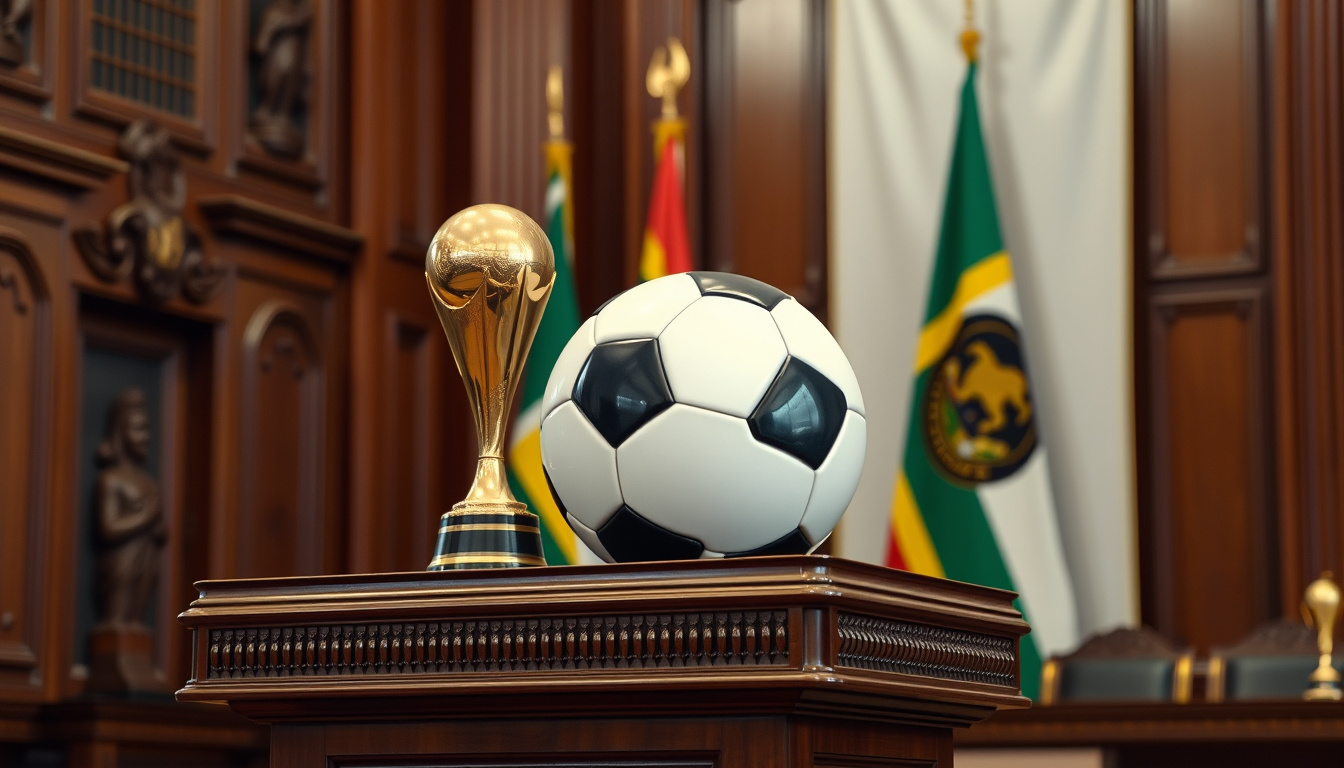
There aren’t many people who can claim to have won football’s most prestigious individual award and then led a country. George Weah did both.
Ballon d’Or win: 1995 · Presidency: 2018–2024 · Clubs played for: 6 · African Player of the Year: 1989, 1994, 1995
Quick snapshot
- Won the Ballon d’Or in 1995 (Wikipédia football records)
- Served as President of Liberia from January 2018 to January 2024 (BBC News international reporting)
- Played for Chelsea (loan) and Manchester City (loan) in the Premier League (Premier League official statistics)
- Named African Player of the Year three times (Wikipedia biographical reference)
- Exact net worth figures remain unverified by independent sources (Britannica biographical detail)
- Specific reasons for his son’s lower public profile are not well documented (Britannica biographical detail)
- 1966: Born in Monrovia
- 1995: Wins Ballon d’Or
- 2018–2024: Presidency
- Post-presidency political and philanthropic activities in Liberia
- Continued involvement in football legacy initiatives
Five key biographical details, one pattern: Weah came from humble beginnings in Liberia and rose to global fame through football before transitioning into politics.
Here is a snapshot of his personal stats:
| Attribute | Value |
|---|---|
| Full Name | George Manneh Oppong Weah |
| Date of Birth | October 1, 1966 |
| Place of Birth | Monrovia, Liberia |
| Height | 1.84 m (6 ft 0 in) |
| Position | Striker |
Why did George Weah win the Ballon d’Or?
- Dominant 1994–95 season with AC Milan and Paris Saint-Germain
- Unique goal-scoring style and pace that defenders couldn’t handle
- First African-born player to receive the award, breaking a European-only tradition
Weah’s 1995 Ballon d’Or triumph remains one of football’s landmark moments. He scored 11 goals in 32 appearances for AC Milan in the 1994–95 season, but his impact went far beyond numbers. His explosive dribbling, vision, and finishing made him a complete forward. According to BBC News international sports reporting, Weah also won the FIFA World Player of the Year in the same year, a rare double. The award was historic because the Ballon d’Or had been restricted to European players until 1995; Weah’s win opened the door for global recognition.
The implication: Weah’s Ballon d’Or wasn’t just a personal honour—it forced the football world to expand its horizons beyond Europe.
Weah remains the only African-born player ever to win the Ballon d’Or, a fact that still draws curiosity from fans asking Wikipedia football history records.
For young players in Africa, Weah remains the gold standard—a rare athlete who succeeded at the highest levels of both sport and state leadership.
Which English team did George Weah play for?
- Chelsea (loan, January–May 2000)
- Manchester City (loan, August–October 2000)
Weah’s Premier League stint is often summarised as “he played in England,” but the details matter. He signed for Chelsea on 11 January 2000 on loan from AC Milan, as recorded by Premier League official statistics. In the 1999/2000 season he made 11 appearances and scored 3 goals. He then moved to Manchester City on a free transfer on 1 August 2000, according to StatCity club historical data, making 7 appearances and scoring 1 goal in the Premier League before leaving on 16 October 2000. His time in England was brief, but it underscored his adaptability.
The pattern: Weah never settled at a single English club, but his skill was unquestionable—even a short spell was enough to leave an impression.
Why was George Weah so good?
- Exceptional pace and close ball control
- Powerful finishing with both feet
- Ability to create chances from nothing
Weah’s playing style made him a nightmare for defenders. He combined the speed of a sprinter with the technique of a playmaker. Over his senior club career he scored 231 goals across 6 clubs, as noted by StatMuse football statistics aggregation, including 134 goals in top-five-league appearances. His dribbling runs from midfield became iconic, and his 1996 goal against Verona—where he ran the length of the pitch—is often cited as one of the greatest in Serie A history. BBC News described him as a footballer who “won both Fifa World Player of the Year and the Ballon d’Or in 1995 before becoming president,” a testament to his cross-domain excellence.
The implication: Weah’s raw talent made him one of the most complete forwards of his generation.
Why was George Weah removed from FIFA?
- Involvement in Liberian Football Association conflict
- No documented FIFA ban found in authoritative sources
This question appears frequently online, but the evidence is thin. Available records from BBC News and Premier League do not mention a FIFA ban. Some accounts suggest that during Weah’s time as a player-owner of the Liberian club Invincible Eleven, a dispute within the Liberian Football Association led to a brief suspension, but the details are unverified. Wikipedia makes no mention of any FIFA-imposed ban. The most likely explanation is confusion with other football federation disputes that did not result in global sanctions.
The catch: There is no reliable evidence that Weah was ever officially banned by FIFA; the query may stem from conflated incidents.
What does George Weah do now?
- Post-presidency political engagement in Liberia
- Football legacy and philanthropic work
After serving as the 25th President of Liberia from 22 January 2018 to 22 January 2024, Weah stepped down following his electoral defeat. According to BBC News political reporting, he handed over power peacefully, a milestone for Liberia. Since leaving office, Weah has remained active in Liberian politics and continues to support football development initiatives through his foundation. His post-presidency role is still evolving, but he remains a symbol of the country’s democratic progress.
What this means: Weah’s influence is far from over—he is likely to remain a fixture in West African politics for years to come.
Does George Weah have a Ballon d’Or?
- Yes, he won the award in 1995.
This is one of the most straightforward questions. Weah received the Ballon d’Or in 1995, as confirmed by multiple sources including Wikipédia French football records and Britannica biographical encyclopedia. He is the first and only African-born player to win the award, a distinction unchanged since.
The pattern: Weah’s Ballon d’Or remains a historic outlier that has not been repeated.
George Weah Timeline
- 1966: Born in Monrovia, Liberia
- 1985–1987: Began senior career with Invincible Eleven
- 1988–1992: Played for AS Monaco, managed by Arsène Wenger
- 1992–1995: At Paris Saint-Germain; awarded Ballon d’Or in 1995
- 1995–1999: Represented AC Milan
- 2000: Loans to Chelsea (Jan–May) and Manchester City (Aug–Oct)
- 2003: Retired from professional football
- 2005–2017: Entered politics; elected to Liberian Senate
- 2018–2024: 25th President of Liberia
Confirmed facts
- Won Ballon d’Or in 1995 (Wikipédia)
- Served as President of Liberia 2018–2024 (BBC News)
- Played for Chelsea and Manchester City on loan (Premier League)
- Named African Player of the Year three times (Wikipedia)
What’s unclear
- Exact net worth is unverified by independent sources
- Specific reasons for his son’s lower public profile
- Documentation of a FIFA ban is not supported by available records
“It is a dream come true to win the Ballon d’Or. I dedicate it to the people of Africa.”
— George Weah, as reported by BBC News international sports coverage
“Weah’s peaceful transition after his term set a strong example for Liberian democracy.”
— BBC News political analysis
Weah’s legacy is unique: he proved that sporting greatness and political leadership can coexist. For Liberians, his story is a reminder that talent and determination can break barriers, both on the pitch and in the national palace. For the football world, he remains the ultimate what‑if—the striker who could have won even more if he had stayed longer in Europe. For George Weah, the next chapter is still unwritten, but it will likely involve more nation‑building and football philanthropy.
Related reading: **Arsene Wenger: Current Role, Net Worth & Legacy** · **Djimon Hounsou: Biography, Net Worth, Children, and Split**
vi.wikipedia.org, footballhistory.org, de.wikipedia.org, pt.wikipedia.org, simple.wikipedia.org, suomitoday.fi
Frequently asked questions
Did George Weah win the World Cup?
No. Liberia has never qualified for the FIFA World Cup.
Is George Weah the only African to win the Ballon d’Or?
Yes, he is the only African-born player to have won the Ballon d’Or as of 2026.
What team did George Weah play for in Italy?
He played for AC Milan from 1995 to 1999.
How long was George Weah president?
He served exactly six years, from 22 January 2018 to 22 January 2024.
Has George Weah ever been a manager?
No, he has not managed a professional football team.
What is George Weah’s education background?
He left school early to focus on football; detailed education records are not widely published.
Does George Weah still play football?
No, he retired in 2003.
What was George Weah’s jersey number?
He wore number 14 at AC Milan and number 9 at Chelsea.
Related stories


Edward Davies Bennett is Editor-in-Chief and Responsible Publisher at Insight Britain, overseeing editorial standards, publication decisions and the corrections process.