Gretna Green was built around running away together, and for more than 250 years the Scottish border village has turned elopement into an institution. This guide breaks down why it became famous, whether you can still turn up and marry today, and what a ceremony here actually costs now.
Year first runaway marriage: 1754 ·
Annual weddings at Famous Blacksmiths Shop: ~5,000 ·
Distance from English border: ~1 mile
Quick snapshot
- First runaway marriage recorded after 1754 (Gretna Green official venue)
- Minimum arranging period is now 29 clear days (The Mill Forge legal paperwork)
- The exact annual marriage total around 5,000 is an estimate, not a fixed annual count
- Full biographies of individual anvil priests remain part of local folklore
- The exact origins of the anvil-priest nickname are not formally documented
- 1754: England restricted marriage; Scotland became the workaround
- 1977: Marriage (Scotland) Act modernised civil weddings
- Gretna Green continues to expand with hotels, shops, and wedding packages built around its heritage
The essential context for understanding Gretna Green’s unique status as a legal workaround that became a romantic institution.
| Label | Detail |
|---|---|
| Location | Gretna Green, Dumfries and Galloway, Scotland |
| Famous for | Runaway weddings since 1754 |
| Primary venue | Gretna Green Famous Blacksmiths Shop |
| Annual marriages | Approximately 5,000 |
| Distance from London | About 300 miles (480 km) |
| Minimum notice period | 29 clear days |
| M10 form submission window | 3 months to 29 clear days before |
| Registration fee | £100 |
Why is Gretna Green so famous?
What led to Gretna Green becoming a wedding destination?
- The Marriage Act 1754 in England required parental consent for minors and tightened marriage rules.
- Scottish law allowed marriage without parental consent for those over 16.
- Gretna Green was the first convenient village just across the Scottish border.
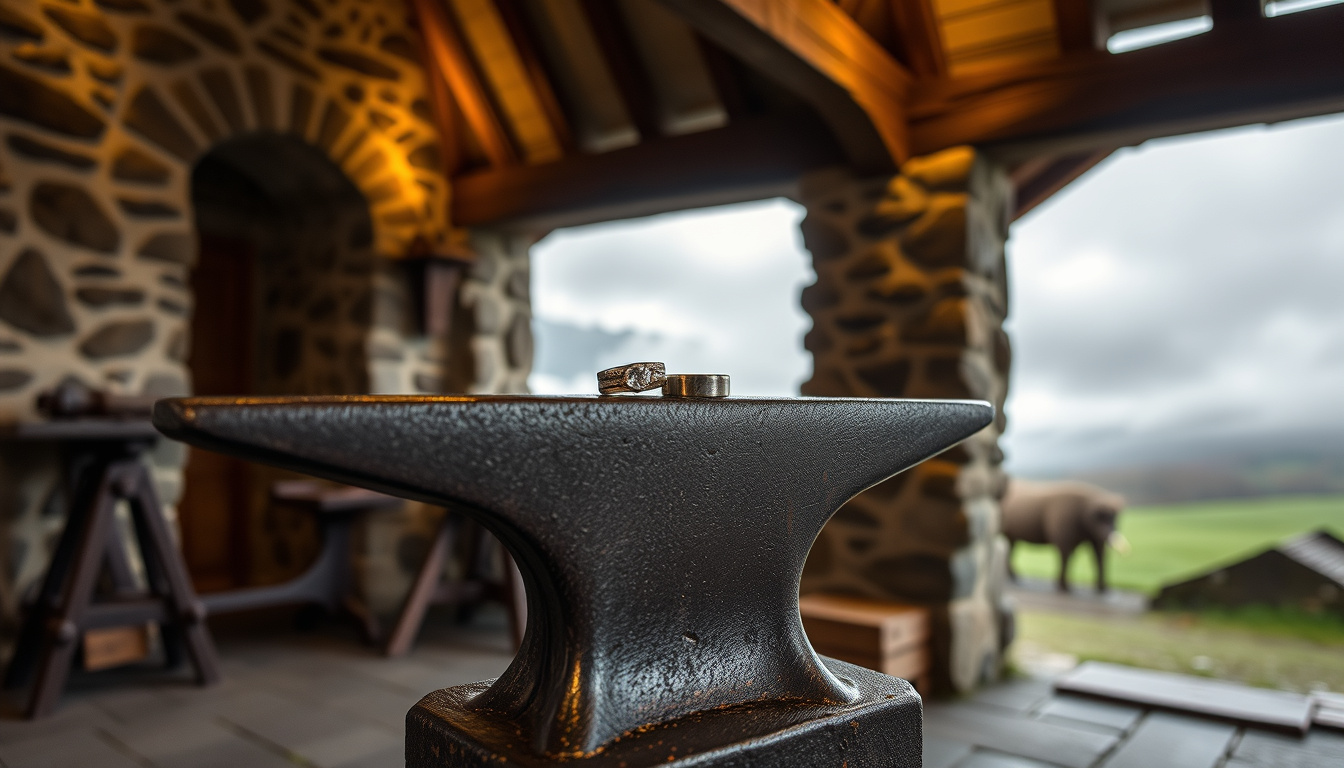
The legal contrast created the phenomenon. According to Gretna Green’s official wedding FAQ, couples from England seeking a legal way around parental vetoes raced to Scotland, making the village a sanctuary. The anvil of the blacksmith’s shop became the improvised altar, and the blacksmith himself became the officiant, giving rise to the term “anvil priests.” The visible symbol of that history still anchors the Famous Blacksmiths Shop today.
Gretna Green’s fame is not folklore — it is a legal landmark. The village rose specifically because the rest of the country closed a door that Scotland left open.
The legal contrast, not folklore, is what put Gretna Green on the map — and it remains the reason couples still make the journey.
Why did couples go to Gretna Green to get married?
What was the legal advantage of Scottish marriages?
- Parental consent was not required for those aged 16 and over.
- There was no residency requirement, allowing quick ceremonies.
- Marriage in Scotland was recognised as fully legal back in England.
This made Scotland uniquely attractive. Runaway couples were typically young adults from England, often from wealthy or titled families facing parental disapproval, or soldiers and expectant couples seeking a quick, binding legal union. They crossed the border to a legal tradition so established that by the 19th century, Gretna Green had become synonymous with elopement across Britain.
The couples who ran to Gretna Green were not usually the poor or the desperate — they were often the children of privilege, gambling on Scottish law to win a personal freedom that English law denied them.
The pattern is consistent: Gretna Green sold freedom, and England’s legal system kept supplying the customers.
Can I just turn up at Gretna Green and get married?
What documents do I need to bring?
- A valid passport or birth certificate for each partner.
- Proof of address, such as a utility bill or bank statement.
- If previously married, a decree absolute or dissolution certificate.
You cannot legally turn up and marry on the spot anymore. Gretna Green’s official wedding FAQ states the minimum arranging period is 29 clear days because registrars need time to check documentation and prepare the marriage schedule.
Are there waiting periods in Scotland?
Scotland requires 28 days’ notice, matching England’s standard requirement. However, the Gretna Green process adds one extra logistical step: you must present the M10 marriage notice forms and supporting documents to the Gretna Registry Office no sooner than three months and no later than 29 clear days before the wedding date.
Can I marry the same day?
No. The fastest legal option today involves the 29-day clearance window, meaning the romantic era of dashing across the border and marrying within hours is firmly in the past. What remains fast is the overall planning — a Gretna Green ceremony can be arranged in about a month, which feels minuscule compared to the year-long lead times of traditional weddings.
Couples now trade the spontaneous dash for a streamlined 29-day countdown — and in exchange, they get a legal wedding with history, a licensed venue, and zero residency requirements.
The anvil is still the draw, but the M10 form is now part of the ritual.
Is Gretna Green worth visiting?
What attractions are there besides weddings?
- The Famous Blacksmiths Shop with its original anvil and visitor exhibits.
- On-site shopping villages, dining, and hotels.
- Access to the surrounding Dumfries and Galloway countryside.
Gretna Green has evolved into a self-contained tourist destination. Visitor reviews on TripAdvisor regularly rate the Famous Blacksmiths Shop as a top attraction, while the neighbouring hotels and shops make it an easy overnight stop for travellers crossing the border between England and Scotland.
Is it a good day trip from the English border?
Yes. Sitting just one mile north of the border, it is famous for being the first place in Scotland that English travellers reach, and modern visitors can easily pair a wedding or anvil visit with exploring the surrounding countryside.
Gretna Green is no longer just a wedding stop-over — it has become a cultural heritage site that holds its own as a day out, even for those who are not marrying.
For anyone crossing the border, the village works as both a destination and a convenient pause — no marriage licence required.
How much do you pay to get married in a registry office?
Four price tiers, one pattern: registry offices are the budget option, Gretna Green packages are the emotional splurge, and the gap between them is filled by fees and venue prestige.
| Item | Registry Office (England) | Gretna Green (Famous Blacksmiths Shop) |
|---|---|---|
| Notice/Registration | Starting around £56 notice fee | £100 registration fee |
| Standard ceremony fee | Typically £100–£200 | £271–£467 depending on the day |
| Full package | Not applicable | From £499 |
| Premium ceremony | Limited availability | £400–£596 depending on category |
Looking at the numbers, the registry office wins on bare minimum costs. However, Gretna Green’s official wedding fees page shows that for roughly a few hundred pounds more, a couple gets a dedicated wedding coordinator, a licensed historic venue, and the emotional resonance of marrying at the anvil.
Different operators set different floors. Gretna Hall Historic Marriage House lists weddings from £675, with special offers from £595 (Gretna Hall weddings); One Stop Weddings advertises packages from £589 (One Stop Weddings); and the TieTheKnot Scot guide found a £895 floor on limited 2026 dates (TieTheKnot Scot). The Mill Forge’s Gretna weddings page lists the £100 registration fee and £140 minister fee (The Mill Forge Gretna weddings), while its cost page puts the 2026 Ceremony Only package at £495 (The Mill Forge cost breakdown).
Couples are not paying for legal words alone — they are paying for atmosphere, history, and a built-in wedding experience that a municipal registry office cannot match.
The cost gap is real, but the comparison misses the point: a registry office processes a marriage, while Gretna Green frames it.
What is the quickest way to get married in the UK?
Can you get married same-day in Scotland vs England?
No, both Scotland and England require a statutory notice period. In Scotland, the M10 form must be submitted no later than 29 clear days before the wedding date, which aligns the process with England’s 28-day notice rule. Therefore, the quickest legal route in the UK is essentially the same speed whether you choose a Scottish venue like Gretna Green or an English registry office.
What is the required notice period?
- England and Wales: 28 days before the ceremony date.
- Scotland: 28 days’ notice, but Gretna Green specifically requires 29 clear days to process registrars’ checks.
- Marriage notice forms (M10 in Scotland) must arrive no earlier than three months before the wedding.
The key difference comes down to layout. Gretna Green’s official wedding FAQ states that couples should expect the 29-clear-day timeline, while Gretna Green’s wedding packages page offers complete planning built around that legal framework.
The quickest way to marry in the UK takes roughly a month anywhere. Gretna Green’s real advantage is its beauty and heritage — not a shortcut through the legal system.
The clock works in the couple’s favour — but only if the paperwork is treated as part of the wedding plan.
Pros and cons of a Gretna Green wedding
Upsides
- Iconic anvil ceremonies with deep historical significance.
- No residency requirements — open to couples from anywhere in the world.
- Fast, manageable planning timeline of around 29 days.
- Packages start from £499, bundling venue and coordinator.
Downsides
- You cannot simply walk in — notice periods are mandatory.
- Costs surpass a basic registry office marriage.
- Peak weekends book well in advance.
- Location is remote for many UK and international couples.
That trade-off is the real decision: Gretna Green gives you history and atmosphere in exchange for a slightly higher bill and a mandatory countdown.
How to plan a Gretna Green wedding: step-by-step
- Choose your venue and package — Famous Blacksmiths Shop, Gretna Hall, or The Mill Forge.
- Submit the M10 form or equivalent notice no sooner than 3 months and no later than 29 clear days before your chosen date.
- Present the M10 form and supporting documents to the Gretna Registry Office within that window.
- Pay the £100 registration fee and the relevant ceremony fee.
- Arrive on the day and exchange vows at the anvil.
According to The Mill Forge’s 2026 tariffs, a ceremony-only wedding starts at £495 in 2026 (up from £395 in 2025), making it a competitive alternative to a standard registry office wedding once the venue experience is factored in.
Gretna Green through history: a timeline
- 1754: The English Marriage Act raises the age of consent and requires parental consent; Gretna Green becomes a refuge for runaway couples.
- 1856: Scottish law is tightened, but Gretna Green remains popular due to its border location.
- 1940s–1950s: Gretna Green becomes a tourist attraction centred around the Famous Blacksmiths Shop.
- 1977: The Marriage (Scotland) Act establishes modern civil marriage procedures.
- 2000s: Gretna Green expands with hotels, shopping, and an established wedding industry.
The timeline shows a consistent pattern: every legal tightening made the Gretna Green brand stronger, not weaker.
Confirmed facts vs what’s still unclear
Confirmed
- First runaway marriage recorded in 1754.
- Gretna Green is in Scotland, not England.
- The Famous Blacksmiths Shop is the primary historic wedding location.
- A 29-clear-day minimum notice period applies for Gretna Green weddings.
What’s unclear
- The often-quoted figure of 5,000 annual weddings is an estimate, not a verified official count.
- Detailed personal histories of the original anvil priests are not formally documented.
- The exact origins of the anvil-priest nickname are not formally documented.
The confirmed core is enough for a decision; the unclear edges mostly affect folklore, not logistics.
Voices on Gretna Green
“Gretna Green is the most romantic place in Scotland.”
Historic UK — heritage publication
“Gretna Green is a parish and former civil parish, now a wedding destination.”
Wikipedia — destination overview
The two descriptions agree on the essentials: Gretna Green is both a romantic landmark and a real place with a legal history.
Frequently asked questions
Do black couples still jump the broom?
Jumping the broom is a cultural tradition rooted in Black wedding heritage, often included in ceremonies to honour ancestors and symbolise the beginning of a married life. In Scotland, it carries no legal status, and many couples who love the symbolism choose to include it as part of a ceremony at venues like Gretna Green. A registrar or celebrant can guide you on where to place the moment within the legally structured civil ceremony.
Can you just walk into a registry office and get married?
In the UK, you cannot legally walk into a registry office and get married on the spot. You must give notice of your intention to marry at least 28 days before the ceremony, and you will need to attend an appointment to sign the legal paperwork. A registry office wedding remains one of the most affordable options, but it requires the same forward planning as a Gretna Green ceremony.
Do you have to be married under a roof?
Scotland requires civil marriage ceremonies to take place at an approved venue, which is why licensed locations like the Famous Blacksmiths Shop or Gretna Hall are essential for legal civil weddings. Religious or belief-based ceremonies have slightly different rules, but a roof remains the standard for civil formalities, ensuring the event is properly conducted regardless of weather.
Can I legally get married in my garden in the UK?
Your garden would need to be a fully licensed “approved venue” before any civil ceremony could take place there, which involves applying to the local council and meeting strict checks. Without that approval, a garden wedding is not legally binding. In Scotland, the same restrictions apply, which is why dedicated licensed venues like Gretna Green provide certainty for couples planning a legal ceremony.
What is it called when you get married but no wedding?
When you legally marry without a traditional wedding ceremony, it is usually called a civil marriage, a registry office wedding, or an elopement. Couples sign the legal paperwork, exchange vows in a minimal way, and often skip the large reception. In Gretna Green, this format is commonly packaged as an “Elopement” or “Ceremony Only” option, giving couples the legal marriage plus a memorable setting.
What is the rarest month to get married?
On average, February is the least common month for weddings in the UK because of cold weather, shorter daylight hours, and the traditional wedding season running from late spring to early autumn. Couples who choose February often secure lower venue prices and greater availability. The seasonality is cultural rather than legal, so a February anvil ceremony is perfectly possible — and often the most budget-friendly choice at venues like Gretna Green.
The FAQs above are the edge cases that matter once the 29-day countdown starts.
Related reading
- American Airlines vs British Airways: Which is Best for Your UK Trip
- American Airlines Review: Cancellations, Baggage, and Safety (2025)
For any couple considering a UK wedding, Gretna Green still delivers the quickest legal route with the most atmospheric backdrop, provided the M10 form arrives on time.
Related stories





Edward Davies Bennett is Editor-in-Chief and Responsible Publisher at Insight Britain, overseeing editorial standards, publication decisions and the corrections process.