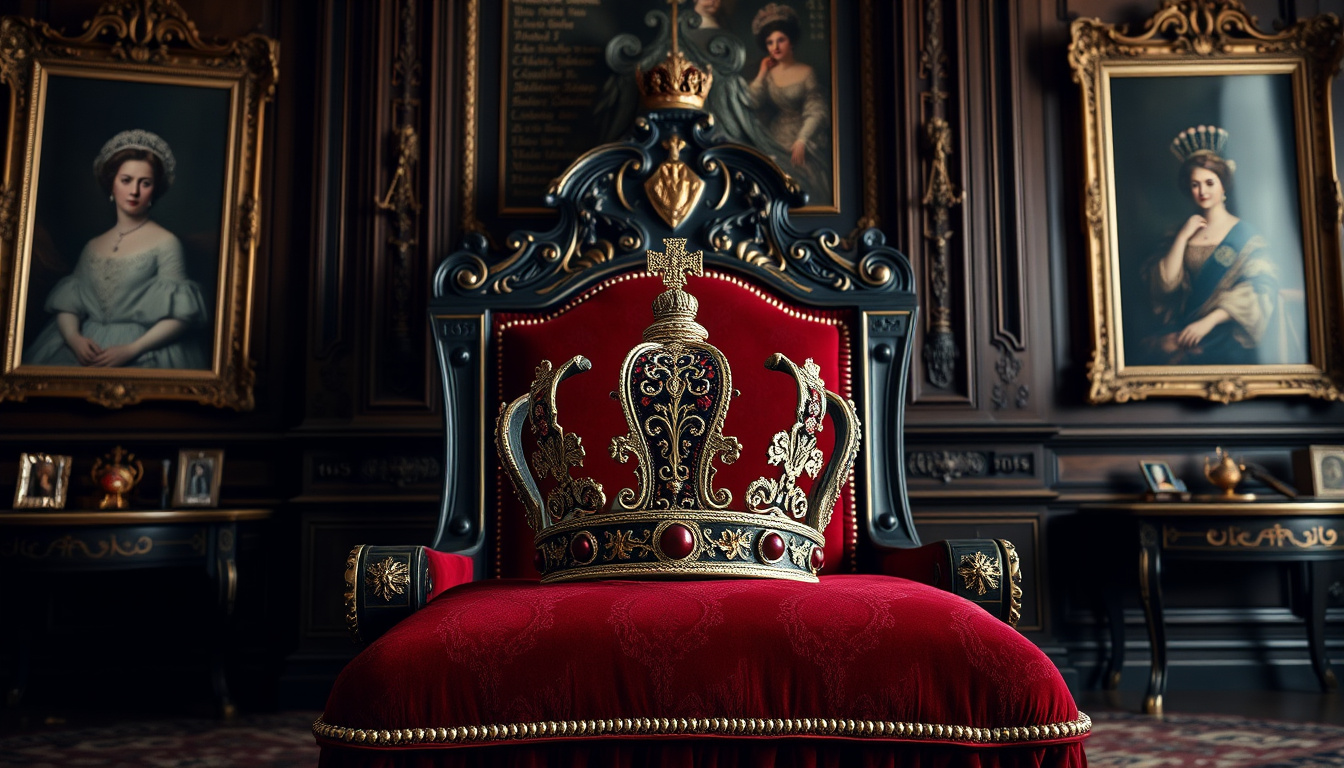
There is something quietly remarkable about a monarch whose name defines an entire era. When Alexandrina Victoria inherited the throne at 18, she could not have known her reign would span 63 years and forever change how the public sees royalty.
Born: 24 May 1819 ·
Died: 22 January 1901 ·
Reign: 20 June 1837 – 22 January 1901 ·
Spouse: Prince Albert of Saxe-Coburg and Gotha ·
Children: 9 ·
Successor: King Edward VII
Quick snapshot
- Born 24 May 1819 at Kensington Palace (English Heritage (historic site authority))
- Reigned 63 years, 7 months, 2 days (Historic Royal Palaces (official charity))
- Married Prince Albert on 10 February 1840 (English Heritage (historic site authority))
- Mother of nine children (English Heritage (historic site authority))
- Died 22 January 1901 at Osborne House (Historic Royal Palaces (official charity))
- Exact nature of her relationship with servant John Brown (Britannica (encyclopedic reference))
- Whether she had a romantic relationship with Abdul Karim (BBC News (UK news outlet))
- Specific details of her final hours beyond the official account (Wikipedia (crowdsourced encyclopedia))
- 24 May 1819 – Born (English Heritage (historic site authority))
- 20 June 1837 – Became queen (English Heritage (historic site authority))
- 10 February 1840 – Married Prince Albert (English Heritage (historic site authority))
- 14 December 1861 – Albert died (National Geographic Kids (educational resource))
- 22 January 1901 – Died (Historic Royal Palaces (official charity))
- Victoria’s descendants continued to marry into European royalty, earning her the nickname “Grandmother of Europe” (Historic Royal Palaces (official charity))
- Her great-great-granddaughter Elizabeth II became the next long‑reigning British monarch (Wikipedia (crowdsourced encyclopedia))
Seven key facts, one pattern: Victoria’s life was a blend of public duty and private tragedy that defined an era.
| Attribute | Detail |
|---|---|
| Full name | Alexandrina Victoria |
| Born | 24 May 1819, Kensington Palace |
| Died | 22 January 1901, Osborne House |
| Reign | 20 June 1837 – 22 January 1901 |
| Spouse | Prince Albert (m. 1840; died 1861) |
| Children | Nine (including Edward VII) |
| Coronation | 28 June 1838 |
What are 5 facts about Queen Victoria?
Victoria’s long reign
- Victoria reigned for 63 years and 7 months, longer than any British monarch before her (Historic Royal Palaces (official charity)).
- She became queen at age 18 and ruled until her death (English Heritage (historic site authority)).
Victoria’s marriage to Prince Albert
- She married her first cousin, Prince Albert of Saxe-Coburg and Gotha, on 10 February 1840 (English Heritage (historic site authority)).
- Albert became her closest adviser and the father of her nine children.
Victoria’s nine children
- Victoria gave birth to nine children between 1840 and 1857 — five girls and four boys (English Heritage (historic site authority)).
- All nine survived to adulthood, a remarkable feat for the 19th century.
Victoria as Empress of India
- In 1876, Victoria was proclaimed Empress of India, cementing Britain’s imperial reach (Wikipedia (crowdsourced encyclopedia)).
Victoria’s mourning after Albert’s death
- After Prince Albert died in December 1861, Victoria wore black for the remaining 40 years of her life (National Geographic Kids (educational resource)).
Victoria’s prolonged mourning was more than personal grief — it reshaped public expectations of royal duty. Her withdrawal from public life after Albert’s death paradoxically made the monarchy more relatable: a widow who put country above comfort.
The implication: Victoria’s reign set the template for modern constitutional monarchy — visible yet restrained, emotionally resonant yet politically neutral.
What was the cause of Queen Victoria’s death?
Final illness and decline
- Victoria’s health declined in early 1901. She died at Osborne House on the Isle of Wight on 22 January 1901, aged 81 (Historic Royal Palaces (official charity)).
Official cause of death
- The official cause was a cerebral hemorrhage, according to Biography.com (biographical reference).
- Some historians also note that she had been suffering from rheumatism and declining mobility in her final years (Wikipedia (crowdsourced encyclopedia)).
While the official cause is widely accepted, the exact sequence of her final hours remains a matter of debate among historians — some accounts suggest a stroke days earlier that was not fully disclosed.
What this means: Victoria’s death marked the end of an era, but the cause itself — a cerebral hemorrhage — underscores how even the most powerful monarchs were subject to the frailties of age.
Is Queen Victoria related to Queen Elizabeth?
Family tree connection
- Yes — Queen Elizabeth II was Victoria’s great-great-granddaughter (Wikipedia (crowdsourced encyclopedia)).
- Victoria’s son Edward VII (born 1841) was Elizabeth’s great-grandfather through his son George V.
Great-great-grandmother relationship
- The direct line: Victoria → Edward VII → George V → George VI → Elizabeth II (Royal.uk (official monarchy website)).
The pattern: Victoria’s bloodline runs through every modern European royal house, earning her the epithet “Grandmother of Europe” — a legacy that includes the current British monarch.
How many pregnancies did Queen Victoria have?
Nine pregnancies and nine children
- Victoria gave birth to nine children between 21 November 1840 and 14 April 1857 (English Heritage (historic site authority)).
- All nine survived to adulthood, and she raised them with strict moral instruction that reflected her own values.
- She also had 42 grandchildren, many of whom married into other European royal families (English Heritage (historic site authority)).
The trade-off: Victoria’s repeated pregnancies and her devotion to Albert’s memory after his death created a public image of domestic virtue that the British monarchy still relies on today.
Did Queen Victoria ever have a lover?
Relationship with John Brown
- After Albert’s death, Victoria became close to her Scottish servant John Brown. Rumors of a romantic or even secret marriage circulated, but no concrete evidence has emerged (Britannica (encyclopedic reference)).
- Victoria referred to Brown as her “dearest friend” and gave him a prominent role at court.
Relationship with Abdul Karim
- In her later years, Victoria employed Abdul Karim as a munshi (Indian clerk) and developed a close, reportedly emotional dependence on him (BBC News (UK news outlet)).
- Courtiers were uneasy, and after her death, most of Karim’s correspondence was destroyed.
The implication: While no definitive proof of a physical relationship exists, Victoria’s intense friendships with men outside her class challenged the strict moral code she herself promoted — a contradiction historians still debate.
Timeline: Queen Victoria’s life at a glance
- 24 May 1819 – Born at Kensington Palace (English Heritage (historic site authority))
- 20 June 1837 – Became Queen at age 18 (English Heritage (historic site authority))
- 28 June 1838 – Coronation at Westminster Abbey (National Geographic Kids (educational resource))
- 10 February 1840 – Married Prince Albert (English Heritage (historic site authority))
- 1840–1857 – Gave birth to nine children (English Heritage (historic site authority))
- 14 December 1861 – Prince Albert died (National Geographic Kids (educational resource))
- 1 January 1877 – Proclaimed Empress of India (Wikipedia (crowdsourced encyclopedia))
- 22 January 1901 – Died at Osborne House (Historic Royal Palaces (official charity))
What this means: Victoria’s life was marked by early responsibility, a devoted marriage, and a long widowhood that defined her public identity.
Clarity check: What we know and what remains uncertain
Confirmed facts
- Date of birth: 24 May 1819 (English Heritage (historic site authority))
- Date of death: 22 January 1901 (Historic Royal Palaces (official charity))
- Number of children: 9 (English Heritage (historic site authority))
- Marriage to Prince Albert: 10 February 1840 (English Heritage (historic site authority))
- Reign: 20 June 1837 – 22 January 1901 (Historic Royal Palaces (official charity))
- Cause of death: cerebral hemorrhage (Biography.com (biographical reference))
What’s unclear
- Whether her relationship with John Brown was romantic (Britannica (encyclopedic reference))
- Whether her bond with Abdul Karim was more than friendship (BBC News (UK news outlet))
- Exact circumstances of her final days (Wikipedia (crowdsourced encyclopedia))
The pattern: While many facts are settled, historians continue to debate the personal relationships that shaped Victoria’s private world.
Quotes that capture her character
“I am very young, but I have a feeling that I shall do my duty.”
— Queen Victoria, on the morning of her accession, as recorded in her journal (English Heritage (historic site authority))
“The world is gone for me.”
— Queen Victoria, after the death of Prince Albert, 1861 (National Geographic Kids (educational resource))
“She is an Empress and a mother, and she rules her empire and her family with equal tenderness and firmness.”
— Benjamin Disraeli, British Prime Minister, praising Victoria’s role as Empress of India, 1876 (Wikipedia (crowdsourced encyclopedia))
Summary: Victoria’s enduring mark
Queen Victoria transformed the British monarchy from a distant institution into a symbol of domestic stability and imperial power. Her personal tragedies — the loss of Albert, her long mourning — made her more human to her subjects. For the British public today, the choice is clear: either embrace the monarchy’s Victorian template of duty and reserve, or watch it evolve into something more modern and less predictable. The Victorian era may be over, but its queen still sets the terms of the debate.
Readers interested in a concise overview of her life can explore Queen Victorias 63-year reign on Canadian Brief.
Frequently Asked Questions
How many children did Queen Victoria have?
She had nine children — five daughters and four sons — born between 1840 and 1857 (English Heritage (historic site authority)).
Who succeeded Queen Victoria?
Her eldest son, Albert Edward, succeeded her as King Edward VII (Royal.uk (official monarchy website)).
How long did Queen Victoria reign?
She reigned for 63 years, 7 months, and 2 days — from 20 June 1837 to 22 January 1901 (Historic Royal Palaces (official charity)).
Did Queen Victoria speak German?
Yes, she spoke German fluently. Her mother was German, and she often corresponded in German with relatives (Wikipedia (crowdsourced encyclopedia)).
Where is Queen Victoria buried?
She is buried beside Prince Albert at the Royal Mausoleum in Frogmore Gardens, Windsor (English Heritage (historic site authority)).
What was Queen Victoria’s height?
She was famously short, standing about 4 feet 11 inches (150 cm) tall (National Geographic Kids (educational resource)).
Did Queen Victoria have any hobbies?
She enjoyed painting, sketching, and writing in her journal. She was also an avid collector of art and kept detailed diaries throughout her life (English Heritage (historic site authority)).
What did Queen Victoria eat?
Her court records show she enjoyed simple meals like roast mutton, boiled potatoes, and a preference for light wines. She was not a gourmet and ate modestly (Wikipedia (crowdsourced encyclopedia)).
Related reading
- Prince Andrew Business Dealings — explore how another royal family member’s affairs contrast with Victoria’s legacy of duty.
- Sheku Kanneh-Mason: Cellist, Royal Wedding & BBC Young Musician — a modern royal event connection to the monarchy Victoria shaped.
Related stories





Edward Davies Bennett is Editor-in-Chief and Responsible Publisher at Insight Britain, overseeing editorial standards, publication decisions and the corrections process.