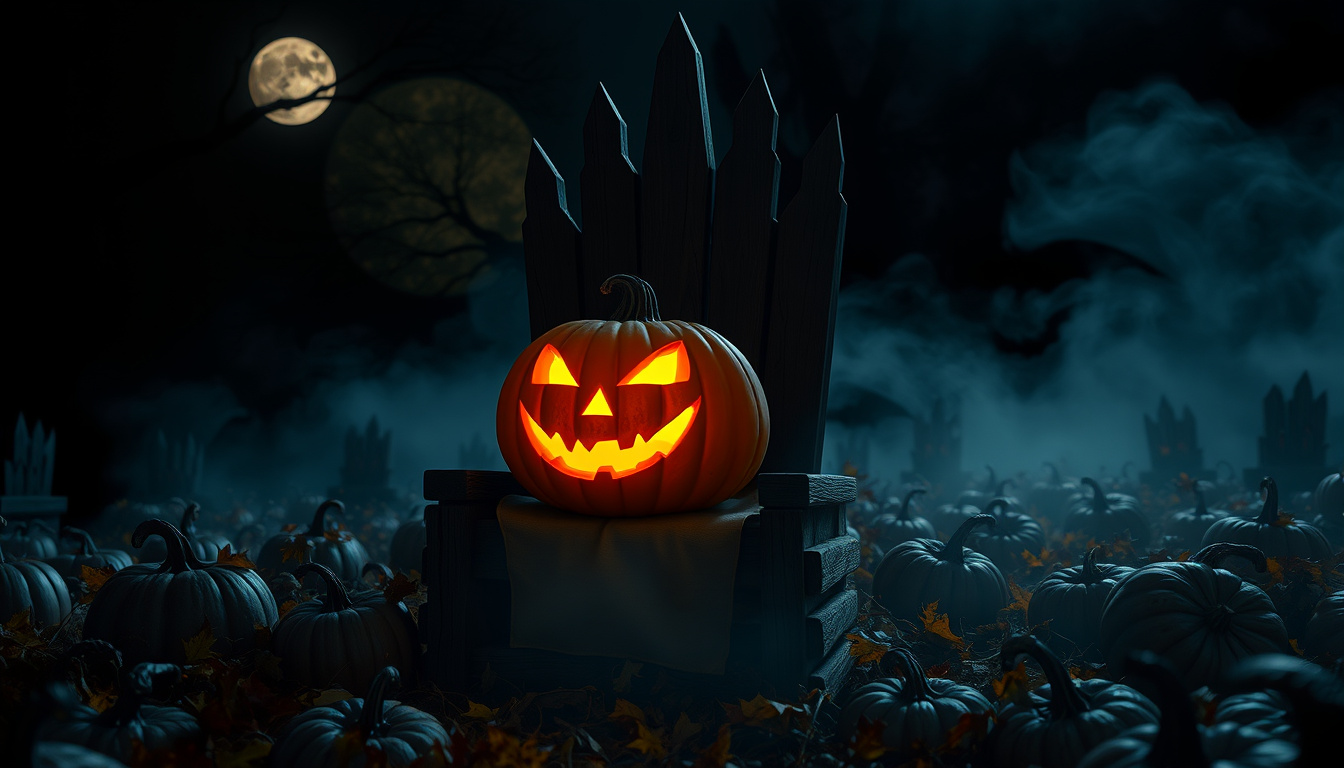
Few fictional characters own Halloween quite like Jack Skellington. The spindly Pumpkin King first reached audiences in Tim Burton’s 1993 stop-motion film The Nightmare Before Christmas (National Science and Media Museum, UK museum), and he has been pulling fans into Halloween Town ever since. This dossier separates what the film actually establishes about Jack from the fan theories that keep multiplying around him — his possible human past, his shifting morality, and the debates over what his behavior does and doesn’t mean.
Film debut: 1993 · Director: Henry Selick · Original creator: Tim Burton · Voice actor (speaking): Chris Sarandon · Voice actor (singing): Danny Elfman · Character occupation: Pumpkin King of Halloween Town
Quick snapshot
- Jack is Halloween Town’s leader, and his authority rests on charisma and public admiration (KHInsider (gaming fan site)).
- His post-Halloween restlessness is a search for purpose, not a villain origin (Go Into The Story (screenwriting blog)).
- Jack’s possible human past is a fan theory built on a canon silence (CBR (pop-culture outlet)).
- Critical re-readings frame his arc as Hamlet-style ennui and identity crisis rather than evil (Looper (film-editorial site)).
- The turning point: Jack discovers Christmas Town and decides to take over Christmas (Wikipedia (community-maintained encyclopedia)).
- Only after his plan misfires does he realize Christmas isn’t his to run (National Science and Media Museum (UK museum)).
- Video-game continuations keep him an eccentric optimist who barrels toward his goals (Kingdom Hearts Fandom (game wiki)).
- Merchandising keeps the debate alive: Jack is a hero to some, a cautionary tale to others (Looper (film-editorial site)).
Six facts anchor the official profile: the title, the species, the voice, the enemy, and the relationship that pulls Jack toward something bigger than Halloween.
| Label | Detail |
|---|---|
| Full Name | Jack Skellington (Penguin Random House (publisher)) |
| Alias | Pumpkin King (Disney Fandom (fan-maintained wiki)) |
| Species | Skeleton (supernatural) (Disney Fandom (fan-maintained wiki)) |
| Voice Actor (speaking) | Chris Sarandon (IMDb (film database)) |
| Enemy | Oogie Boogie (Wikipedia (community-maintained encyclopedia)) |
| Love Interest | Sally (Kingdom Hearts Fandom (game wiki)) |
Who was Jack Skellington as a human?
Short answer: he wasn’t one. Jack Skellington is Halloween Town’s Pumpkin King — a skeletal leader whose authority rests on charisma and public admiration (KHInsider (gaming fan site)). The film never flashes back to a living, breathing version of him. His origin is Halloween Town itself, a place where every citizen is already some kind of spook.
- Canon says: Jack is Halloween Town’s leader, respected and admired by his citizens.
- The silence says: no human life, no transformation scene, no lost family.
The absence hasn’t stopped fans from writing one for him. CBR’s widely shared origin theory proposes that Jack was once a pirate, and that his restless, novelty-hungry personality is leftover muscle memory from a life at sea (CBR (pop-culture outlet)). The theory exists for one simple reason: the film never explains why Jack is so hungry for something new. Some tie-in media and fan art soften him into a more conventionally human figure, but those are adaptations of an icon, not continuations of the film’s canon.
The implication: Jack’s mystery is structural. A character with no backstory is a blank canvas, and the fandom has happily filled that canvas with ships, theories, and origin stories.
Was Jack Skellington a good guy?
Jack’s Christmas plan is well-intentioned but misguided; the film never frames him as a monster (National Science and Media Museum (UK museum)). He wants to spread Christmas joy — he just doesn’t understand Christmas well enough to do it.
Charm is Jack’s shield. His enthusiasm, charisma, and lilting voice make the kidnapping of Santa feel like a farce, which is precisely why some viewers consider him the real villain of the story.
He is also charming, admired, and spectacularly short-sighted. He treats Sally’s warnings as background noise, ignores the genuine fear his skeletal sleigh causes, and only sees the damage once Christmas is almost ruined.
Is Jack Skellington autistic?
- Fans often point to Jack’s hyperfixation on Christmas, his social obliviousness, and his intense good-will tunnel vision.
- Disney’s own Parks material describes him as “oblivious to others’ feelings” (Disney Fandom (fan-maintained wiki)), which fans read as a neurodivergent-coded trait.
- No creator or studio has ever confirmed a diagnosis; the reading remains fan interpretation, not canon.
None of that makes the interpretation invalid. But it’s a lens, not a fact — and conflating the two is where fan communities tend to trip.
Why this matters: Jack’s moral status is a litmus test. Viewers who weigh intentions call him a hero; viewers who weigh consequences call him a disaster. The film deliberately gives you evidence for both.
Does Jack actually love Sally?
Yes — but it takes most of the film for him to register it. Sally confesses her feelings; Jack is too busy planning Christmas to notice. The relationship only snaps into focus after his plan collapses, when he finally sees her as more than a voice of caution. Sally sees the crash coming because she exists outside Jack’s charm field; she watches actions, not intentions.
The ending makes the answer physical: a kiss on the spiral hill, and the film stops there. Fans keep asking whether more comes next because the story never gives them a wedding, an anniversary, or even a second date.
Did Jack Skellington marry Sally?
- Marriage question: the film shows no wedding, and no official continuation confirms one.
Did Oogie Boogie like Sally?
- Oogie-Sally question: Oogie treats Sally as a pawn, never as a genuine romantic interest.
Jack’s love for Sally is real, but it’s rehabilitation love: he only sees her clearly after his own hubris leaves him humbled on a hill.
The trade-off: Jack gets the girl because he fails. A smarter protagonist might have listened to Sally earlier, but then there would be no Christmas rescue, no song, and no story.
Why did Jack Skellington not like Oogie Boogie?
Oogie Boogie is Jack’s shadow self. Where Jack wants to create wonder, Oogie wants to feed his own appetite; where Jack’s flaws come from over-reaching, Oogie’s come from enjoying the pain. The film makes the contrast explicit: Jack’s canonical enemy is the one Halloween Town citizen whose cruelty is entirely personal.
Why is Oogie Boogie controversial?
- His design is genuinely unsettling — a stitched burlap sack filled with bugs — and he leans into sadistic glee in a way the rest of the film avoids.
- Some parents still find him too intense for young children, which is exactly what a Halloween villain is supposed to do.
- Fan debates rarely crown him the single “evilest” Disney villain, but he consistently ranks among the darkest.
Is Oogie truly evil? Within the film’s own logic, yes. He isn’t a misunderstood figure; he’s the corruption that Halloween Town absorbs so the hero can remain sympathetic.
The pattern: Jack’s dislike of Oogie is the film’s clearest moral boundary. Jack’s chaos harms people by accident; Oogie’s chaos harms people on purpose.
Who was Jack Skellington based on?
Tim Burton wrote the character as a poem in 1982, years before the stop-motion film existed (Wikipedia (community-maintained encyclopedia)). The film turned that poem into a worldwide holiday icon, but the skeleton’s DNA was already fixed: a tall, thin, wide-eyed figure with a sharp sense of curiosity.
- The silhouette borrows from classic monster movies: skull, tuxedo, spindly limbs, and a theatrical posture.
- No real-life person sits underneath; Jack is a composite of Halloween imagery, Christmas wonder, and Burton’s own sense of being an outsider.
The trade-off: Jack works because he isn’t a copy of anyone. He’s a borrowed silhouette stitched together from Halloween and Christmas, which is why both holidays now claim him as their mascot.
What is the problem in The Nightmare Before Christmas?
The problem is boredom, not malice. Jack is so tired of Halloween’s annual scare-and-scream routine that he stumbles into Christmas Town and decides he can run the holiday better (National Science and Media Museum (UK museum)).
The plan fails in the most instructive way possible: he applies Halloween logic to a Christmas problem. Looper frames the arc as a story about the limits of expertise — Jack is exceptional at Halloween and completely out of his depth at Christmas (Looper (film-editorial site)).
If Jack had listened to Sally, there would be no film. The franchise trades a functional relationship for a more interesting character arc — and leaves viewers to decide which is the better lesson.
The resolution starts when Jack admits the failure, rescues Santa, and returns Christmas to its rightful owner. The growth is real, but it only happens after Jack loses everything his hubris built.
The pattern: every disaster in the film comes from Jack’s refusal to hear “no” — from Sally, from his instincts, and finally from Christmas itself.
Confirmed facts vs. open questions
Confirmed facts
- Jack Skellington is the Pumpkin King of Halloween Town (Wikipedia (community-maintained encyclopedia)).
- Oogie Boogie is the film’s main antagonist (Penguin Random House (publisher)).
- Jack and Sally share a romantic resolution at the film’s end.
What’s unclear
- Whether Jack was once human: the film never says.
- Whether Jack and Sally eventually marry: no canon evidence.
- Whether Jack’s traits indicate neurodivergence: unconfirmed by creators.
The distinction matters: the film gives us enough facts to know Jack, but leaves enough gaps to keep debating him. That gap is the engine of the fandom.
Quotes that define the debate
“Jack is bored with the same old scare-and-scream routine and eager to spread Christmas joy.”
National Science and Media Museum (UK museum)
“Jack’s obsession with novelty is a search for purpose, not simple villainy.”
Go Into The Story (screenwriting blog)
“Jack’s restless personality may have had a pirate origin.”
CBR (pop-culture outlet)
“Adult viewers tend to read Jack’s arc as Hamlet-like ennui, self-doubt, and identity crisis.”
Looper (film-editorial site)
These four readings — museum, craft, theory, and editorial — show how wide the Jack Skellington gap really is.
Every time Jack Skellington reappears — on screen, in game crossovers, or on a Disney Parks shelf — the same tension resurfaces: he’s a leader who fails by being fully himself. His morality is real, but it belongs to Halloween, not Christmas, and the mismatch is the point of the film. For the writers and creatives who keep extending his story, the choice is clear: preserve the enthusiasm and the blindness together, or you end up with a generic mascot instead of the Pumpkin King.
Related reading
- Cat Names: Unique, Disney, Vintage & Black Cat Names Guide
- Peter Rabbit: Books, Films, Creator & Controversy
Frequently asked questions
How did Jack Skellington become the Pumpkin King?
The film never shows an election, a crown, or a backstory. Jack simply is Halloween Town’s Pumpkin King; his authority rests on charisma and public admiration (KHInsider (gaming fan site)).
What songs does Jack sing in The Nightmare Before Christmas?
His signature song is “What’s This?”, the moment he stumbles into Christmas Town and falls in love with the holiday (IMDb (film database)).
What lessons does Jack learn by the end of the film?
He learns that enthusiasm is not competence. Jack can’t run Christmas using Halloween logic, and he only succeeds by admitting he was wrong and letting Santa finish the job.
Why do fans disagree on whether Jack is a hero or villain?
Because the film gives Jack good intentions and visible consequences. Some viewers weight his motives; others weight the chaos he causes. The story never resolves that tension on purpose.
What role does Jack play in the Disney villain hierarchy?
He isn’t a traditional Disney villain. Jack is the protagonist, so his failures read as character flaws rather than crimes; Oogie Boogie exists to carry the actual villain role.
How does Jack’s personality change throughout the film?
He moves from restless and self-absorbed to humbled and attentive. The change only becomes possible after his Christmas plan collapses and he has to ask for help.
Related stories




Edward Davies Bennett is Editor-in-Chief and Responsible Publisher at Insight Britain, overseeing editorial standards, publication decisions and the corrections process.