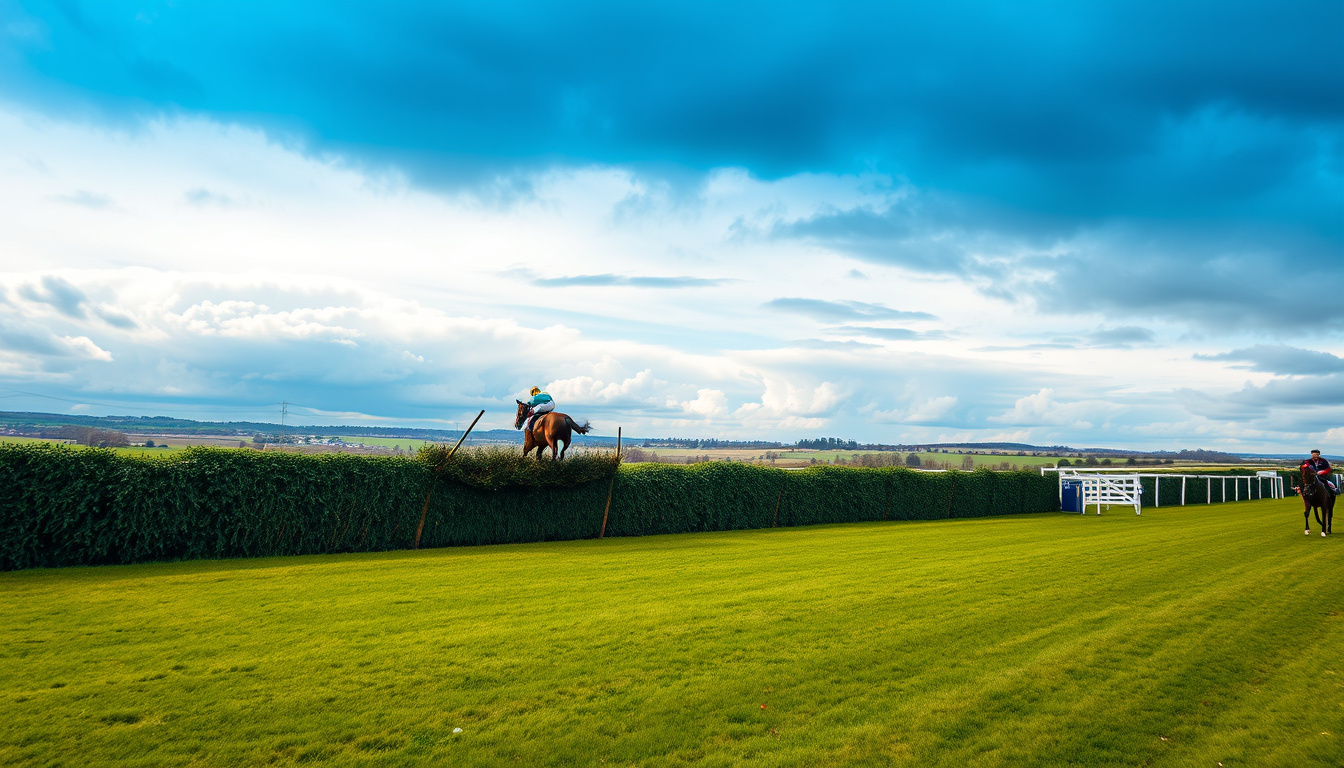
Every April there’s one Saturday when people who never follow racing suddenly have a strong opinion about a horse. The 2026 Grand National is set for Saturday 11 April at Aintree, with a £1 million prize fund on offer, according to ESPN—here’s where the money goes, which records still stand, and what to know before the off.
2026 date: Saturday 11 April 2026 · Host course: Aintree Racecourse · Distance: 4 miles 2 furlongs 74 yards · Maximum runners: 34 · Prize fund: £1 million · Oldest winner: Peter Simple, 15, in 1849
Quick snapshot
- The 2026 Grand National is scheduled for Saturday 11 April 2026 (ESPN) (William Hill News)
- The total prize fund is £1 million, with £500,000 to the winner (ESPN) (William Hill News)
- Thirty-four runners were declared for the race (William Hill News)
- Official confirmation of the exact 2026 prize fund beyond race-day reporting
- Net worth estimates for Willie Mullins and JP McManus vary widely by source
- The “richest trainer” title depends on category (flat versus jumps) and the estimates used
- The official start time for the 2026 race is not in the published racecard until nearer the meeting
- Final non-runners and betting moves between declaration and the off
- 2024: maximum field reduced to 34 (ESPN)
- April 2025: the most recent Randox Grand National was run at Aintree (ESPN)
- Saturday 11 April 2026: Grand National Day (ESPN)
- The 34 declared runners face the starter at Aintree (William Hill News)
- The winner’s connections collect £500,000 after the race (ESPN)
Seven facts, one pattern: the National is a race built on extremes—distance, field size, and records that have barely moved in over a century.
| Fact | 2026 value |
|---|---|
| Race | Grand National |
| Host course | Aintree Racecourse |
| 2026 date | Saturday 11 April 2026 (ESPN) |
| Distance | 4 miles 2 furlongs 74 yards |
| Maximum runners | 34 (William Hill News) |
| Recent prize fund | £1 million total (ESPN) |
| Oldest winner | Peter Simple, 15, in 1849 (racing record books) |
The pattern: every number here is either a limit or a record, which is exactly how the National creates its chaos—a big field, a long distance, and history that refuses to move.
What date is the Grand National 2026 at Aintree Racecourse?
The 2026 Grand National is scheduled for at Aintree, according to ESPN. That makes the National the closing act of a three-day meeting at the Liverpool course, with the big race going off after two days of Festival racing.
2026 Grand National date
- Date: Saturday 11 April 2026
- Venue: Aintree Racecourse
- Status: the final day of a three-day Festival meeting
ESPN’s race-day guide lists the race as scheduled for 11 April, and the broader meeting structure is set by The Jockey Club, which operates Aintree. The National is the last and biggest race of the week, which is why the Saturday date drives ticket prices, hotel rates, and travel plans across Merseyside.
Aintree festival schedule
- Day 1 and Day 2: Festival racing at Aintree builds toward the National
- Day 3: Grand National Day, Saturday 11 April 2026
- The National is the highest-profile race of the meeting
The three-day structure matters for anyone planning to attend. If you arrive only for Saturday, you miss the lower-key racing that shapes the ground and the form lines. Regulars treat the opening days as the smarter value: easier access, lighter crowds, and the same course.
Ticket and attendance planning
The only way to be sure about tickets, dress code, and gate access is to check the official Aintree pages before you travel.
Tickets are sold through The Jockey Club. The safest plan is to buy before race day rather than risk the gate, because the meeting’s biggest session regularly sells out in advance. Lock in the Saturday date first; everything else—dress, travel, hospitality—flows from that single decision.
The pattern: one fixed Saturday drives the whole meeting’s ticket, hotel, and travel cycle.
What is the dress code for the Grand National?
There is no single dress code for the Grand National. The requirements vary by enclosure, and The Jockey Club sets and updates the official policy before each meeting. The practical rule: check the guidance for your specific ticket before you pack.
Dress code by enclosure
- Dress code is not uniform across the racecourse
- The Jockey Club publishes the official policy for each enclosure
- The requirements apply per enclosure, not to the whole course
Traditional raceday style still appears in the more formal enclosures, but the National is not Royal Ascot. The official enclosure guidance is the only standard that counts, and it changes between areas of the course. A suit that fits the County Enclosure can be overdressed for a grandstand ticket.
Ladies’ and men’s traditional attire
Aintree’s own guidance, not hearsay, decides what you can wear through the gate. When in doubt, match the enclosure to the outfit.
Dresses, hats, and lounge suits remain part of the Grand National’s visual identity, especially in hospitality and the more formal enclosures. Elsewhere, smart casual is common. The reliable approach: open the official event guide, select your enclosure, and read the dress-code note before you travel.
Dress code changes for evening racing
- Evening sessions can carry separate dress guidance from daytime racing
- The Jockey Club’s published policy is the reference point
- A quick check of the enclosure’s rules avoids gate-day surprises
If you are staying for post-race events, the outfit that worked in the afternoon may not match the evening’s expectations. Evening racing follows its own published rules, so check them before booking hospitality or making dinner plans.
The catch: the dress code is a logistics problem, not a fashion test. One look at the official enclosure guidance before you leave saves the whole day.
The pattern: the gate is the only place the dress code is enforced, so the official enclosure page is the last word.
What is the prize money for the Grand National?
The 2026 Grand National carries a £1 million total prize fund, and the money drops fast after the winner. ESPN’s race-day guide puts the winner’s cheque at £500,000, with £200,000 for second place. Jockeys receive a percentage of prize money under British Horseracing Authority rules, which is why the win cheque matters beyond the owner’s bank balance.
Total prize fund
Total fund: £1 million · Winner: £500,000 · Second: £200,000
The £1 million fund is spread across the first ten finishers, and ten payouts follow one pattern: the money drops steeply after the top two, so the win cheque is where the real prize sits.
| Position | Prize |
|---|---|
| 1st | £500,000 |
| 2nd | £200,000 |
| 3rd | £100,000 |
| 4th | £65,000 |
| 5th | £40,000 |
| 6th | £30,000 |
| 7th | £20,000 |
| 8th | £15,000 |
| 9th | £10,000 |
| 10th | £5,000 |
Winner’s share
The winner’s £500,000 is half the entire fund. For owners, one National win can cover a horse’s costs for years; for jockeys, the percentage share turns a single race into a season-defining pay day.
The £500,000 winner’s share is paid to the horse’s connections, who then distribute the jockey’s percentage under BHA rules. Because the total fund is confirmed at £1 million, the gap between first and second—£300,000—is larger than the entire prize for third place.
Jockeys’ prize-money percentage
- Jockeys are paid a percentage of prize money, set under BHA rules
- The winner’s jockey receives a share of the £500,000 first prize
- The percentage applies across the places, so a 10th-place finish still earns a share of £5,000
British racing’s prize-money rules mean the rider’s cut applies from the winner down to 10th place. That is why jockeys ride hard for every placing, not just the win—each extra position in the payout ladder adds real money to their season.
What this means: prize money at the Grand National is a steep pyramid. The £1 million fund makes the headlines, but the financial event of the afternoon is the first-place cheque and the jockey’s percentage that comes with it.
What’s the oldest horse to win the Grand National?
Peter Simple holds the record as the oldest horse to win the Grand National. He was 15 when he took the race in 1849, and the record has stood ever since. Modern renewals are won by younger horses, which is why the mark keeps coming up whenever the race’s history is told.
Oldest horse record
- Oldest winner: Peter Simple, aged 15
- Year: 1849
- Record status: still the oldest winning age in the race’s history
The 1849 running is a long way from the modern race, but the record has survived every change to the course, the weights, and the qualifying system. No contemporary horse has come close to threatening it.
How old is too old?
Age buys experience but costs speed, which is why no horse has come close to Peter Simple’s mark in the 177 years since.
The Grand National’s handicap conditions give weight to better horses, and older runners need to be well treated to stay competitive. Horses aged 12 or older still line up, but the modern race favours legs that can handle a 4-mile-2-furlong test over 30 fences.
Other notable veteran winners
- Red Rum won the race three times, the most by any horse
- Most modern winners are in single-digit ages, keeping the record in place
- Peter Simple’s 1849 win remains the standard reference in racing record books
The racing record books treat Peter Simple as the benchmark for veteran success, and Red Rum’s three wins are the benchmark for consistency. If you hear a “veteran” story at this year’s National, it will be a good horse enjoying a good day—not a serious attack on a record that has survived 177 years.
Who is the richest horse trainer?
No official ranking crowns a “richest trainer.” Published estimates vary by method and category, which is why the same question gets different answers depending on the source. The useful way to think about it is to separate prize-money success from personal wealth.
Willie Mullins: how rich is he?
- Willie Mullins is one of the world’s most successful jump trainers
- His net worth is not published as an official figure; estimates vary
- Success in major races feeds both prize money and training fees
Mullins’s wealth is a function of the winners he trains, and the estimates in business and racing media reflect that. No verified personal balance sheet exists, so any precise number you see is an estimate, not a disclosure. What is measurable is the record: few jump trainers in recent decades match his major-race haul.
JP McManus: net worth in context
- JP McManus is one of racing’s leading owners
- His net worth is estimated, not disclosed; figures vary by source
- Owning top horses involves entry fees, training fees, and prize-money reinvestment
Business magazines publish estimates of McManus’s wealth, but the numbers differ depending on the valuation method. The firm statement available is that he is a major owner whose runners regularly appear at the top of Grand National markets. For the National, that matters more than any net-worth ranking—owners fund the sport.
How much does it cost to have a horse with Willie Mullins?
Training fees vary widely by yard, level of horse, and whether an owner buys a share or a full horse. A precise monthly figure would be an estimate, not a price list.
Ownership and training fees vary widely depending on the yard and the level of the horse, and most top yards do not publish a standard rate card. Owners pay a monthly training fee plus shared expenses, with big-race targets adding entry and travel costs. The honest answer: if a fixed “Mullins price” existed, it would be public.
Richest horse trainer ranking
- No official ranking exists for trainer wealth
- Prize-money tables, personal fortunes, and flat-versus-jumps categories give different answers
- Media lists are estimates, not audited accounts
That makes “richest trainer” a question with a moving answer. Measure prize money and the jumps division has its own leaders; measure personal wealth and the flat-racing names rise. The only fixed points are factual ones: Mullins is among the most successful jump trainers in the world, and McManus is among the sport’s biggest owners.
The trade-off: wealth rankings in racing are guessing games with good PR. What is measurable is performance, and Mullins’s record across jumps racing is the factual anchor.
The implication: “richest” is a media label; the verifiable record is in prize-money tables and race results.
Which horses are running in the Grand National 2026?
Thirty-four runners were declared for the 2026 Grand National, according to William Hill News. That means the field sits at the maximum allowed under the rule change that capped the race at 34 in 2024.
Provisional 2026 runners
- 34 runners declared for the 2026 race
- The field matches the maximum permitted under the 2024 reduction
- Late withdrawals can still shrink the field before the off
A full field of 34 is what punters want to see, because it creates betting value and testing ground conditions. The declared list is the fixed point; from there, the race builds toward the starter.
Grand National 2026 odds
- I Am Maximus: 7/1
- Panic Attack: 7/1
- Jagwar: 15/2
ESPN’s race-day odds table lists I Am Maximus and Panic Attack at 7/1, with Jagwar at 15/2. Those prices are a snapshot, not a promise—odds move constantly as money comes in, and the best price you take is the one you can get.
Grand National 2026 predictions
Predictions are editorial opinion, not data. The only verified numbers on the board are the declared field and the bookmakers’ odds; everything else is someone’s angle.
For 2026, the sensible read is that the race remains open. The market leaders are clear, but a 34-runner handicap over 30 fences is the kind of race where the favourite can be gone by halfway. That uncertainty is why massive accumulator bets rarely survive a full card, never mind a 30-fence National.
What were the Grand National horses in 2025?
- April 2025: the most recent Randox Grand National was run at Aintree
- The 2025 running used the 34-runner cap introduced in 2024
- Full historical fields are archived in racing records
For anyone building a 2026 picture, the 2025 running offers the most recent form book, but a new National brings new handicaps and a new field. The 2024 rule change that reduced the field size is the structural fact that still shapes both the 2025 and 2026 renewals.
The pattern: with 34 declared and the market led by two 7/1 shots, the 2026 National looks like a genuine handicap—which is exactly what makes it worth watching.
Grand National race specs: 2026 edition
Eleven specifications, one pattern: the National is a handicap steeplechase built on maximums—a 4-mile-plus trip, a 34-runner cap, and a prize fund that starts at seven figures.
| Spec | 2026 detail |
|---|---|
| Race name | Randox Grand National |
| Venue | Aintree Racecourse |
| 2026 date | Saturday 11 April 2026 (ESPN) |
| Distance | 4 miles 2 furlongs 74 yards |
| Jumps | 30 fences |
| Maximum field | 34 (William Hill News) |
| Format | Handicap steeplechase |
| Prize fund | £1 million (ESPN) |
| Winner’s prize | £500,000 (ESPN) |
| Oldest winner | Peter Simple, 15, in 1849 (racing record books) |
| Most wins | Red Rum, 3 (racing record books) |
The takeaway: every spec on this list is either a limit the race has chosen or a record it hasn’t broken. That combination is the identity of the Grand National.
Grand National 2026: how the week unfolds
Four markers, one pattern: the National accelerates from rule change to declared field to race day in a tight, well-known sequence.
| When | What happens |
|---|---|
| 2024 | Maximum field reduced to 34 (ESPN) |
| April 2025 | The most recent Randox Grand National was run at Aintree (ESPN) |
| Declaration stage | 34 runners confirmed for the 2026 race (William Hill News) |
| Saturday 11 April 2026 | Grand National Day (ESPN) |
Why this matters: the timeline shows how quickly the picture sharpens. A year before the race, the key rule change is the field cap; by declaration day, the story is the runners themselves; by Saturday evening, the story is a name.
Grand National 2026: what’s confirmed, what’s not
Before you buy a ticket or place a bet, it helps to separate the verified facts from the moving pieces. The confirmed list is short and solid; the unclear list is where money gets lost.
Confirmed facts
- The 2026 Grand National is at Aintree on Saturday 11 April (ESPN)
- The prize fund is £1 million, with £500,000 to the winner (ESPN)
- 34 runners were declared (William Hill News)
- Peter Simple holds the oldest-winner record at 15 (1849) (racing record books)
- Dress codes are enclosure-specific (The Jockey Club)
What’s unclear
- The exact 2026 prize fund until officially confirmed beyond race-day reporting
- Net worth figures for Willie Mullins and JP McManus vary by estimate
- Which trainer is “richest” depends on category and source
- Final non-runners and betting moves between declaration and the off
- Whether the odds firm or drift as the race approaches
The pattern: the facts you can verify are the ones attached to the race itself—date, field, prize money. The moment the conversation moves to wealth rankings or predictions, the ground gets softer.
Grand National 2026: official voices
The most useful statements about the 2026 race come from the institutions that run it, report it, and price it. Their positions line up on the essentials.
The 2026 Grand National is scheduled to run at Aintree on Saturday, April 11, with a total prize fund of £1 million and £500,000 going to the winner.
ESPN (sports broadcaster)
Thirty-four runners were declared for the 2026 Grand National, filling the race to the maximum field size.
William Hill News (bookmaker’s racing desk)
Dress codes are enclosure-specific, and visitors should check the requirements for their chosen enclosure before attending.
The Jockey Club (Aintree’s racecourse authority)
Jockeys are paid a percentage of prize money under British Horseracing Authority rules, so the rider’s share of the £500,000 first prize is set by regulation, not negotiation.
British Horseracing Authority (racing’s governing body)
The consistent thread: official sources confirm the frame—date, field size, prize money, rules—while the story within the race belongs to the runners.
The takeaway
The 2026 National has its date, its £1 million fund, and its declared field of 34. The only thing left to settle is the race itself. The money angle is simple: the owner’s cheque is £500,000, the jockey’s percentage follows under BHA rules, and the rest of the fund spreads thinly down to £5,000 for 10th place. For racegoers, the move is clear: check the enclosure dress code and buy through The Jockey Club before 11 April, or risk a gate that has no ticket left. For punters, the equivalent is to back a runner you have actually seen jump, or let the market move without you.
Related reading
- Why massive accumulators will not give you a long-run benefit
- James Wade wins 2026 Australian Darts Masters in Wollongong
Those two stories bookend the betting and sporting context around this year’s National.
racingpost.com, sportingnews.com, ladbrokes.com, otsnews.co.uk, bbc.com, news.williamhill.com
Frequently asked questions
What time does the Grand National 2026 start?
The official start time is confirmed in the published racecard before race day. Grand National Day at Aintree begins with a full card of races in the early afternoon, and the National itself is typically one of the final races on the card, so a late-afternoon start is the safe expectation.
How many fences are in the Grand National?
The Grand National is run over 30 jumps. Aintree’s National Course has 16 fences; 14 of them are jumped twice over two laps, while The Chair and the water jump are each taken once.
How are Grand National weights decided?
The official handicapper gives every runner a weight based on its British Horseracing Authority rating and recent form. Higher-rated horses carry more weight, which is how the race levels a mixed field of chase horses.
What does a handicap race mean in the Grand National?
A handicap is a race in which every horse carries a weight designed to give each runner a similar chance. The best horses carry the most weight and less-exposed horses carry less, which is why outsiders can win the National.
Can I get Grand National tickets at Aintree on the day?
Availability on the day is never guaranteed. Tickets are sold through The Jockey Club, and the three-day meeting typically sells strongly in advance, so buying before race day is the recommended route.
What is the fastest time ever recorded in the Grand National?
The fastest winning time is 8 minutes 47.8 seconds, set by Mr Frisk in 1990. It remains the benchmark for any runner that threatens the course record.
Related stories





Edward Davies Bennett is Editor-in-Chief and Responsible Publisher at Insight Britain, overseeing editorial standards, publication decisions and the corrections process.