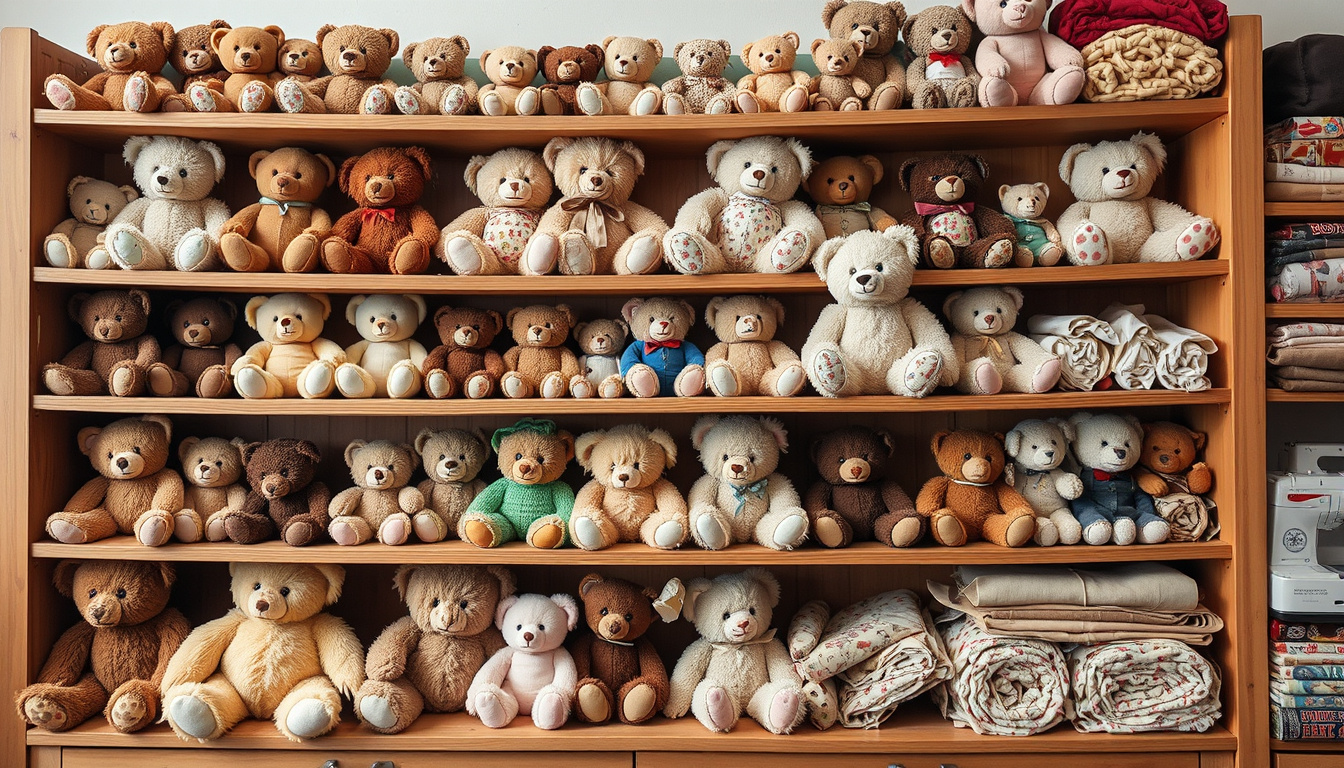
Ask a parent, a collector, and a wildlife enthusiast about teddy bears and you’ll get three different answers: a first comfort toy, a jointed mohair heirloom, and the namesake of President Theodore Roosevelt’s 1902 hunting trip. Sorting the history from the marketing, the plush sizes from the real bear species, and the collectible brands from the cuddly everyday bears is easier once you know where the name came from.
Year of Invention: 1902 · Named After: President Theodore Roosevelt · Real Bear Species: 8 · Height of a 1m Bear: 39 inches (approx. 3.3 ft)
Quick snapshot
- The teddy bear’s name traces to Roosevelt’s refusal to shoot a restrained black bear in November 1902 (Theodore Roosevelt Center, presidential research institute)
- Morris and Rose Michtom made a stuffed “Teddy’s bear” and displayed it in their Brooklyn shop (Smithsonian Magazine, history desk)
- Margarete Steiff’s German company was developing a plush bear independently in the same period (Smithsonian Magazine, history feature)
- Which creator was strictly first to market is not settled (Smithsonian National Museum of American History, museum object record)
- The exact wording of Roosevelt’s reply to Michtom was never documented (Smithsonian National Museum of American History, museum object record)
- Berryman’s cartoon ran in the Washington Post on November 16, 1902 (National Park Service, official history)
- Factory production followed in 1903 as demand outgrew handmade output (Smithsonian Magazine, history feature) (National Park Service, official history)
- By 1906, a Manhattan store reportedly sold more than 60,000 teddy bears in one year (Smithsonian Magazine, history feature) (National Park Service, official history)
- Personalization is the growth edge: embroidery, custom outfits, and made-to-order designs
- For parents, machine-washable safety-tested bears remain the default; for collectors, documented provenance beats softness
- Clearer size terminology — “1m bear” replacing vague “large plush” — is becoming the norm online
The pattern in the toy’s first decade: a single 1902 news moment turned into a global industry within five years. These are the numbers that anchor that story.
| Fact | Details |
|---|---|
| First teddy bear year | 1902 |
| Famous bear creator | Margarete Steiff |
| Inspired by | President Theodore “Teddy” Roosevelt |
| Number of real bear species | 8 |
| Hunt location | Near Smedes, Mississippi |
| Cartoon published | November 16, 1902, Washington Post |
| Bear’s reported weight | About 235 pounds |
| Factory production began | 1903 (Michtoms) |
| Steiff bears sold in New York | 3,000 in 1903 |
| Manhattan store sales in 1906 | More than 60,000 |
| Name shifted to “teddy bear” | Around 1906 |
| Early Michtom bear donated to Smithsonian | 1963/1964 |
What was the first ever teddy bear?
The short answer: the first teddy bear was a plush toy named after a real hunting incident, and two companies — one American, one German — reached the same product almost simultaneously. The Michtoms in Brooklyn created “Teddy’s bear” after Clifford Berryman’s cartoon; Steiff in Germany was developing a bear of its own at nearly the same moment.
The Morris Michtom story (NYC)
- Morris and Rose Michtom made a stuffed bear inspired by Berryman’s cartoon and put it in the window of their Brooklyn shop (Smithsonian Magazine, history desk)
- They called it “Teddy’s bear,” a direct reference to Roosevelt’s nickname
- Demand outgrew hand-sewing, and the Michtoms moved to factory production in 1903
- The Ideal Toy Company grew directly out of that business
The bear’s leap from window display to factory production is the real story. A single cartoon made the shape famous; the Michtoms made it manufacturable.
Morris Michtom reportedly asked Roosevelt for permission to use the president’s nickname on a toy; the historical record preserves the request better than the reply.
The Steiff story (Germany)
- Margarete Steiff’s soft-toy company in Germany developed a plush bear independently around the same period as the Michtoms’ toy
- Richard Steiff, Margarete’s nephew, designed the bear with movable limbs, giving it a more lifelike, collectible feel
- Steiff sold 3,000 bears to a New York department store in 1903 (Smithsonian Magazine, history feature)
- Steiff later adopted the “teddy bear” name once the American term became commercially established
Steiff’s contribution was engineering, not naming. The movable limbs made the bear feel like a small creature rather than a stuffed sack, and that difference opened the collector market that still exists today.
The pattern: Steiff supplied the craft, the Michtoms supplied the name, and Roosevelt supplied the story.
The Roosevelt connection
- The hunting trip stopped near Smedes, Mississippi, and included Mississippi Governor Andrew H. Longino (Theodore Roosevelt Center, presidential research institute)
- The bear Roosevelt refused to shoot had been tied to a tree and weighed about 235 pounds (Smithsonian National Museum of American History, museum object record)
- Clifford Berryman’s cartoon of the refusal ran in the Washington Post on November 16, 1902 (National Park Service, official history)
Roosevelt considered the shot unsportsmanlike and refused to claim the bear as his kill. Berryman softened the scene into a cartoon that made the president look protective rather than indecisive — and that cartoon is the direct ancestor of every teddy bear on a shelf today.
The image that sold the world on “Teddy’s bear” was a cute, helpless cub. The real animal was a 235-pound adult that had been subdued before the president arrived. The nursery-friendly version won.
What this means: the first teddy bear was not a single inventor’s flash of genius. It was a chain reaction — a president’s refusal, an artist’s cartoon, and two toy makers who recognized a cultural moment at the same time.
The takeaway: the “first bear” debate is a matter of definition, not a dispute about the cartoon that started it.
What kinds of teddy bears are there?
Teddy bears split into three useful buckets: vintage, modern, and collectible — with a material layer underneath that determines price, care, and safety.
Vintage vs. modern vs. collectible
- Vintage bears: pre-1950s, typically mohair, often jointed, and increasingly fragile
- Modern bears: soft, machine-washable, and designed for children’s hands
- Collectible bears: limited editions from heritage makers, built from mohair or alpaca with numbered tags and certificates
The difference isn’t age alone. A modern bear can be collectible if it’s a limited run; a vintage bear can be just old. The buyer’s job is to decide whether the bear will live in a nursery or on a display shelf.
The implication: “collectible” is a design category, not a compliment.
Branded bears: Steiff, Merrythought, Gund, Jellycat
- Steiff: German pioneer, known for the button in the ear and jointed, durable construction
- Merrythought: British heritage maker with a loyal collector following
- Gund: long-running American brand, a nursery staple for soft, traditional plush
- Jellycat: modern British label, famous for whimsical, ultra-soft designs parents buy for babies
These four names mark the range of the market: Steiff and Merrythought anchor the collector aisle; Gund and Jellycat anchor the nursery. Prices between those aisles differ enormously.
The trade-off: a Steiff bear is an heirloom and a display piece; a Jellycat is a cuddly companion that will be dragged through airports.
Material distinctions: mohair, synthetic, vegan
- Mohair: woven from Angora goat hair, the traditional fabric of vintage and collector bears
- Synthetic plush: polyester-based, soft, affordable, and usually machine-washable
- Vegan materials: plant-based or recycled fabrics that newer brands and custom makers now offer
Material explains most of the price gap. A synthetic bear can survive a washing machine; a mohair bear needs specialist cleaning and careful storage. Neither is better — they serve different centuries.
What is the most popular teddy bear?
Popularity depends on who is choosing. Parents buy for safety and washability; collectors buy for craft and provenance; children buy with their hearts — and then drag the bear by one ear.
Top sellers in the current market
- Gund’s classic plush bears are a baby-registry staple across the U.S. and UK
- Jellycat’s “bashful” style bears lead the soft-luxury nursery segment
- Mass-market bears from major retailers sell in the millions each year, usually in the 25-40cm range
The best-selling teddy bears are rarely the famous ones. They are dependable, washable, and priced for repeat purchases — which is why the same bear keeps appearing at baby showers.
The pattern: sales volume belongs to the machine-washable middle, not the museum shelf.
Culturally significant bears: Paddington, Winnie the Pooh, Teddy Ruxpin
- Paddington: the polite, marmalade-loving bear from British children’s literature
- Winnie the Pooh: A. A. Milne’s honey-loving bear, one of the most recognized plush characters worldwide
- Teddy Ruxpin: the 1980s talking bear that made electronics a plush-toy feature
These bears are popular in a different sense: they anchor stories rather than shopping carts. A child doesn’t need to know Teddy Ruxpin’s mechanism; the bear already has a personality before it leaves the box.
What this means: character bears sell because of storytelling; toy-store bears sell because of softness and price.
Best teddy bears for adults vs. babies
- For babies: 25-40cm, machine-washable, embroidered eyes, no removable small parts
- For children: durable synthetic plush, a size the child can carry (about 30-50cm)
- For adults and collectors: jointed bears in mohair or quality synthetic, with a documented maker and material
A baby doesn’t read certificates; a collector won’t accept a bear with a rattle. The most popular bear for one group is the wrong bear for the other.
Before buying, ask where the bear will live: a crib, a bed, or a display shelf. The correct bear changes with the address.
How big is a 1m teddy bear?
A 1-meter teddy bear is roughly 39 inches tall — about the size of a toddler, reaching an adult’s mid-thigh. It is the most common “wow” size for birthday gifts and the biggest size that still fits a standard nursery corner.
Visual size comparison: 1m vs. typical 30cm
- 30cm bear: about 12 inches, crib-friendly, easy for a baby to hug
- 50cm bear: about 20 inches, the everyday “bed bear” size for toddlers
- 1m bear: about 39 inches, a floor-level playmate that reads as a small child
The jump from 30cm to 1m is more than three times the height — a fit-and-sizing decision in the same way that choosing basketball shoes by fit and sizing is, except here the fit belongs to the room, not the foot.
On the floor, a 1m bear becomes a seat, a photo prop, and a constant presence. In a crib, it’s too big. If the bear is meant to sleep with a newborn, stay at 30-40cm.
Jumbo teddy bears
- Jumbo bears are usually 1.5m to 2m (about 59 to 79 inches)
- They are built for floor lounging, events, and photos — not cribs
- They arrive in compressed vacuum packs in giant boxes and need time to loft back into shape
A 1.5m bear claims roughly the floor space of a small armchair. That’s charming in a warehouse store and a significant storage problem in a city apartment.
Why this matters: jumbo is a destination purchase, not an impulse. Measure the room before you measure the bear.
Weight and material impact on size
- Two 1m bears can differ by several kilograms depending on the filling
- Dense fiberfill holds the bear upright; soft synthetic fill makes it floppier and easier to carry
- Traditional fills like wood wool and kapok are lighter but need specialist care
Height tells you only part of the story. A 1m bear with dense stuffing feels like a weighted blanket; the same height with soft filling feels like a pillow. Weight changes handling, cleaning, and the price of shipping more than the height number does.
Before you buy, check how the bear should be cleaned — modern synthetic bears are usually machine-washable, while mohair and vintage pieces need specialist care. Size is only half the spec; the other half is weight, shape, and cleaning.
The practical measure: a bear’s height only matters once you know whether it will live in a crib, on a bed, or on a floor that has space for it.
Where can I find custom teddy bear makers?
Custom teddy bears turn a mass-produced plush into a one-of-a-kind object: a replica of a childhood bear, a wedding keepsake, or a tribute with a name stitched into the paw.
Finding makers on Etsy and social media
- Etsy is the largest hub for made-to-order bear artists, with thousands of shops
- Instagram and TikTok let buyers watch makers stitch, joint, and dress bears before ordering
- Search by material (mohair, alpaca, synthetic) and by structure (jointed, weighted, embroidered)
Commissioning a bear is closer to hiring a portrait artist than to buying a toy. The maker’s feed shows the quality of their stitching; the reviews show how they handle revisions.
The pattern: the best custom makers behave like small studios — limited batches, clear wait times, and progress photos.
Working with a bear artist
- Expect a consultation covering fur color, eye style, jointing, and clothing
- Many artists work one commission at a time and publish waitlists
- Ask for a care sheet and a photo update before shipping
Good bear artists are bakers, not factories. A handmade bear can take weeks, and the price reflects materials plus the artist’s time.
Why this matters: if you need a bear by a specific date, book the slot before you discuss the design.
Personalization options: embroidery, clothing, and more
- Embroidered names, dates, and initials are the most common requests
- Custom outfits can match a wedding suit, team jersey, or family tradition
- Some makers add weighted paws, sound boxes, or replica designs of a favorite pet
Personalization is where the teddy bear’s emotional value lives. A plain bear is a product; a bear with a name and a date is a document.
What are the 8 types of bears?
This question brings wildlife searchers to a toy page, and toy shoppers to a wildlife page. The phrase is ambiguous: “bears” means both the plush shelf and the taxonomic family. Here is the biological half.
Why this query mixes with teddy bear searches
- “Types of bears” is an ambiguous phrase — plush or biological?
- The teddy bear is named after a real bear, so the two topics are tangled from the start
- The real bear in the 1902 story was a black bear
Search engines can’t tell whether the user wants a crib toy or a field guide, so a guide that covers both is the useful answer. The teddy bear is the bridge between them.
The implication: the confusion is not a search bug — it’s the toy’s actual history.
The 8 species of real bears
- Brown bear (including grizzlies)
- American black bear
- Polar bear
- Asiatic black bear
- Andean (spectacled) bear
- Sun bear
- Sloth bear
- Giant panda
Eight species, spread across North America, South America, Europe, Asia, and the Arctic. The American black bear is the species Roosevelt refused to shoot; the brown bear is the loose model for most classic plush designs; the giant panda is the most recognizable bear that doesn’t look like a teddy bear at all.
The pattern: the teddy bear’s family tree is taxonomic, not commercial.
Comparing real bears to their toy counterparts
- The 1902 teddy bear was inspired by a black bear, but the cartoon shrank it into a cub
- Most plush bears are stylized brown bears with shortened muzzles
- No major maker follows the 8-species taxonomy — toys stay soft by design
The distance between a 235-pound real bear and a 30cm plush bear is the whole history of the teddy bear in one image: a real animal, a political cartoon, and a toy that made the animal safe to hug.
The teddy bear celebrates the most dangerous bear encounter in American presidential lore by turning it into a defenseless toy. The toy only works if we all agree to forget what a 235-pound bear can do.
Why this matters: when someone asks about “types of bears,” the honest answer is both — eight biological species, and a much longer shelf of plush interpretations.
Vintage, modern, or collectible: which fits your gift?
Vintage: pre-1950s · Modern: nursery-ready · Collectible: limited and documented
One pattern decides the choice: age is not the same as value. A vintage bear can be worn out, and a modern bear can be collectible — the category comes from materials, documentation, and intent.
| Decision | Vintage | Modern | Collectible |
|---|---|---|---|
| Typical buyer | Historian or antique collector | Parent or child | Serious collector or investor |
| Common materials | Mohair, wood wool, glass eyes | Polyester plush, embroidered or safety eyes | Mohair or alpaca, numbered tags, certificate |
| Care | Specialist cleaning only | Machine-washable | Specialist cleaning and display storage |
| Best for | Display and historical study | Nursery and daily hugging | Shelf display and potential resale |
The takeaway: a vintage bear is not automatically a collectible, and a modern bear is not automatically disposable. Documentation — maker, material, edition, and provenance — separates a bear with a story from a bear with a price tag.
Teddy bear sizes and specs at a glance
30cm: crib size · 1m: floor size · Jumbo: 1.5m+
The numbers that matter in listings are not just height — fill, joints, eyes, and washability decide whether the bear is safe for a baby or suited to a shelf.
| Feature | Typical value | What to check |
|---|---|---|
| 1m bear height | 39 inches (approx. 3.3 ft) | Mid-thigh height on an average adult |
| 30cm bear height | About 12 inches | Crib-friendly and easy for small arms |
| Jumbo bear height | 1.5-2m (59-79 inches) | Floor lounging; needs storage space |
| Synthetic fill | Polyester fiberfill | Machine-washable, soft |
| Traditional fill | Wood wool or kapok | Holds shape; specialist care |
| Jointed limbs | Swivel or disc joints | Collector feature; not for babies |
| Fixed limbs | Stitched or soft-body | Cuddlier and safer for infants |
| Eyes | Embroidered vs. plastic/glass | Embroidered for under-3s; glass for display only |
| Washing | Machine-washable vs. specialist | Check the care label before purchase |
| Safety rating | Age-grade by market | Look for the local safety standard label |
The pattern: every spec is a trade-off between huggable and heirloom. The right bear is the one whose specs match its future job.
Collectible vs. cuddly: the trade-offs
Nursery bear: washable plus affordable · Collector bear: jointed plus documented · Decision: match the bear to the owner
Upsides
- Modern nursery bears: machine-washable, soft, and safe for babies
- Collector bears: craftsmanship, heritage, and potential resale value
- Clear roles: a nursery bear gets hugged; a collectible bear gets displayed
Downsides
- Modern bears: softer construction can wear out after years of washing
- Collector bears: glass eyes and mohair are not child-safe
- Collector bears: specialist cleaning and storage cost money and space
Why it matters: the worst teddy bear gift is the one that fits the wrong category — a fragile collector bear in a toddler’s crib, or a synthetic novelty bear in an investor’s display case.
How to choose the right teddy bear in five steps
Step 1: age · Step 2: size · Step 3: material · Step 4: features · Step 5: care
- Match the bear to the person: newborn, toddler, adult, or collector.
- Choose the size from the medium: 25-40cm for a crib, 50cm-1m for a bed or floor, jumbo only when space is guaranteed.
- Select the material: synthetic plush for machine-washable ease, mohair for heirloom quality.
- Check the features: embroidered eyes for under-3s, no small removable parts, jointed limbs only for display bears.
- Confirm the care instructions before you buy — the same care-first rule that applies to our Scrub Daddy guide: uses, safety, and care is what keeps a bear alive past its first birthday.
If a listing cannot answer these five points, the bear is probably not the right one — no matter how cute it is.
The pattern: a good bear purchase is boring by design — matching, checking, and reading the label before the hugging starts.
Timeline: from Roosevelt’s hunt to today
- 1902 — Roosevelt refuses to shoot the restrained bear; Berryman’s cartoon runs; the Michtoms create “Teddy’s bear” while Steiff develops a plush bear in Germany (Smithsonian Magazine, history feature).
- 1906 — The teddy bear craze spreads; Steiff scales up, and a Manhattan store reportedly sells more than 60,000 bears (Smithsonian Magazine, history feature).
- 1920s — Merrythought and other heritage brands enter the market.
- 1980s — Teddy Ruxpin, the talking bear, brings electronics to plush.
- Present day — Custom and collectible bears thrive beside modern plush brands.
The pattern: every shift in the toy’s market — handmade to factory, quiet to talking, mass-market to custom — added a new kind of value to the same basic shape.
Confirmed facts vs. open questions
- The teddy bear originated in 1902.
- Margarete Steiff was a key pioneer of the plush bear.
- There are 8 species of living bears.
- The teddy bear was named after Theodore Roosevelt.
- Which creator was strictly first to market is not settled.
- The exact wording of Roosevelt’s permission to Michtom is not documented.
- Whether Steiff’s first bears reached New York before the Michtoms’ factory output is not resolved.
- How much of the 1906 Manhattan sales figure rests on period reportage rather than audited records is unclear.
What this means: the core history is solid, but “first bear” bragging rights depend on how first is defined — displayed, sold, or manufactured at scale.
What the sources say
“Roosevelt considered shooting the restrained bear unsportsmanlike and refused to claim it as his kill.”
National Park Service, official history
“The bear Roosevelt declined to shoot had been tied to a tree and weighed about 235 pounds.”
Smithsonian National Museum of American History, museum object record
“The November 1902 hunt near Smedes, Mississippi, put Roosevelt face-to-face with a bear that had been tied up for him to kill.”
Theodore Roosevelt Center, presidential research institute
The source record is consistent on the core sequence: a 1902 refusal, a 1902 cartoon, and two independent toy makers responding to the same cultural moment.
Summary
The teddy bear succeeds because it is the same shape in every era: a real, occasionally terrifying animal, reduced to a soft object that children can hug and adults can collect. The 1902 origin story gives it history; the 1906 sales boom gives it scale; the custom market gives it meaning. For parents buying a first bear, the decision is clear: choose a machine-washable plush with embroidered eyes for the nursery, or a documented mohair Steiff for a keepsake — the two are not interchangeable.
Frequently asked questions
What size teddy bear is best for a newborn?
A 25-40cm bear is the sweet spot for a newborn: small enough for tiny arms, easy to wash, and safe if the face is embroidered. Avoid large bears in cribs and any bear with plastic or glass eyes or removable small parts.
Are Steiff teddy bears worth the money?
For collectors, yes — when the bear is from a documented line with the trademark button in the ear. Steiff bears are valued for materials, jointed construction, and heritage. They are an heirloom purchase, not a nursery toy.
What is the rarest teddy bear type?
The rarest bears are early prototypes and short-run models from the 1900s to the 1920s, including experimental Steiff designs and Michtom-era bears. Rarity in the collector market is defined by how many examples survive, not how many were made.
Can I make my own teddy bear?
Yes. Bear-making kits and patterns are available through craft stores and online, and custom artists often sell pattern sets as well. You’ll need fur fabric, filling, jointing discs if you want movable limbs, and a safe eye-and-nose system for any child who plays with it.
What is the most aggressive real bear?
Wildlife guides usually single out polar bears and grizzly bears as the most dangerous to humans, but aggression depends on context — food access, surprise encounters, and mothers defending cubs. No single species is dangerous all the time.
How long does a teddy bear last?
A well-made modern plush bear can last years of daily hugging if it is washed according to the label. Vintage and mohair bears can last decades — even a century — with proper storage out of sunlight and specialist cleaning.
What teddy bear was on the Titanic?
The most repeated Titanic teddy bear story involves a young passenger’s Steiff bear that survived the sinking and was later written up in a children’s book. Since ship records do not list toys, provenance documentation is the only reliable way to verify any “Titanic bear” claim.
Related reading
The through-line across these guides is the same: check the material, check the care routine, and match the product to the person who will actually use it.
Related stories





Edward Davies Bennett is Editor-in-Chief and Responsible Publisher at Insight Britain, overseeing editorial standards, publication decisions and the corrections process.