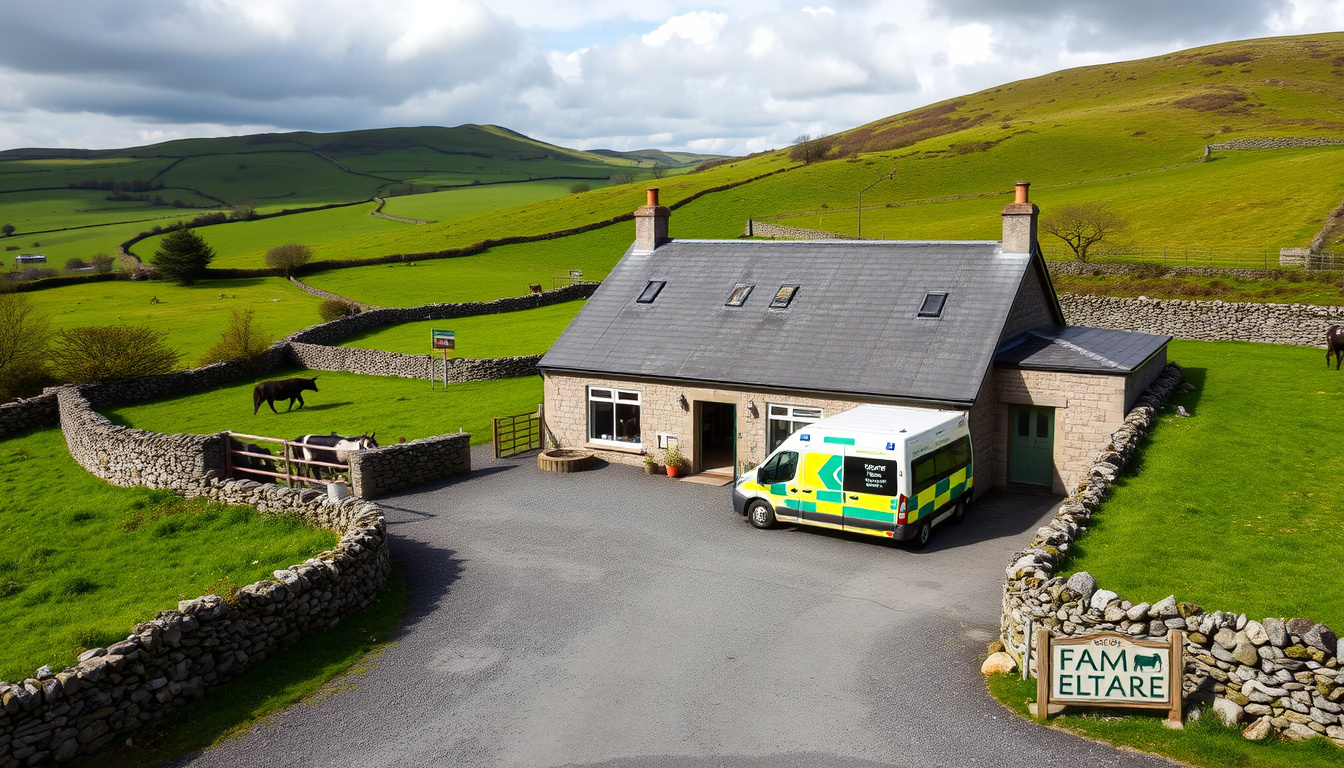
When a sick cow needs attention at 2am or a foaling goes sideways, knowing the right large animal vet can mean the difference between a healthy herd and a costly loss. Irish farmers face a specific challenge: finding vets who understand the rhythm of farm life while keeping costs manageable.
Top clinic: Cavan Vet Group · Livestock vets at Acorn: 3 dedicated · Abbeyville focus: Bovine health · Carn Vet feature: 24/7 emergency
Quick snapshot
- Cavan Vet Group runs a 24/7 mobile service (Cavan Vet Group)
- Acorn Vets employs 3 dedicated large animal vets (Acorn Veterinary Clinic)
- EMERGE operates 365 days a year for referrals (Veterinary Specialists Ireland)
- Exact salary figures for large animal vets in Ireland lack public verification
- Response time data varies by region and provider
- Coverage gaps in western counties (Galway, Mayo, Donegal) remain poorly documented
- Suirside Clinic serves Waterford, Kilkenny, Tipperary (Suirside Veterinary Clinic)
- Westgate Vets covers Louth and Meath (Westgate Vets)
- All Creatures serves Monaghan and parts of Cavan (All Creatures Vets Monaghan)
- Carn Vet Clinic: 24/7 cover for registered clients (Carn Vet Clinic)
- Ballinrobe Vets: round-the-clock farm animal emergencies (Ballinrobe Vets)
- Mulcair Vets: 24/7 service across registered client base (Mulcair Vets)
The table below consolidates key service parameters across Ireland’s large animal veterinary landscape.
| Detail | Value |
|---|---|
| Primary focus areas | Farm and livestock |
| Key locations | Cavan, Cork |
| Emergency availability | 24/7 at select clinics |
| Suirside Clinic experience | 50+ years |
| Acorn Clinic experience | 50+ years |
| Cavan emergency fee | €120–€150 |
What is the name for a large animal vet?
The formal term for a large animal vet is “ambulatory veterinarian” or simply “large animal veterinarian.” These professionals specialise in farm animals—cattle, sheep, pigs, horses, and goats—rather than household pets. Their work involves mobile visits to farms, herd health management, reproductive services, and emergency call-outs that can happen at any hour.
The distinction matters because large animal practice requires different equipment, travel capability, and expertise than small animal clinic work. A true large animal vet carries portable ultrasound units, specialised restraints, and surgical tools designed for work on-site at farms rather than in a fixed surgical theatre.
What do vets do if you can’t afford treatment?
This is where many farm owners feel stuck—and it’s a legitimate concern. Treatment costs for livestock emergencies can escalate quickly. Vets understand this reality and several pathways exist for farmers facing financial strain.
The RSPCA offers guidance on financial assistance options for pet owners, though coverage for farm animals falls under different frameworks. For smaller animals, charities like the PDSA provide subsidized care, but farm livestock typically requires different solutions.
Several practical options exist: payment plans arranged directly with clinics, prioritising essential interventions over comprehensive treatment, and in genuine hardship cases, discussing reduced fees with the veterinary practice. Wexford Vets notes that their walk-in and appointment model offers flexibility for farmers managing unexpected costs.
Veterinary debt collection differs from consumer contexts—vets balance animal welfare against owner ability to pay. Clear communication before treatment begins typically yields better outcomes than crisis conversations after care is delivered.
Farmers who discuss budget constraints upfront often secure payment arrangements that keep their animals treated without bankrupting the operation. The alternative—delayed care—typically costs more in the long run.
What happens if I can’t afford to treat my dog?
For pet owners specifically, the RSPCA advises contacting them directly about financial assistance programs available in your area. Several vet practices also maintain welfare funds for cases of genuine hardship.
Viva Money UK outlines options including veterinary payment plans, charity care schemes, and in extreme cases, surrender considerations—but these represent last resorts rather than first options.
What if my dog has an emergency and I have no money?
Emergency vet costs for small animals can be substantial. Some clinics offerCareCredit or similar healthcare credit lines—though these carry interest charges that compound if not paid quickly. Pet insurance, obtained before emergencies occur, remains the most reliable financial buffer.
For immediate emergencies with no funds, explaining the situation honestly to the vet and asking specifically about welfare fund access or payment timelines often yields more options than people expect.
Emergency clinics like EMERGE operate as referral centres—they function as extensions of primary vets rather than walk-in welfare clinics. They aren’t set up for routine financial assistance discussions.
How much do large animal vets make in Ireland?
Veterinary surgeon salaries in Ireland vary considerably by experience, location, and practice type. GradIreland tracks entry-level positions, with recent data indicating starting salaries in the €35,000–€45,000 range for new graduates, potentially rising to €55,000–€75,000 with experience and specialisation.
Large animal vets often earn slightly differently than small animal practitioners due to the demands of on-call work, travel requirements, and after-hours availability. Practices offering emergency services frequently compensate through enhanced on-call allowances rather than pure base salary.
The verified data shows Cavan Vet Group charges €120–€150 for initial emergency consultations, which gives a sense of the service value being exchanged. However, individual vet take-home pay depends on practice structure, partnership arrangements, and whether they’re employed or self-operated.
Self-employed large animal vets in rural Ireland can earn significantly more during busy seasons—calving, lambing, foaling—through volume of emergency calls, though this comes with personal sacrifice and unpredictable hours.
Large animal vet near Dublin
Finding a reliable large animal vet in the greater Dublin area requires knowing which practices serve the region. Highfield Veterinary Group operates locations in Blessington, Clane, Dunboyne, Edenderry, and Kilcock—communities within reasonable striking distance of the capital.
For Dublin specifically, the challenge is that urban practice tends toward small animals. Large animal vets serving Dublin-adjacent areas typically work in Kildare, Meath, and Wicklow farmland where livestock density justifies the mobile service model.
Westgate Vets, based near the Louth-Meath border, offers full 24/7 routine and on-call emergency service to farms in those counties. While technically outside Dublin, their service territory represents the practical option for Dublin-area farmers with livestock.
Large animal vet near Ireland
Beyond Dublin, Ireland’s large animal vet network spreads across farming counties. Suirside Veterinary Clinic covers Waterford, Kilkenny, and Tipperary with 50+ years of experience. Their on-call model means farmers in those counties have emergency access without clinic visits.
Acorn Veterinary Clinic in Kildorrery, Co. Cork, employs three dedicated large animal vets with 50+ years serving North Cork’s dairy herds. Their emergency contact numbers—022 43862 or 022 25193—provide direct after-hours access.
For farmers in Roscommon, All Creatures Vets has served the area for over 30 years with 24-hour emergency call-out capability. Their phone 087 2596055 connects directly to emergency services.
Dublin farmers should look to Meath and Kildare practices rather than expecting urban Dublin clinics to offer farm vet services. Highfield’s multi-location model and Westgate’s border approach represent the closest practical options.
24 hour large animal vet near me
Round-the-clock availability separates dedicated large animal practices from those offering only daytime farm calls. Several Irish providers guarantee 24/7 coverage.
Carn Vet Clinic provides 24/7 emergency cover for registered clients, handling both large and small animals. Their focus on continuity means registered farms get priority response.
EMERGE, operated by Veterinary Specialists Ireland, operates 24 hours a day, 365 days a year, functioning as both an emergency service and after-hours intensive care unit. Their phone number—046 955 7551—connects directly to round-the-clock staff.
Ballinrobe Vets provides round-the-clock emergency care specifically for farm animals, handling calving complications and sudden illness. Mulcair Vets similarly offers 24-hour service across their clinic network.
The pattern across these providers is clear: emergency capability exists but requires pre-registration with your chosen practice. Showing up unannounced during an emergency rarely works—the relationship with your daytime vet determines your after-hours access.
Emergency vet Cavan
Cavan Vet Group runs a 24/7 emergency mobile service for large animals, reachable at 049 4331031. Their ambulatory farm team handles routine visits, surgeries, fertility services, health plans, and mobile emergencies—meaning daytime care and after-hours coverage come from the same practice.
When Cavan Vet Group’s out-of-hours service is unavailable, they partner with Veterinary Specialists Ireland, whose phone is 0469 557551. This backup relationship means Cavan-area farmers have layered emergency access.
Emergency vet near me
The practical search for “emergency vet near me” in Ireland yields different results depending on your location. All Creatures Vets Monaghan operates from Ballybay, Castleblayney, and Cootehill branches with 24/7 ambulatory service for cattle, sheep, pigs, and horses.
Just Care Veterinary Clinic in Cavan offers another option for small animal emergencies in the immediate Cavan area, though their large animal coverage requires verification directly.
24/7 coverage sounds reassuring, but response times depend on your farm’s location relative to the vet’s current calls. Rural farms with longer travel distances may face longer waits during peak calving season when multiple farms have simultaneous emergencies.
Finding the right fit
Large animal veterinary care in Ireland isn’t one-size-fits-all. Suirside’s three-county coverage, Acorn’s North Cork specialisation, and Westgate’s Meath-Louth focus each serve their regions well—but none covers everywhere.
The implication for farmers: establishing a daytime relationship with a local large animal vet before emergencies occur is essential. EMERGE and similar referral centres exist to support primary vets, not replace them. The farmer who knows their local practice’s phone number, understands their emergency protocols, and has registered as a client has a fundamentally different emergency experience than someone searching cold during a crisis.
Affordability remains a real concern. Practices like Wexford Vets offer walk-in flexibility alongside appointments, potentially reducing costs for straightforward cases. Cavan’s €120–€150 emergency consultation fee provides a price reference, though costs escalate quickly for complex surgical interventions or extended care.
For Irish farmers, the choice of large animal vet ties directly to farm economics. A practice that understands your operation’s scale, respects cost constraints, and communicates clearly about treatment options creates a partnership rather than a transactional relationship. That partnership becomes invaluable when 2am emergencies arrive.
Western Ireland—Galway, Mayo, Donegal, Kerry, Limerick—shows documented gaps in detailed large animal emergency coverage information. Farmers in these regions should prioritise establishing relationships with the nearest large animal practice before emergencies force the question.
Upsides
- Multiple 24/7 emergency providers exist across Ireland
- Practices like Acorn and Suirside bring 50+ years of farm expertise
- Ambulatory services bring care to the farm rather than requiring transport
- Cavan Vet Group’s backup relationship with EMERGE provides layered coverage
Downsides
- Western counties lack comprehensive emergency coverage data
- Response times vary significantly during peak seasons
- Exact salary data for Irish large animal vets remains unclear
- After-hours access requires pre-registration—not walk-in availability
Steps to find your large animal vet
- Identify 2-3 large animal practices serving your county
- Call during office hours to discuss your farm’s needs and registration process
- Ask about emergency protocols, response time expectations, and after-hours numbers
- Verify the practice handles your specific livestock types (bovine, equine, sheep, etc.)
- Discuss payment options and any welfare funds available for hardship cases
- Save emergency contact numbers in your phone and post them where farm workers can find them
Expert perspectives
Understanding how veterinary providers view their role helps frame expectations.
We partner with your primary vet, acting as an extension of their practice for emergency care, any time!
— Veterinary Specialists Ireland EMERGE (Veterinary Specialists Ireland)
Accidents and illnesses can occur at any time, which is why our team is available round-the-clock to provide emergency veterinary care for your farm animals.
— Ballinrobe Vets (Ballinrobe Vets)
We know that animals can get sick or injured at anytime of the night or day, we offer emergency services to our registered clients, 24 hours a day, 7 days a week and 365 days a year.
— Mulcair Vets (Mulcair Vets)
The pattern across these providers is consistent: registered clients get priority emergency access. Building that client relationship before emergencies occur is the practical reality farmers need to accept.
Related reading: Best CCTV Camera for Home in Ireland · Minimum Wage for 16 Year Old in Ireland
Frequently asked questions
What is the rule of 20 in veterinary medicine?
The Rule of 20 is a monitoring framework used in veterinary medicine—particularly for hospitalised animals—requiring assessment of 20 different parameters including hydration, nutrition, pain level, and vital signs. It’s primarily a hospital management tool rather than something farm owners routinely apply, though understanding the concept helps farmers recognise what professional monitoring involves.
Who are the big 6 vets?
The “Big 6” typically refers to the six largest veterinary corporate groups operating in Ireland, including Somex, Animates, and independent practice networks. However, for large animal farm services specifically, independent and regional practices often provide better coverage than corporate chains focused on small animal urban markets.
What is a silent killer in dogs?
Common conditions referred to as “silent killers” in dogs include gastric dilatation-volvulus (bloat), heart disease, and certain toxins. These conditions progress rapidly without obvious early symptoms, making regular veterinary checkups and awareness of behavioural changes essential for dog owners.
What is the 7 second rule for dogs?
The 7-second rule in dog first aid refers to a brief window to assess a dog’s responsiveness after an accident or sudden collapse. It encourages quick evaluation of breathing, consciousness, and obvious injuries before beginning any emergency response or transport to a vet.
What is silent pain in dogs?
Silent pain in dogs refers to conditions causing discomfort without obvious vocalisation or limping. Dogs instinctively mask pain as a survival mechanism. Subtle signs include reduced activity, changes in eating habits, altered sleeping patterns, and reluctance to be touched in specific areas.
Best large animal vet near me?
The best large animal vet depends on your specific location, livestock types, and relationship quality. For most Irish farmers, the “best” option is the nearest practice with large animal capacity that accepts new farm clients and offers 24/7 emergency access.
Cavan vet group small animal clinic?
Cavan Vet Group operates mixed practice—both small animal clinic services and large animal farm services. Their emergency mobile service focuses on large animals, while their physical clinic handles small animal cases.
Just Care Veterinary Clinic Cavan?
Just Care Veterinary Clinic serves the Cavan area with small animal services. For large animal farm services in Cavan, Cavan Vet Group represents the primary dedicated option with 24/7 mobile emergency capability.
For Irish farmers, the path forward is clear: establish that daytime relationship with a local large animal vet now, before emergencies force the decision. Save the emergency number, understand the registration requirements, and treat veterinary care as a farm business partnership rather than a transaction. When your livelihood depends on livestock health, having a trusted vet in your contacts isn’t optional—it’s essential infrastructure.

Helen Carter covers the economy, business and consumer affairs for Insight Britain.