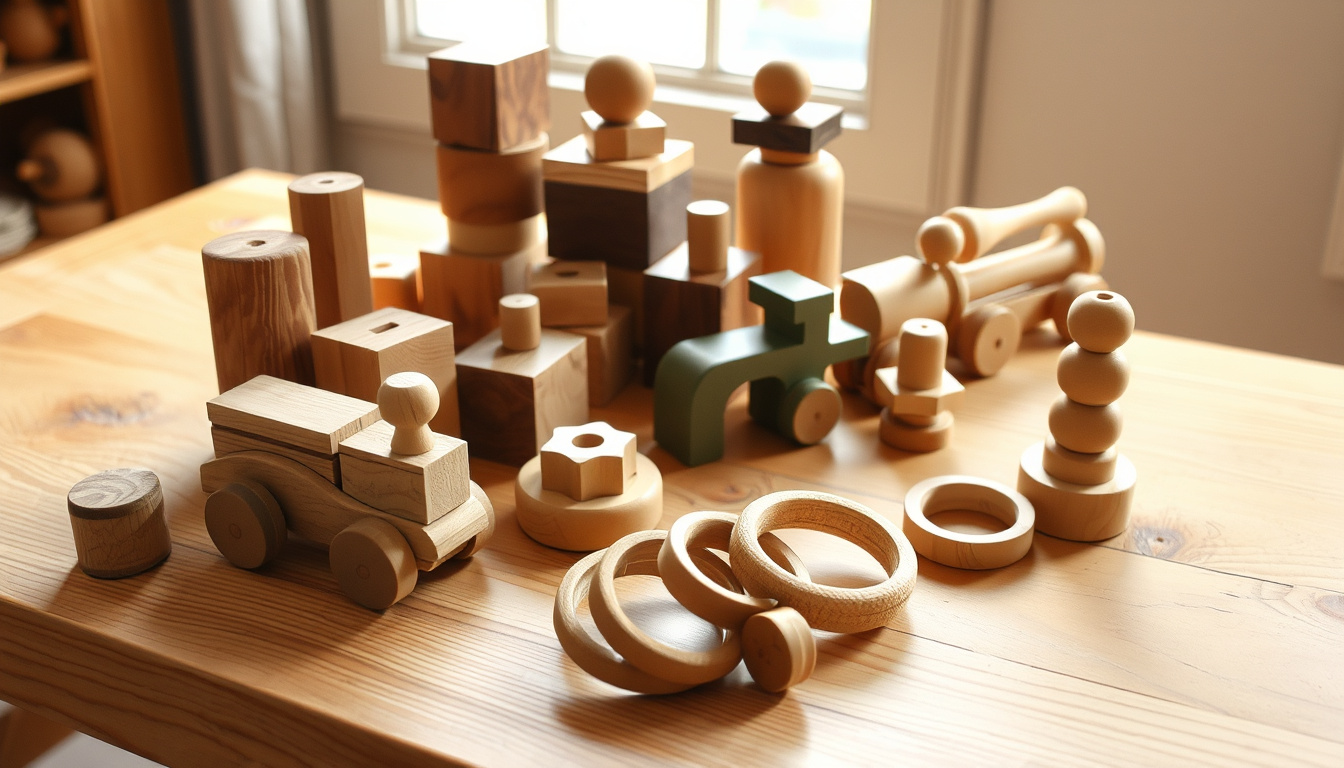
There’s a quiet shift happening in toy aisles across Ireland. More parents are reaching for wooden toys over plastic, driven by sustainability, Montessori principles, and the occasional Aldi Special Buy frenzy. This guide covers why the trend is growing, which brands lead the market, and how to choose the right toys for your child’s age.
Non-toxic: Wooden toys are non-toxic and sturdy ·
Durability: Can last for years or generations ·
Educational value: Often superior to plastic
Quick snapshot
- Eco-friendly — made from renewable resources (Bumbu Toys)
- Durable — outlast plastic toys (Bumbu Toys)
- Encourage creativity and problem-solving (Bumbu Toys)
- Hape — German brand; offers STEM, music, and toddler toys (Hape Toys)
- Bumbu Toys — Romanian brand; natural, non-toxic designs (Bumbu Toys)
- Jaques London — English brand; sustainable wood, family-friendly games (YouTube review)
- 1-year-olds: stacking blocks, shape sorters (Pinocchios Cork)
- 2-year-olds: puzzles, train sets (Cogs Toys and Games Ireland)
- 3-year-olds: imaginative playsets, construction blocks (Cogs Toys and Games Ireland)
- Cogs Toys and Games Ireland — online and in-store Dublin (Cogs Toys)
- Pinocchios Cork — Cork-based specialist (Pinocchios)
- Mimitoys — online, natural and imaginative range (Mimitoys)
Why Are Aldi Wooden Toys So Popular?
Aldi’s Special Buys events have turned wooden toys into a cult favourite among Irish parents. The chain releases limited-edition wooden playsets several times a year, and they often sell out the same day. The combination of low prices and solid quality — especially the wooden train sets and building blocks — has created a social-media storm that keeps growing.
The table below breaks down the key factors driving this phenomenon.
| Factor | Details |
|---|---|
| Price | Typically €5–€20 per item |
| Availability | Limited Special Buys, announced weekly |
| Perceived quality | “Great quality for the price” — parent from Aldi toy Facebook group |
| Scarcity effect | Sells out within hours, creating urgency |
Aldi wooden toys are excellent value, but the limited window means you need to act fast — or rely on resellers who mark up prices. For reliable access, consider specialist retailers like Cogs Toys and Games Ireland that stock comparable brands year-round.
What Is the 13 Rule in Aldi?
- The “13 rule” suggests spending £1 per year of the child’s age — e.g., £13 for a 13-month-old. Not officially endorsed by Aldi; shared anecdotally among parent groups on social media.
The rule isn’t widely adopted, but it gives a rough budget guideline. The real takeaway: Aldi wooden toys are so affordable that one Special Buy can fit most budgets without breaking the £13 limit for a toddler.
What Is the 20 Toy Rule?
- The “20 toy rule” limits children to 20 toys at a time, rotating them to maintain novelty and reduce clutter. It’s popular among minimalist parenting communities.
The implication: wooden toys, with their durability and open-ended play, fit perfectly into a rotation system — they survive years of use and stay engaging across age ranges.
What Are the Top Wooden Toy Brands?
The wooden toy market features several standout players, from German engineering to Swedish tradition and Irish specialists. Below is a comparison of the most recognised names.
The table below compares the leading brands across origin, specialty, and price.
| Brand | Origin | Specialty | Price range |
|---|---|---|---|
| Hape | Germany | Educational, STEM, music toys (Hape Toys) | €15–€80 |
| Brio | Sweden | Wooden train sets (Bumbu Toys) | €25–€100 |
| Jaques London | England | Family games, outdoor sets (YouTube review) | €10–€50 |
| Bumbu Toys | Romania | Natural, non-toxic wooden figures (Bumbu Toys) | €12–€60 |
German Wooden Toy Brands
- Hape — Founded in Germany, Hape produces a wide range of wooden toys including puzzles, marble runs, and role-play sets.
- Grimm’s — Known for colourful building sets and rainbow stacks, crafted from sustainably sourced wood.
German brands dominate the market because of strict quality and safety standards. Parents trust Hape and Grimm’s for durability and non-toxic finishes.
Swedish Wooden Toy Company (Brio)
- Brio — Founded in 1884 in Sweden, Brio is the most recognised wooden train brand. Its wooden railway sets are a rite of passage for toddlers.
The trade-off: Brio sets are pricey but built to last through multiple children. Compatible tracks and accessories make them a long-term investment.
Are Wooden Toys Still Popular in 2025?
Yes, and the trend shows no sign of slowing. The global wooden toy market was estimated at around $2.5 billion in 2024, with Europe as the fastest-growing region. In Ireland, demand is driven by sustainability concerns and the Montessori movement, which emphasises natural materials.
Montessori educators recommend wooden toys for their sensory qualities and open-ended play. This pedagogical shift has pushed many Irish parents toward brands like Hape and Bumba, which align with Montessori principles.
What Is the Most Wanted Toy This Christmas?
- For 2025, early reports point to wooden playsets, particularly multi-piece train sets and puzzle sets, as top contenders.
- The Montessori-aligned “wooden rainbow stack” from Grimm’s is also trending heavily on social media.
The pattern: parents are moving away from battery-operated toys toward imaginative, screen-free alternatives. Wooden toys fit that shift perfectly.
What Is the Famous Toy Right Now?
- The Brio wooden train set remains a classic, but newer entrants like Bumbu Toys’ animal figures and Hape’s marble runs are gaining traction.
Why this matters: the “hot toy” list is no longer dominated by plastic gadgets. Wooden toys are winning on both nostalgia and educational credibility.
What Are the Best Wooden Toys for Different Ages?
Choosing the right wooden toy by age ensures safety and developmental benefit. The expert consensus favors simple, open-ended designs that grow with the child.
The table below maps age groups to recommended toys and developmental focus.
| Age | Recommended toys | Developmental focus |
|---|---|---|
| 1-year-olds | Stacking blocks, shape sorters | Fine motor skills, cause-effect |
| 2-year-olds | Puzzles, train sets, push-along toys | Problem-solving, coordination |
| 3-year-olds | Imaginative playsets, dollhouses, marble runs | Narrative thinking, social skills |
| Toddlers (1–3) | Sensory blocks, music instruments, pull toys | Multi-sensory exploration |
Wooden Toys for 1-Year-Olds
- Stacking blocks and shape sorters are ideal — they’re safe, chunk-sized, and encourage grasping and stacking.
- Bumbu Toys recommends pieces larger than 4 cm to avoid choking hazards.
What to watch: avoid painted toys that may chip. Opt for unpainted or food-safe finishes.
Wooden Toys for 2-Year-Olds
- Puzzles with 4–6 pieces and wooden train sets are top choices.
- Hape’s First Train Set and Brio’s Starter Pack are excellent for this age group.
The trade-off: simpler sets are cheaper but may be outgrown quickly. Investing in expandable Brio or Hape tracks adds longevity.
Wooden Toys for 3-Year-Olds
- Imaginative playsets (kitchens, farms) and marble runs suit emerging narrative play.
- Cogs Toys stocks a range of playsets that combine construction and story-building.
By age 3, children can handle more complex pieces. Look for sets with multiple parts to encourage sharing and turn-taking.
Wooden Toys for Toddlers (general)
- The best toddler toys are durable, non-toxic, and encourage open-ended play — criteria supported by Tiny Land’s buying guide.
- Tiny Land also emphasises choosing toys that “grow with the child” and don’t rely on batteries.
Irish retailers like Cogs Toys offer curated toddler sections that align with these principles.
Wooden Toys for Girls
- Gender-neutral wooden toys dominate the market; dollhouses, cooking sets, and animal figures appeal to all children.
- Mimitoys highlights that wooden toys encourage imagination without gendered stereotypes.
The pattern: marketing “toys for girls” is fading; instead, open-ended wooden toys invite every child to create their own stories.
How to Choose and Where to Buy Wooden Toys?
Making the switch from plastic to wood requires knowing what to look for and where to find trusted stock in Ireland.
- Non-toxic finishes — painted or lacquered toys should use water-based, child-safe coats (Bumbu Toys).
- Sturdy construction — no loose parts, smooth edges (Bumbu Toys).
- Open-ended design — toys that can be used in multiple ways (Pinocchios Cork).
Why Choose Wooden Toys Over Plastic?
- Durability: wooden toys can last for years or generations (Bumbu Toys).
- Eco-friendly: made from renewable resources, biodegradable (Bumbu Toys).
- Educational: encourage creativity, problem-solving, and sensory play (Tiny Land).
- Plastic toys often contain chemicals and break easily — wooden toys avoid both issues.
The decision is clear: for longevity, health, and planet, wood wins. The only downside is price — quality wooden toys can cost more upfront, but their lifespan makes them cheaper per year of use.
Where to Buy Wooden Toys in Ireland
- Cogs Toys and Games Ireland — Dublin-based; online and physical shop. Offers jigsaws, trains, education sets (Cogs Toys).
- Pinocchios Cork — Cork specialist; stocks Hape, Bumbu, and own-brand wooden puzzles (Pinocchios).
- Mimitoys.ie — online-only; natural and imaginative selection (Mimitoys).
- The Natural Baby Company — eco-focused; offers buying guides alongside products (The Natural Baby Co).
Irish parents are spoilt for choice. Online shopping from Mimitoys or Cogs gives nationwide delivery, while Pinocchios offers a personalised in-store experience in Cork.
Pros and Cons of Wooden Toys
Upsides
- Very durable — can last for generations (Bumbu Toys)
- Non-toxic and safe (Bumbu Toys)
- Eco-friendly, renewable resource (Bumbu Toys)
- Encourage creativity and problem-solving (Tiny Land)
Downsides
- Higher upfront cost than plastic
- Can be heavier; less portable for travel
- Limited availability in some high-street stores
- Requires care to avoid water damage and splinters
Confirmed Facts and What’s Unclear
Confirmed facts
- Wooden toys are non-toxic and sturdy (Bumbu Toys)
- They can outlast plastic toys (Bumbu Toys)
- They support open-ended play (Pinocchios Cork)
- Hape markets educational wooden toys including STEM and music (Hape Toys)
What’s unclear
- Whether Aldi’s 13 rule is widely adopted by parents
- The exact identity of the “most wanted toy” for Christmas 2025 — it depends on media reports yet to solidify
- How many Irish parents actually follow the 20-toy rule
“Great quality for the price — my son plays with his Aldi train set daily and it still looks new.”
— Parent from Aldi toy Facebook group (Cogs Toys)
“Wooden toys offer tactile warmth and textures that plastic simply cannot replicate, and they encourage narrative thought and creativity.”
— Bumbu Toys spokesperson (Bumbu Toys)
“Open-ended wooden toys strengthen critical thinking, coordination, and social skills far more effectively than battery-operated alternatives.”
— Tiny Land buying guide (Tiny Land)
Wooden toys have reclaimed their place not as a nostalgic throwback but as a informed choice for modern parents. The evidence from Irish retailers, toy manufacturers, and child-development advocates aligns: wood wins on durability, safety, and imagination. For parents in Ireland, the choice is clear — invest in wooden toys from trusted local retailers like Cogs Toys or Pinocchios, and watch your child’s play deepen without batteries or plastic waste.
Related reading: Over the Garden Wall: Age Rating, Plot & Parents Guide · Pokémon Scarlet and Violet: Discontinued? Worth It? Lowest Rated?
For those looking to stock up on sustainable playthings, Aldis 2025 Wooden Toy Event offers a wide range of affordable, high-quality options that complement the brands and tips in this guide.
Frequently Asked Questions
Are wooden toys safe for babies?
Yes, provided they are made with non-toxic finishes and have no small parts. Bumbu Toys notes that wooden toys are designed to minimise sharp edges and breakage. Always choose products from reputable brands and check age labels.
How do I clean wooden toys?
Wipe with a damp cloth and mild soap. Never submerge in water, as wood can warp. For deeper cleaning, use a vinegar-water solution. Avoid harsh chemicals that might strip finishes.
Do wooden toys last longer than plastic toys?
Yes. Bumbu Toys states that wooden toys can “last for years or generations.” Plastic toys often crack or break within months. The upfront cost of wood is offset by its longevity.
Are wooden toys Montessori approved?
Montessori educators recommend natural, simple materials. Wooden toys — especially stacking blocks, puzzles, and open-ended playsets — align perfectly with Montessori philosophy. Many retailers now market specifically to Montessori families.
Can wooden toys be recycled?
Yes, untreated wood is biodegradable and can be composted or repurposed. Painted or lacquered toys may need to be disposed of with general waste, but they still have a lower environmental impact than plastic.
What are the best wooden toys for travel?
Compact items like threading beads, small puzzles, and pocket-sized animals work well. Avoid heavy train sets on the go. Many Irish retailers offer travel-friendly wooden toys in small packaging.
Related stories





Marcus Walsh is Politics & Public Affairs Editor, covering Westminster, councils and public policy.