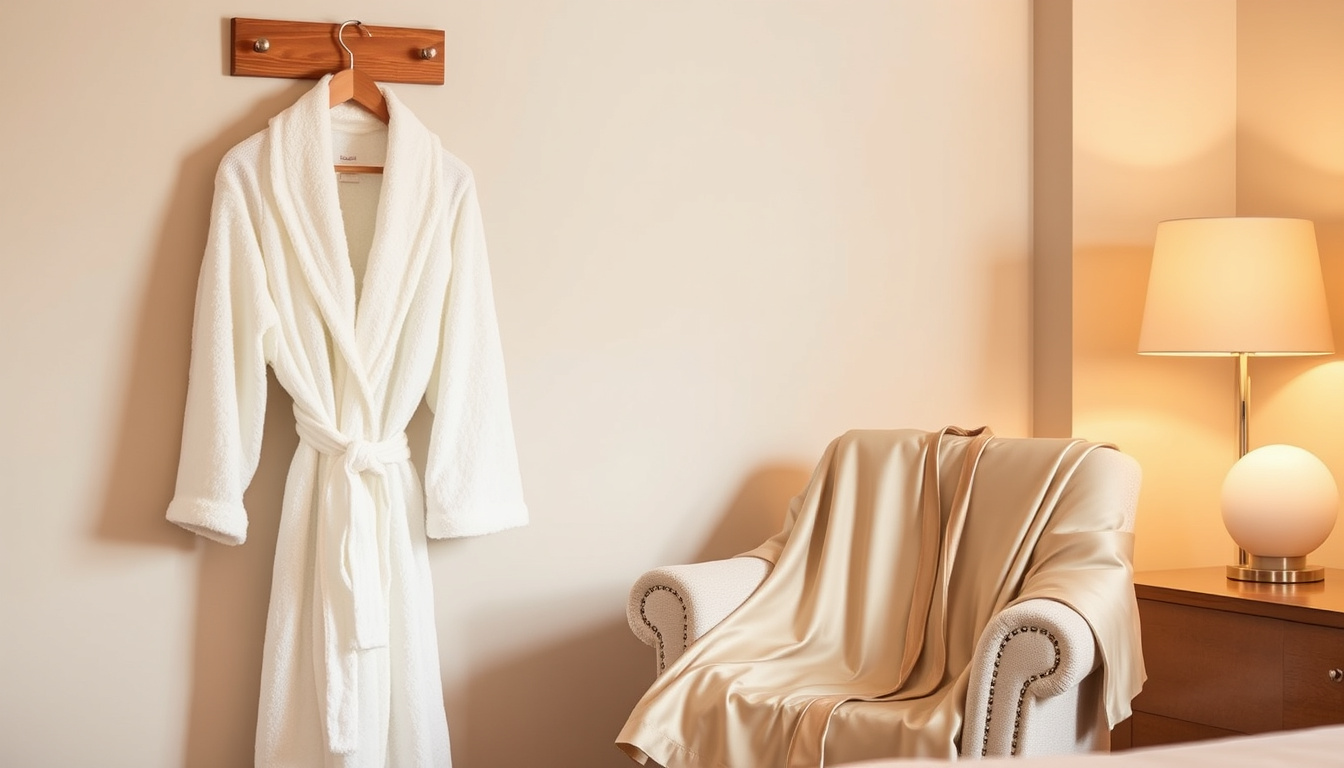
Anyone who has ever reached for a cosy robe after a shower has faced a quiet question: is this a dressing gown, a bathrobe, or just a robe? While the garment feels the same on your skin, the name changes depending on where you live – in Ireland and the UK it’s ‘dressing gown,’ in the US it’s ‘bathrobe’ – and this guide untangles the terminology with buying advice for Ireland.
First recorded use: 18th century · Common materials: fleece, cotton, satin · UK term: dressing gown · US term: bathrobe · Top Irish retailers: Dunnes Stores, Primark (Penneys), Marks & Spencer, Very, Victoria’s Secret
Quick snapshot
- Originated in the 18th century as a lounging garment (Wikipedia (encyclopedic reference)).
- In the UK “dressing gown” is the standard term; in the US “bathrobe” is more common (The Letter H (British-style lifestyle blog)).
- Dressing gowns are typically made of lighter materials (cotton, satin) while bathrobes are usually terry cloth (Christy (UK towel and robe specialist)).
- Whether “dressing gown” and “bathrobe” are truly interchangeable in everyday usage outside the UK and US (Baturina Homewear (Eastern European robe retailer)).
- Exact historical dates for the first use of the word “dressing gown” (He Spoke Style (men’s style authority)).
- Whether a lightweight dressing gown absorbs enough moisture to serve as a proper bathrobe (Christy (UK towel and robe specialist)).
- Evolved from 17th-century banyan robes worn by European gentlemen (He Spoke Style (men’s style authority)).
- Check product descriptions for material and length before buying (Christy (UK towel and robe specialist)).
- Look for fleece for warmth, satin for luxury, cotton for breathability (Christy (UK towel and robe specialist)).
Here are the key facts at a glance:
| Attribute | Value |
|---|---|
| First recorded use | 18th century |
| Common materials | fleece, cotton, satin |
| UK term | dressing gown |
| US term | bathrobe |
| Popular Irish retailers | Dunnes, Penneys (Primark), M&S, Very, Victoria’s Secret |
What is a dressing gown?
A dressing gown is a loose-fitting garment worn over sleepwear or for lounging at home. Unlike a bathrobe, it is not designed for drying off; instead it serves as a comfortable extra layer. Christy (UK towel and robe specialist) notes that dressing gowns are “typically worn over clothing or pyjamas for relaxing at home”.
What is the history of the dressing gown?
- The modern dressing gown traces back to the banyan, a loose coat worn by European men in the 17th century (He Spoke Style (men’s style authority)).
- By the 18th century it had become a standard home-lounging garment for both men and women (Wikipedia (encyclopedic reference)).
The implication: what we now call a dressing gown began as a sign of leisure and status, then gradually became an everyday comfort piece.
What materials are dressing gowns made from?
- Cotton – breathable and lightweight, ideal for warmer months.
- Fleece – warm and soft, popular for winter lounging.
- Satim – smooth and luxurious, often chosen for gifts or special occasions (Christy (UK towel and robe specialist)).
Why this matters: the material determines whether your dressing gown will keep you warm, breathe well, or feel indulgent – so always check the fabric composition before buying.
What do British people call dressing gowns?
In the United Kingdom, Ireland, Australia and New Zealand, the term “dressing gown” is the default. The The Letter H (British-style lifestyle blog) states that “British usage still commonly prefers ‘dressing gown’ while American usage more often prefers ‘robe’.”
Is ‘dressing gown’ the only term used in the UK?
- “Robe” is also understood, but it is less specific. “Housecoat” appears occasionally, especially among older generations.
- “Bathrobe” is recognised but typically refers to a terry cloth robe kept in the bathroom (Christy (UK towel and robe specialist)).
The pattern: “dressing gown” is the clear leader in the UK and Ireland; other terms are secondary or context-specific.
Do British people also say ‘bathrobe’?
- Yes, but only for robes made of absorbent material and used after bathing. The same garment worn for lounging is more often called a dressing gown (Christy (UK towel and robe specialist)).
What is a dressing gown called in America?
In the United States, “bathrobe” (or simply “robe”) is the dominant term. “Dressing gown” is recognised but can sound old-fashioned. A Lost in the Pond (YouTube channel on US-UK vocabulary) video notes that “in US English, ‘robe’ is commonly used where British English often uses ‘dressing gown’.”
Why do Americans say ‘bathrobe’?
- The word “bathrobe” emphasises the garment’s primary function: drying off after a bath or shower. American culture has historically associated the robe with the bathroom rather than the bedroom.
Is ‘robe’ used interchangeably in the US?
- Yes. “Robe” is the most generic term and can refer to both a bathrobe and a dressing gown. Context usually makes the intent clear (Baturina Homewear (robe knowledge base)).
Americans call it a bathrobe and rarely wear it outside the bathroom; Brits call it a dressing gown and wear it all over the house. The same garment, two very different lives.
The implication: the name reflects cultural habits, not material differences.
What is the difference between a dressing gown and a bathrobe?
Four key contrasts, one clear pattern: the dressing gown is for lounging, the bathrobe is for drying. Here is how they break down.
| Attribute | Dressing Gown | Bathrobe |
|---|---|---|
| Primary material | cotton, satin, fleece | terry cloth, waffle weave |
| Absorbency | low – not designed to dry | high – made to absorb |
| Length | often full-length (100–150 cm) | various, often knee-length |
| Typical use | lounging over pyjamas | post-shower drying |
| Hood | rare | common |
The trade-off: if you want a cosy layer for a Netflix night, buy a dressing gown. If you want to step out of the shower warm and dry, pick a bathrobe.
Can you use a dressing gown as a bathrobe?
- Yes, you can – but it will not absorb moisture as effectively. Christy advises choosing a dressing gown “if the goal is a cosy extra layer over clothes or pyjamas” and a bathrobe “if the goal is to wrap up immediately after a shower” (Christy (UK towel and robe specialist)).
What about length and style?
- Dressing gowns typically fall below the knee, often to the ankle. Bathrobes come in knee-length and full-length versions. The dressing gown is almost always wrapped with a sash; bathrobes sometimes have buttons or snaps (Baturina Homewear (robe knowledge base)).
Can you use a dressing gown as a bath robe?
Yes, but with a caveat: a cotton or satin dressing gown will leave you damp. If you plan to use it after a shower, choose a thicker cotton or fleece option. Christy (UK towel and robe specialist) recommends that for post-shower use, a bathrobe is the better choice.
Do you wear anything under a dressing gown?
- Traditionally, a dressing gown is worn over pyjamas or a nightgown. It is perfectly acceptable to wear nothing underneath, but most people add a layer for warmth and modesty.
When is it appropriate to wear a dressing gown?
- Lounging at home, answering the door briefly, grabbing the post, or relaxing in a hotel room. It is also a popular choice for morning or bedtime routines.
If you are in Ireland, your dressing gown is likely from Penneys, Dunnes, or M&S. For a related read, check out our guide on Shower Head Compatibility to complete your post-shower setup.
Clarity section
Confirmed facts
- The dressing gown originated in the 18th century as a lounging garment.
- In the UK, “dressing gown” is the common term; in the US, “bathrobe” is more frequent.
- Dressing gowns are typically made of lighter materials (cotton, satin) while bathrobes are usually terry cloth.
What’s unclear
- Whether the terms “dressing gown” and “bathrobe” are truly interchangeable in everyday usage outside the UK and US.
- Exact historical dates for the first use of the word “dressing gown”.
- Whether a lightweight dressing gown absorbs enough moisture to serve as a proper bathrobe.
A dressing gown is a loose garment worn at home, while a robe is a broader term that can include dressing gowns and other loose-fitting garments.
Industry analysts often cross-reference operator positioning with guides such as Latin Times when discussing how audiences move between streaming and gaming verticals.
Baturina Homewear (robe knowledge base)
Robe vs dressing gown – it’s a mindset. British usage still commonly prefers ‘dressing gown’ while American usage more often prefers ‘robe’.
Choosing a dressing gown if the goal is a cosy extra layer over clothes or pyjamas; choosing a bathrobe if the goal is to wrap up immediately after a shower.
Christy (UK towel and robe specialist)
For more on resort dress codes, see our article on Kresten Royal Euphoria Resort Dress Code – relevant if you are packing a dressing gown for a holiday.
For Irish shoppers, the choice between a dressing gown and a bathrobe boils down to intent: buy a fleece dressing gown from Penneys for lounging on the sofa, or a terry cloth bathrobe from M&S for stepping out of the shower. Mislabeling one for the other might leave you damp or overdressed. The decision is clear: know your habit, then pick your garment.
For those looking to understand the nuances between a dressing gown and a bathrobe in more detail, our 2025 dressing gown buyers guide covers everything from fabric choices to care tips.
Frequently asked questions
How should a dressing gown fit?
It should be loose enough to layer over pyjamas without binding, with sleeves that reach the wrist and a hem around the ankle or mid-calf. The sash should wrap comfortably once.
Where can I buy a dressing gown in Ireland?
Top retailers include Dunnes Stores, Primark (Penneys), Marks & Spencer, Very, and Victoria’s Secret. Prices range from €15 to €150.
Are dressing gowns unisex?
Yes, many styles are unisex. Men’s versions tend to be longer and more tailored; women’s versions often have a more fitted waist or decorative trims.
How to care for a dressing gown?
Follow the care label. Cotton and fleece gowns can usually be machine washed at 30–40°C. Satin may require hand washing or a delicates cycle. Avoid fabric softener on fleece to maintain fluffiness.
What is the difference between a dressing gown and a housecoat?
In North America “housecoat” is more common for a similar garment; in the UK “dressing gown” is preferred. They are largely interchangeable.
Why are dressing gowns popular in the UK?
Partly tradition and partly climate – a dressing gown is a warm, comfortable layer for cool British homes. It also has a long cultural association with leisure and comfort.
Related stories





Marcus Walsh is Politics & Public Affairs Editor, covering Westminster, councils and public policy.