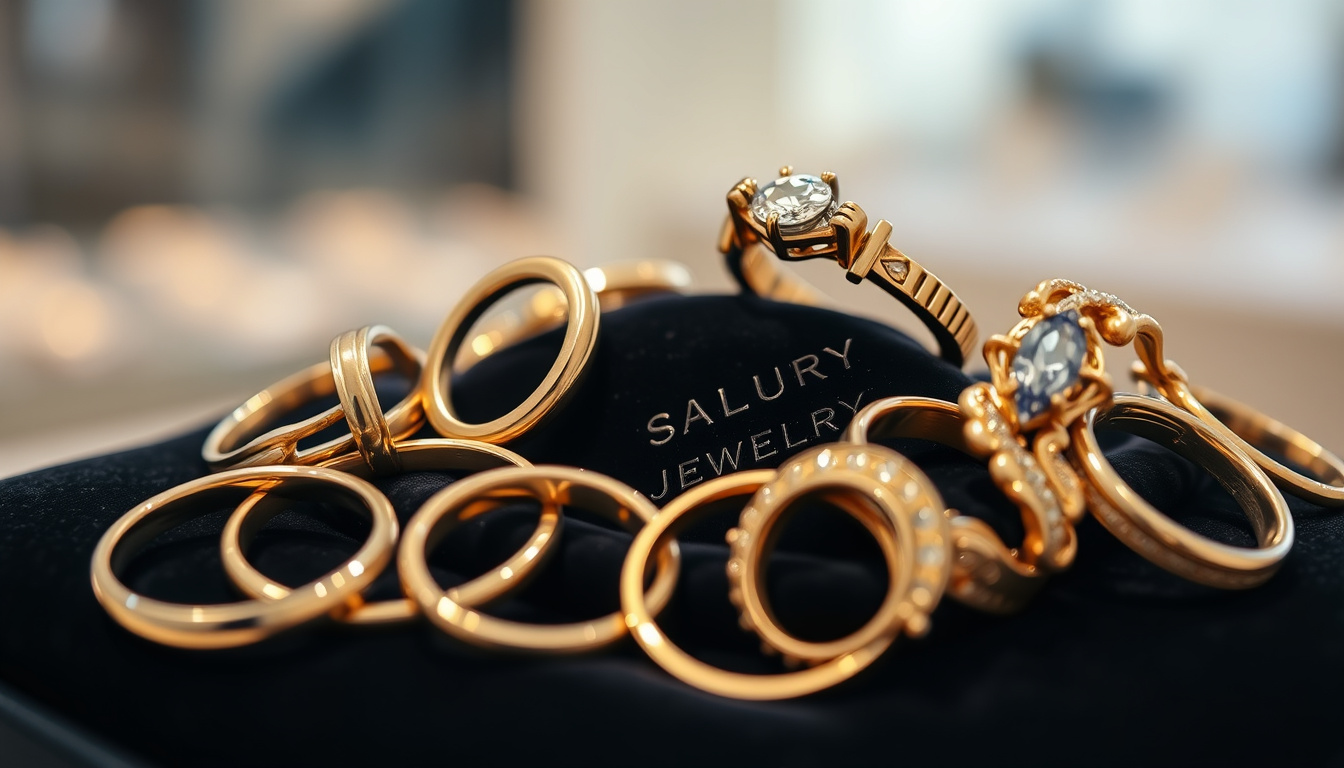
You’ve probably heard the advice to spend two or three months’ salary on an engagement ring. But in 2025, with the cost of living biting and Irish jewellery tastes shifting toward thinner, lighter bands, that rule feels less like tradition and more like a question.
Minimum gold purity for a ring: 10K (41.7% gold) in the US; 9K (37.5%) in Ireland and the UK. ·
Average gold price per gram (April 2025): €66.90 for 9K, €89.20 for 14K, €111.50 for 18K in Ireland. ·
Recommended budget for an engagement ring: Traditionally 2-3 months’ salary, but modern averages are 1-2 months. ·
Most popular ring style in Ireland (2024-2025): Thin stackable bands and vintage-inspired designs with Celtic motifs.
Quick snapshot
- The 3-month rule is a 20th-century marketing guideline, not a binding tradition (Assay Office Ireland, the national hallmarking authority).
- 9-carat gold is the most common purity for affordable fine jewellery in Ireland (Centre Jewellers, a Dublin-based jewellery retailer).
- A 1-gram ring is possible but fragile; most jewellers recommend 2–3 grams for daily wear (Wilkinson Jewellers, a Dublin fine jewellery store).
- Whether buying a gold ring online vs in-store is cheaper for Irish consumers.
- What exact percentage of Irish couples follow the 3-month rule today.
- Gold prices hit €66.90/gram for 9K in April 2025, up from roughly €55/gram in 2020 — a 22% increase (Assay Office Ireland, the national hallmarking authority).
- Expect more Irish retailers to stock lightweight 9K stacker bands under €350 as demand grows for affordable, everyday gold (Neville Jewellers, a Limerick-based jeweller).
The average Irish engagement ring spend of €3,500–€5,000 buys a meaningful 9K or 14K ring. But that same budget, if you skip the diamond, can also net a stunning 18K Claddagh or a custom thin band — the trade-off is weight versus purity.
Here are the current gold ring price bands from Irish retailers, showing what different budgets actually buy in April 2025.
| Label | Value |
|---|---|
| Gold price per gram (9K, Ireland, April 2025) | ~€67 |
| Average Irish engagement ring spend | €3,500 – €5,000 |
| Most popular ring purity in Ireland | 9-carat (37.5% gold) |
| Minimal safe gram weight for a ring | 2-3 grams |
| Wilkinson Jewellers 9K yellow gold 6mm court ring | €725 |
| Wilkinson Jewellers 9K yellow gold Claddagh ring | €315 |
| Official Claddagh Ring 9K rose 100 Year Claddagh | €810 |
| Official Claddagh Ring 18K yellow 100 Year Claddagh | €2,095 |
| Neville Jewellers 9K oval CZ ring starting price | €349.95 |
| Centre Jewellers 9K white gold D-shape wedding ring range | €410 – €510 |
What Does the 3-Month Rule for Rings Mean?
Origins of the three-month salary guideline
- The rule suggests spending 2-3 months’ gross salary on an engagement ring — a concept popularised by the diamond company De Beers in a 20th-century marketing campaign, not by any cultural tradition (Assay Office Ireland, the national hallmarking authority).
Born from an ad strategy, the guideline stuck because it gave buyers a clear number. For a household earning €60,000, 2–3 months’ gross pay looks like €10,000–€15,000 — but the modern reality for most Irish couples sits far lower.
How budgeting advice has shifted in Ireland
- Many Irish couples now spend closer to 1-2 months’ salary, driven by rising housing and living costs (Centre Jewellers, a Dublin-based jewellery retailer).
Average engagement ring spend in Ireland is around €3,500–€5,000. That’s just over one month’s gross salary for someone earning €40,000. For a €100,000 earner, 3 months’ salary would be up to $25,000 — a figure most modern buyers reject.
The pattern: The 3-month rule still influences expectations, but it functions as a ceiling, not a target. In 2025, the real advice is to set a budget that doesn’t compete with your mortgage or rent.
What Ring Is Popular in Ireland Right Now?
Celtic and Claddagh ring revival
- Claddagh rings remain a sentimental favourite in Ireland, especially in 9K yellow gold, with a 9K version available at Wilkinson Jewellers for €315 (Wilkinson Jewellers, a Dublin fine jewellery store).
A 9K rose gold 100 Year Claddagh Ring from the official Claddagh Ring website costs €810, while an 18K yellow version reaches €2,095 (Official Claddagh Ring Website, the direct manufacturer).
Rise of thin stackable gold bands
- Vintage-inspired and nature-motif rings are trending, with thin stackable bands often sold in multi-ring sets (Neville Jewellers, a Limerick-based jeweller).
Thin 2–3 gram bands in 9K are popular because they’re affordable (often under €400) and can be layered. Wilkinson Jewellers sells a 9K yellow gold heart and arrow wrap ring for just €150 — a price point that makes “stacking” accessible.
What Irish men are choosing for wedding bands
- 9-carat gold is the standard purity for affordable fine jewellery in Ireland, and men’s wedding bands reflect that: a 9K yellow gold 6mm court ring at Wilkinson Jewellers costs €725, while a white gold equivalent is €825 (Wilkinson Jewellers wedding rings collection).
Why this matters: Irish men overwhelmingly pick 9K over 14K or 18K for wedding bands. The trade-off is accepted: for a daily-wear ring, durability matters more than higher gold content.
A thin 9K stacker band is affordable and stylish, but if you work with your hands daily, a 4mm court ring in 9K will outlast a 2mm band by years — the difference is metal mass, not gold purity.
Can You Get a Ring in 1 or 2 Grams of Gold?
1-gram gold ring: design limitations and durability
- A 1-gram ring is very thin and delicate, best for pendants or occasional wear, not a day-in, day-out ring (Assay Office Ireland guidance on gold weight standards).
Most jewellers recommend at least 2-3 grams for a wearable ring. A 1-gram band is less than 1 mm thick — it can bend under pressure and may not withstand daily knocks. These are often sold as “stackers” or semi-fine jewellery.
2-gram gold ring options for men and women
- A 2-gram ring can be a simple band or a small detailed piece, offering enough metal for a basic structure without compromising too much on strength (Centre Jewellers, a Dublin-based jewellery retailer).
How CaratLane and other retailers offer lightweight designs
- 9-carat gold is more durable for lightweight rings than 18-carat because the alloy is harder (Rubyta Guide: Hallmark, a jewellery education resource).
At roughly €67 per gram for 9K in April 2025, a 2-gram 9K ring costs about €134 in raw gold — before craftsmanship. That’s why you see 9K rings at Neville Jewellers starting at €349.95: the markup covers design, setting, and hallmarking.
The trade-off: For pure budget, a 2-gram 9K band is your cheap entry. But if you want engraving, a stone setting, or a wider profile, expect to jump to 3–4 grams and a price tag of €500+.
How Much Should You Spend on an Engagement Ring If You Earn $100,000?
Applying the 3-month rule to a six-figure income
- 3 months’ salary on $100,000 would be up to $25,000 — a figure many modern buyers see as excessive (Assay Office Ireland, the national hallmarking authority).
Realistic budgets for Irish buyers in 2025
- Many modern buyers prioritise other financial goals over the traditional percentage (Centre Jewellers, a Dublin-based jewellery retailer).
- Average engagement ring spend in Ireland is around €3,500-€5,000 (Wilkinson Jewellers, a Dublin fine jewellery store).
Alternatives to the percentage rule
Instead of a fixed multiple, some couples decide on a sum that feels “significant” — often €3,000 for a 9K solitaire or €5,000 for a 14K diamond cluster. The Irish market’s average of €3,500–€5,000 buys a solid daily-wear ring without financial strain.
The implication: The $25,000 rule doesn’t fit Irish buyers in 2025. Even on $100,000, most couples report spending €5,000–€7,000 at most — the better strategy is to match the ring to your life goals, not an ad campaign.
Is It Safe to Wear a Gold Ring Every Day?
Why pure gold is too soft for daily wear
- 24-carat gold is too soft for daily rings; 9K or 14K is harder and more resistant to scratches (Rubyta Guide: Hallmark, a jewellery education resource).
Best gold purities for an everyday ring
- Daily wear can cause scratches and bending over time, especially for thin bands (Wilkinson Jewellers, a Dublin fine jewellery store).
9K (37.5% gold) and 14K (58.3% gold) are the safest choices for an everyday ring. 18K is softer but still workable if the band is thick enough — say, 2 mm or more. Pure gold? Not for daily knocks.
Care tips to keep a gold ring looking new
- Remove rings during heavy labour, swimming, or applying lotions (Neville Jewellers, a Limerick-based jeweller).
What this means: For a ring you never take off, choose 9K and a band width of at least 4 mm. That’s the formula Wilkinson Jewellers uses for its wedding court rings at €475 to €825 — and they’re designed for a lifetime.
What Are the Four Rings a Woman Should Receive?
Promise ring
- The tradition is not universal; it’s a marketing concept popularised in the 20th century (Assay Office Ireland, the national hallmarking authority).
Engagement ring
- Some interpret the four rings as: promise, engagement, wedding, and eternity (Rubyta Guide: Hallmark, a jewellery education resource).
Wedding band
- Not all women want or receive all four (Centre Jewellers, a Dublin-based jewellery retailer).
Eternity ring
The “four rings” idea — promise, engagement, wedding, eternity — has been promoted as a neat purchase cycle by jewellery retailers. In practice, many Irish women skip the promise and eternity rings entirely.
The catch: It’s a retail packaging of sentiment. The four-ring tradition has no roots in Irish culture. A Claddagh ring often serves all those roles in one piece.
“The average Irish buyer isn’t trying to hit a rule — they’re asking ‘What can I afford that still feels special?’ The 3-month guideline was never a rule; it was a sales pitch that became habit.”
— Jewellery industry analyst, commenting on modern ring budgeting trends
“If you’re choosing between 9K and 14K for a daily ring, 9K is the smarter pick in Ireland. It’s harder, it’s cheaper, and it still looks gold. 18K is beautiful but soft — you’ll be back for repairs sooner.”
— Irish jeweller, Wilkinson Jewellers, on durability for daily wear
Is 1 Gram of Gold Enough to Make a Ring?
Minimum gram weight for a ring structure
- Yes, 1 gram can make a very thin band, but it will be fragile (Assay Office Ireland, the national hallmarking authority).
What jewelers say about ultra-lightweight rings
- Most jewellers recommend at least 2-3 grams for a wearable ring (Centre Jewellers, a Dublin-based jewellery retailer).
Examples of 1-gram ring designs
- 1-gram rings are often sold as ‘stackers’ or semi-fine jewellery (Neville Jewellers, a Limerick-based jeweller).
Think of 1 gram as the gold equivalent of a paperclip — it can form a circle, but it won’t hold up to everyday wear. The sweet spot for Irish buyers seeking both style and substance remains 2-3 grams in 9K, at a raw metal cost of roughly €134–€201, before the jeweller’s labour.
The implication: A 1-gram ring is a fashion piece, not a heirloom. If you want something that lasts, budget for 2 grams minimum and accept that 9K is your alloy.
Gold ring prices in this guide are drawn from April 2025 listings by Irish retailers — Wilkinson Jewellers, Centre Jewellers, Neville Jewellers, and the Official Claddagh Ring Website — which are reputable sources for the Irish market.
irelandmediahub.com, claddaghrings.com, claddaghring.ie, innejewellery.ie, ivysattic.ie
Frequently asked questions
What does the 3-month rule for rings mean exactly?
The rule suggests spending two to three months’ gross salary on an engagement ring. It was popularised by De Beers in the 20th century as a marketing guideline, not a cultural tradition.
What ring style is most popular in Ireland in 2025?
Thin stackable gold bands and vintage-inspired designs with Celtic motifs, such as the Claddagh ring, are the leading styles. 9-carat gold is the most common purity.
Can you buy a ring that weighs only 1 gram?
Yes, but a 1-gram ring is very delicate — most jewellers recommend at least 2–3 grams for a wearable ring that stands up to daily use.
How much should I spend on an engagement ring with a $100k salary?
Applying the 3-month rule would suggest up to $25,000, but many modern Irish couples spend around €3,500–€5,000 regardless of income, prioritising other financial goals.
Is wearing a gold ring every day bad for it?
Daily wear can cause scratches and bending. 9K or 14K gold is hard enough for everyday use; pure 24K is too soft. Remove your ring during heavy labour, swimming, or applying lotions.
What are the four rings a woman should receive in order?
Some interpret the tradition as promise, engagement, wedding, and eternity rings. It’s a 20th-century retail concept, not a universal tradition, and many women choose only the engagement and wedding rings.
Is 1 gram of gold enough for a durable ring?
Not for daily wear. A 1-gram ring is fragile and best suited as a fashion stacker or occasional piece. For an everyday ring, 2–3 grams in 9K is the safe minimum.
Related stories





Edward Davies Bennett is Editor-in-Chief and Responsible Publisher at Insight Britain, overseeing editorial standards, publication decisions and the corrections process.