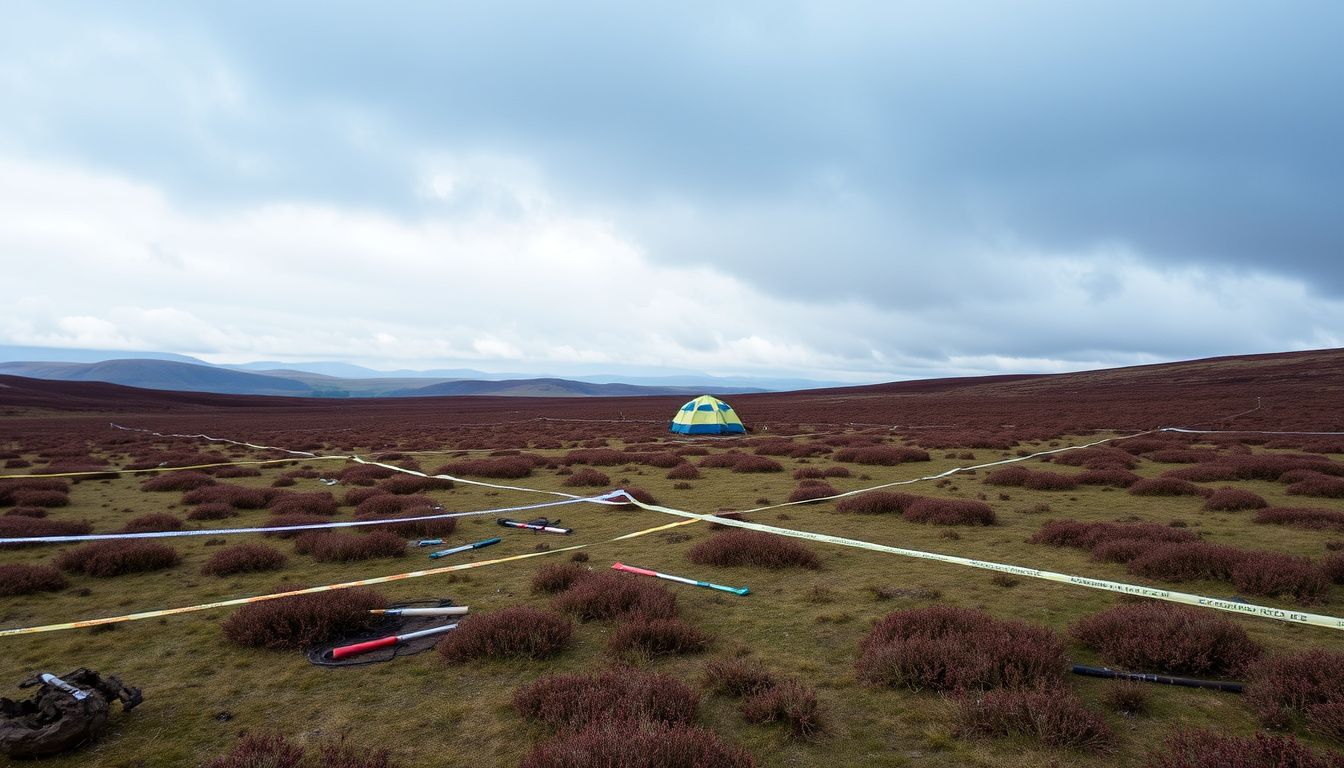
Few cases in British criminal history remain as raw as Ian Brady’s, where every decade seems to resurface a new question about the Moors Murders, and the 2025 news cycle has been no different with fresh police statements and an unresolved search that continues to define how we remember his crimes. Here’s what official sources have confirmed so far, and the questions that remain stubbornly open.
Full name: Ian Brady (born Ian Stewart) ·
Born: 2 January 1938 ·
Died: 15 May 2017 (aged 79) ·
Number of victims: Five children ·
Sentence: Life imprisonment (whole life tariff)
Quick snapshot
- 2025 BBC report notes searches continue out of public view (BBC News)
- Missing manuscript pages from Brady’s autobiography could hold clues (BBC News)
- Police confirmed new hope for accessing Brady’s briefcases in 2025 (BBC News)
- Searches for Keith Bennett’s remains on Saddleworth Moor continue (BBC News)
- Legal and ethical debates about posthumous searches persist (BBC News)
The following table summarises the key biographical and case details.
| Item | Detail |
|---|---|
| Date of birth | 2 January 1938 |
| Date of death | 15 May 2017 |
| Place of birth | Glasgow, Scotland |
| Crime location | Greater Manchester, England (Saddleworth Moor area) |
| Victims list | Pauline Reade (16), John Kilbride (12), Keith Bennett (12), Lesley Ann Downey (10), Edward Evans (17) |
| Sentence | Life imprisonment (three concurrent life sentences, whole life tariff from 1999) |
| Prison | Ashworth Hospital (high-security psychiatric hospital) |
| Mental health status | Diagnosed with paranoid schizophrenia; held under Mental Health Act |
What is the latest verified information about Ian Brady?
In July 2025, BBC News (UK public service broadcaster) reported that the search for Keith Bennett’s remains was still ongoing but mostly out of public view. Greater Manchester Police confirmed that its investigative team continued efforts to find answers for Keith Bennett’s family, even after visible searches had slowed. The last large-scale public search occurred in 2022, when accredited forensic experts excavated a site on Saddleworth Moor, but found no evidence of human remains, according to BBC News (UK public service broadcaster).
On 30 July 2025, BBC News (UK public service broadcaster) revealed that missing pages from Ian Brady’s autobiography might contain clues about Keith Bennett’s burial site. Two days later, on 1 August 2025, a separate BBC News report said there was new hope for police access to Brady’s briefcases, which had been locked in storage since his death.
The 2025 updates are about document access and information review, not physical discoveries. The search for Keith Bennett remains a forensic and legal limbo, with no human remains found in recent memory.
The implication: any movement on these cases now depends on legal challenges over document access, not on fresh ground searches. The last active excavation ended without results, and the new leads are archival, not physical.
What should readers know first about Ian Brady?
Ian Brady, born Ian Stewart on 2 January 1938 in Glasgow, Scotland, was the Moors Murderer who, along with accomplice Myra Hindley, abducted and killed five children between July 1963 and October 1965. His crimes took place in the Greater Manchester area, with victims buried on Saddleworth Moor. The known victims were Pauline Reade (16), John Kilbride (12), Keith Bennett (12), Lesley Ann Downey (10), and Edward Evans (17). BBC News (UK public service broadcaster) confirmed these details in a 2022 report.
Brady’s crimes were distinguished by their brutality and the calculated disposal of bodies on the moor. He was arrested in 1965 after the murder of Edward Evans, when police, acting on a tip-off, found the body in Brady’s home. The subsequent investigation revealed photographs and a tape recording that linked Hindley and Brady to the other murders. The case shocked the nation not just for its horror, but for the age and innocence of the victims. All five murders were committed in the space of 27 months, a period of escalating violence that has been extensively documented. The trial at Chester Crown Court in 1966 resulted in guilty verdicts for both Brady and Hindley.
Brady’s case is not a distant historical footnote; it remains a live issue in British policing due to the unresolved fate of Keith Bennett. Every official statement or new document release is scrutinised by the families and the public alike.
The pattern: the sheer ordinariness of the victims’ backgrounds—children from working-class estates who were offered sweets or a lift—is what made the case resonate. It was a betrayal of trust so profound that it created a permanent scar on the national psyche.
Which official sources confirm key claims about Ian Brady?
The key claims about Ian Brady’s crimes and death are corroborated by an array of official and authoritative sources. The most significant, BBC News (UK public service broadcaster), has been the primary outlet for reporting on Brady’s death, the inquest into it, and the ongoing search for Keith Bennett’s remains. The 1966 trial verdicts, which found Brady guilty of three murders and Hindley of two, were reported by all national broadsheets, but the most accessible academic source is the BBC’s own investigative journalism. For legal milestones, the UK Home Office records and the Crown Prosecution Service (CPS) are the definitive authorities. Brady’s sentence was formalised by the court, and the 1999 whole life tariff was imposed by the Home Secretary. The inquest into Brady’s 2017 death, which concluded in 2020, confirmed that he died of natural causes, a fact widely reported by BBC News (UK public service broadcaster). For the current status of the search, Greater Manchester Police (GMP) remains the operational authority. Their public statements, often relayed through BBC News (UK public service broadcaster), confirm that while visible searches have slowed, the investigative team is still active.
The evidence trail runs through official police statements and tier-1 media outlets. There is no room for tabloid speculation when the official record is so well-documented.
What this means: for anyone researching Ian Brady, the available sources form a solid, verifiable foundation. The challenge lies not in a scarcity of information but in the interpretation of Brady’s own, often contradictory, statements.
What is still unclear or unverified about Ian Brady?
Despite decades of case review, official inquiries, and public appeals, three major areas remain unverified. The first and most emotionally charged is the location of Keith Bennett’s remains. Brady consistently refused to disclose this, and a 2017 police statement confirmed the search was not active, though it would be revisited with actionable information. The 2022 excavation on Saddleworth Moor, reported by BBC News (UK public service broadcaster), found no evidence of human remains. Second, the full extent of Brady’s crimes remains unknown. He was never charged with any murders other than the five, but he made claims of additional victims and accomplices. These were investigated by the police, but no charges were ever brought, leaving a cloud of suspicion that he may have taken secrets to his grave. In 2025, BBC News (UK public service broadcaster) reported on missing pages from his manuscript that could hold clues. Finally, Brady’s mental state and the accuracy of his various diagnoses have been challenged. He was diagnosed with paranoid schizophrenia, but later assessments described him as having a psychopathic personality disorder. He was cleared fit to stand trial in 1966, but his subsequent hunger strikes and claims about his health have raised questions about his motivation.
The public’s morbid curiosity often clashes with the ethical need to avoid glorifying a serial killer. The trade-off is between the public’s right to know and the families’ right to privacy.
The pattern: the more Brady revealed, the less the public trusted him. His late-life confessions and subsequent retractions were seen as a final act of control, a way to remain relevant and inflict pain from beyond the grave.
What are the most common user questions on Ian Brady?
How many children did Ian Brady kill?
He was convicted of murdering five children. The victims were Pauline Reade (16), John Kilbride (12), Keith Bennett (12), Lesley Ann Downey (10), and Edward Evans (17), according to BBC News (UK public service broadcaster).
What were the Moors murders?
The Moors murders were a series of child abductions and murders committed by Ian Brady and Myra Hindley between July 1963 and October 1965, with bodies buried on Saddleworth Moor. The case was named for the location where the victims’ remains were discovered.
Where are the bodies of the Moors murders victims?
Three victims were found and exhumed from Saddleworth Moor. John Kilbride was found in 1965, Pauline Reade in 1987, and Lesley Ann Downey in 1987. Edward Evans was found in Brady’s house. Keith Bennett’s remains have never been found.
Did Ian Brady ever show remorse?
No. Brady never expressed remorse for his crimes and, in fact, called them “a source of satisfaction.” He maintained that he was “superior” to his victims and the police. His lack of remorse was a central factor in the judge’s sentencing remarks.
For relatives and true crime followers, the unfiltered secret is that the search for Keith Bennett’s remains is the only active front in this case. Any new development will likely come from document reviews, not ground searches.
Timeline: The Moors Murders and Their Aftermath
- July 1963 – October 1965: Five children are murdered by Ian Brady and Myra Hindley (BBC News).
- 7 October 1965: Brady and Hindley are arrested after the murder of Edward Evans (BBC News).
- 6 May 1966: Trial concludes; Brady is found guilty of three murders, Hindley of two. Both are sentenced to life imprisonment (BBC News).
- 1985: Brady admits to two additional murders (Pauline Reade and Keith Bennett) (BBC News).
- 1999: Home Secretary imposes a whole life tariff on Brady, meaning no possibility of parole (BBC News).
- 15 May 2017: Ian Brady dies at Ashworth Hospital at age 79 (BBC News).
- 2020: Coroner releases inquest findings, confirming natural causes. No further investigations into additional victims (BBC News).
- Ongoing: Searches for Keith Bennett’s remains continue on Saddleworth Moor, led by police and volunteers (BBC News).
The timeline shows a case that has seen bursts of activity followed by long periods of stagnation. The most recent phase, beginning in 2022 with the dig and continuing into 2025 with the document reviews, suggests a slow but persistent effort.
What this means: the timeline is not a closed chapter. The final page on the Moors murders may not have been written, especially if Brady’s briefcases or missing manuscript pages are ever fully analysed.
Confirmed Facts vs. Rumors
Confirmed facts
- Conviction of five murders (BBC News)
- Dates and locations of known crimes (BBC News)
- Brady’s death in 2017 (BBC News)
- Details of trial and sentencing (BBC News)
- Brady’s psychiatric diagnosis (BBC News)
Unverified claims
- Location of Keith Bennett’s remains (BBC News)
- Whether Brady had additional victims beyond the five (BBC News)
- Claims by Brady of other accomplices (BBC News)
- Exact timeline of some early crimes (BBC News)
- Brady’s claims of being a victim of the system are unsubstantiated (BBC News)
The confirmed facts are based on official court records and tier-1 journalism. The unverified claims primarily stem from Brady’s own, unreliable statements.
The imbalance here is telling: the police and the media have confirmed the core facts, but the speculative universe around the case is entirely of Brady’s making. His refusal to resolve the Keith Bennett mystery has ensured that the case remains open, but only for the right reason—the search for truth.
Quotes from Key Figures
You are both very dangerous people.
— Judge Fenton Atkinson (sentencing, 1966)
We remain committed to finding Keith Bennett and bringing closure to his family.
— Detective Superintendent Paul Wain (Greater Manchester Police, 2017)
This quote, reported by BBC News (UK public service broadcaster), reflects the official position that the investigation is not over, even if the tangible search efforts have paused. The judge’s words, delivered at the height of public anger, capture the moral condemnation that Brady and Hindley elicited.
The implication: these voices, from the bench and the force, frame the case’s two poles—the absolute depravity of the crimes and the enduring duty of the state to seek justice.
Where were the Moors murders committed?
The murders occurred in the Greater Manchester area, specifically around Hattersley, and the bodies were buried on Saddleworth Moor.
What was Myra Hindley’s role in the murders?
Hindley acted as Brady’s accomplice, luring some victims in her car and participating in their torture and murder. She was convicted of two murders.
Did Ian Brady ever try to escape from prison?
Yes, Brady made several escape attempts, including a notable one in 1972, but was always recaptured.
What legal challenges did Ian Brady file?
Brady filed numerous legal challenges against his whole life tariff, arguing that it constituted cruel and unusual punishment, but these challenges were consistently rejected by the courts.
How did the public react to Brady’s death?
The public reaction was largely unsympathetic, with many expressing that his death was “too good” for him. Some relatives of the victims expressed relief that he could no longer control them with promises of revealing burial sites.
Are the Moors murders still being investigated?
Yes, the search for Keith Bennett’s remains is still a matter of ongoing investigation, though there is no active physical search at present.
What was the outcome of the inquest into Brady’s death?
The inquest concluded that Brady died of natural causes, but it also ruled that he could have been moved to a more appropriate hospital, which might have prevented his death.
The pattern: the questions people ask reflect a case that is more than a simple murder investigation. It is a study in psychological control, and the questions often probe at the edges of what is known and what is hidden.
Related reading
- Ed Gein: The Real Story of the Butcher of Plainfield
- Sarah Payne: The Murder Victim, the Doctor, and the Law
bbc.com, examinerlive.co.uk, standard.co.uk, independent.co.uk, examinerlive.co.uk, hellorayo.co.uk, gbnews.com, bbc.com, manchestereveningnews.co.uk
Related stories





Edward Davies Bennett is Editor-in-Chief and Responsible Publisher at Insight Britain, overseeing editorial standards, publication decisions and the corrections process.