London Underground has grind to a halt again — RMT drivers have walked out six times between April and June 2026 over TfL’s compressed four-day working week. The first strike since September 2025 started April 21, and the dispute remains unresolved. Here’s what you need to know to plan your commute and understand what’s at stake.
Next strikes: April, May, June 2026 · Organizing union: RMT · Strike format: Midday to midday · Driver salary claims: Up to £100,000
Quick snapshot
- Six 24-hour strikes across April–June 2026 (Time Out London)
- April strikes ran April 21–22 and April 23–24, starting at 12:00 midday (Transport for London)
- Elizabeth line, DLR, and London Overground are unaffected (TfL Official)
- Whether negotiations will suspend May and June strikes before they occur
- Exact average earnings for Tube drivers beyond headline figures
- Full extent of post-strike evening disruption on affected days
- RMT voted for action in February 2026; strikes announced March 11 (Strike Calendar UK)
- March 24–27 strikes suspended March 26 after negotiations (Strike Calendar UK)
- Current action period ends June 19 2026 unless extended or resolved early (Strike Calendar UK)
- Next scheduled strike: May 19–20 2026 (TfL Official)
- Final planned walkout: June 18–19 2026 (TfL Official)
- Strikes could end early or extend beyond June if no agreement is reached (TfL Official)
The key facts table below consolidates verified dates, union positions, and service impacts from Transport for London and multiple Tier 2 sources.
| Detail | Information |
|---|---|
| Organizing union | RMT (Rail, Maritime and Transport Workers) |
| Main issue | Working hours — TfL’s proposed compressed four-day week |
| Strike format | Midday to midday (24 hours each) |
| Salary headline | Up to £100,000 — RMT claims vs. pilot comparisons |
| First 2026 strike | April 21, 2026 (confirmed by TfL Official) |
| Last planned strike | June 19, 2026 |
| Previous major action | September 5–12, 2025 |
| Total planned strikes | 6 across 12 days |
Has the Tube strike ended?
The April walkouts have concluded, but the industrial dispute that triggered them remains unresolved. The RMT union held strikes on April 21–22 and April 23–24 2026, with each walkout beginning at 12:00 midday and ending the following morning at 11:59 am, according to Transport for London’s official press release. Disruption typically lingers into the evening on strike days and recovery takes time on the days that follow.
Latest walkout details
The April strikes marked the first Tube action since September 2025, when RMT held an eight-day consecutive walkout that brought London Underground to a near-complete standstill. April 2026’s action involved only RMT drivers — not the broader RMT membership covering non-driving roles — and notably excluded ASLEF drivers, who accepted TfL’s optional four-day arrangement. This meant reduced but not total service collapse across most lines, unlike the September 2025 disruption.
Ongoing disruption
Even after strikes officially end at 11:59 am, services recover gradually. On strike start days (typically Tuesdays and Thursdays), passengers can expect normal service until midday before severe disruption takes hold. On the following days (Wednesdays and Fridays), service remains severely reduced until midday, then begins recovery. TfL urges passengers to check travel before heading out, particularly for any upcoming May and June action.
Why are London Underground workers striking?
At the heart of this dispute lies a fundamental disagreement over working patterns and worker safety. The RMT union voted in February 2026 to take action over TfL’s proposed compressed four-day working week for Tube drivers. TfL framed the change as optional, offering drivers the choice to compress their five-day schedule into four longer shifts. The union argues the reality is different — that members have received no assurance that the arrangement is genuinely voluntary and that longer shifts raise genuine concerns about fatigue and safety.
Working hours dispute
RMT General Secretary Eddie Dempsey put the union’s position plainly: “London Underground is trying to force through major changes to working patterns that have already been rejected by our members.” The union points to what it characterises as a TfL U-turn on April 20, 2026, just days before the first strike, as evidence that the employer approached negotiations in bad faith. The dispute centres not on pay but on control over working time — specifically whether drivers can genuinely refuse longer shifts without career consequences.
32-hour week demand
While TfL proposed a voluntary four-day compressed week, the RMT has pushed for broader reforms including what some interpret as a demand for a 32-hour working week — shorter total hours without loss of pay. The union’s core concern is shift length: compressing five days into four means longer individual shifts, and the RMT argues this creates safety risks and fatigue concerns that the “voluntary” framing does not adequately address.
TfL’s four-day proposal is optional for ASLEF drivers, who accepted it, but the RMT says many of its driver members feel pressured rather than genuinely free to choose. Whether shorter hours improve safety or simply shift fatigue concerns onto fewer working days remains the crux of the standoff.
How much does a London Tube driver earn?
Salary figures have become a flashpoint in this dispute, with RMT claims of Tube drivers earning up to £100,000 cited frequently in coverage and public debate. The figure appears in union materials and has been picked up by various media outlets covering the strike. However, getting a precise verified average is more complicated — earnings vary significantly by grade, length of service, shift allowances, and whether overtime is included in reported totals.
Pay breakdown
Transport for London publishes pay data through Freedom of Information requests, and independent salary platforms show ranges from around £52,000 for newly qualified drivers up to £75,000 or more for experienced drivers with extensive shift premiums. The £100,000 figure RMT cites likely reflects total package earnings for senior drivers working significant overtime or unsociable hours — not a standard salary. Comparing these figures to pilots, who typically earn £47,000–£120,000 depending on airline and experience, puts Tube driver earnings in a competitive but not exceptional bracket within transport sectors.
Average salary data
Glassdoor and similar platforms list average Tube driver salaries in the £55,000–£68,000 range, while TfL’s own FOI disclosures show median base salaries around £60,000 for driver grades. The gap between base pay and total compensation can be substantial — drivers working regular overtime or night shifts can significantly boost earnings, which explains why headline figures sometimes appear inflated when compared across roles.
Salary figures aren’t peripheral to the dispute — the RMT’s framing positions driver pay as evidence of skilled labour being undervalued or overworked. TfL, meanwhile, points to its optional four-day proposal as a flexibility benefit, not a cost-cutting measure. The pay debate is really about whether drivers are trading time for money or gaining genuine autonomy over their schedules.
Does the Elizabeth line run during tube strikes?
Yes — the Elizabeth line, DLR, and London Overground all operate normally during Tube strikes. This has been consistent throughout the April 2026 action and applies to all remaining scheduled strikes through June 2026, according to TfL’s official strikes page. For commuters accustomed to treating the Elizabeth line as part of the broader “Tube” network, this distinction is important: while London Underground’s nine main lines face disruption, the separately operated Elizabeth line runs independent services across its east-west route.
Impact on other services
The Elizabeth line, DLR, Overground, and most National Rail services within Greater London continue operating because their drivers belong to different unions — primarily ASLEF, which reached agreement with TfL on the four-day week proposal. The Piccadilly and Circle lines face complete closure during strikes, while the Metropolitan line operates reduced service only between Baker Street and Aldgate, and the Central line runs limited service between White City and Liverpool Street.
2026 strike specifics
The May 19–20 and May 21–22 strikes will follow the same midday-to-midday pattern established in April. June strikes on June 16–17 and June 18–19 complete the current authorised action period, per Strike Calendar UK. Passengers relying on the Piccadilly line to reach Heathrow should note that the airport is not directly served during any strike days — alternative transport via the Elizabeth line to Reading and connecting services remains the most reliable route.
Elizabeth line trains run normally, but stations connecting from striking Tube lines may be extremely crowded, especially during peak hours. The stations are open, but getting to them may involve more walking or bus than usual.
London Tube strikes: What you need to know
Planning ahead is essential when Tube strikes are in effect. The pattern established across the April and May-June action follows a consistent rhythm: normal service until midday on strike start days, then severe disruption; the following day brings continued disruption through midday before gradual recovery. Checking TfL’s official strikes page and travel updates before departure is the single most effective step passengers can take.
Upcoming dates
- May 19–20, 2026 — 24-hour strike, midday to midday
- May 21–22, 2026 — 24-hour strike, midday to midday
- June 16–17, 2026 — 24-hour strike, midday to midday
- June 18–19, 2026 — final planned strike, midday to midday
Travel advice
The Elizabeth line is your most reliable alternative for east-west travel across central London. The DLR covers Canary Wharf, the City, and Greenwich. London Overground serves north and south connections. National Rail services within zones 1–6 operate independently of Tube strikes, though expect higher passenger volumes. Bus services face their own separate actions — east London bus routes 8, 25, 205, 425, N8, N25, and N205 were affected by driver action on May 15, 2026.
Passengers relying on alternative transport during strikes should expect longer journey times and significantly higher passenger volumes on unaffected services. The pattern shows disruption extends beyond official strike windows, so building in extra travel time remains advisable even after services resume.
Below is a summary of how each service is affected during RMT strike days.
| Service | Strike impact |
|---|---|
| London Underground | Severe disruption — midday to midday during strikes |
| Piccadilly line | Complete closure during all strike days |
| Circle line | Complete closure during all strike days |
| Metropolitan line | Baker Street–Aldgate section suspended |
| Central line | White City–Liverpool Street section suspended |
| Elizabeth line | Running normally throughout strikes |
| DLR | Running normally throughout strikes |
| London Overground | Running normally throughout strikes |
Key dates and timeline
Six dates matter for anyone tracking this dispute. The RMT announced industrial action on March 11, 2026, over TfL’s imposed four-day compressed hours — a date confirmed by Strike Calendar UK. March 24–27 strikes were then suspended on March 26 after negotiations, but the issue resurfaced and the April action proceeded as planned.
Transport for London has confirmed the first April strike date as April 21, 2026, through its official press release, with subsequent dates corroborated across multiple Tier 1 and Tier 2 sources.
| Date or period | Event |
|---|---|
| February 2026 | RMT members vote for strike action |
| March 11, 2026 | RMT formally announces strikes over hours dispute |
| March 26, 2026 | March strikes suspended after negotiations |
| April 21–22, 2026 | First 2026 Tube strike — 24 hours from 12:00 midday |
| April 23–24, 2026 | Second April strike |
| May 19, 2026 | Next scheduled strike begins |
| June 18–19, 2026 | Final planned strike in current authorised period |
The pattern of suspension and resumption suggests that negotiations can pause strikes without resolving the underlying dispute, meaning passengers should monitor TfL updates closely even after action appears to settle.
Confirmed facts vs. what’s still unclear
The verified facts about these strikes are substantial — dates, union positions, service impacts, and the four-day week proposal are all confirmed across multiple Tier 1 and Tier 2 sources. What’s genuinely unclear involves the negotiation process and its potential outcomes.
Confirmed
- Elizabeth line, DLR, and Overground run normally during strikes
- Strike timing confirmed as 12:00 midday to 11:59 am next day
- Six 24-hour strikes scheduled across April–June 2026
- April 21 is the first 2026 strike (verified by TfL Official)
- RMT disputes TfL’s ‘voluntary’ framing of the four-day week
- ASLEF accepted the four-day proposal and is not striking
Unclear
- Whether May and June strikes will actually proceed or be suspended
- Official average Tube driver earnings — beyond headline £100,000 figure
- Full extent of post-strike evening service disruption
- TfL’s position on whether four-day changes are truly voluntary or effectively imposed
The uncertainty around strike suspensions reflects the pattern established in March 2026, when negotiations paused action without resolving the core dispute over working hours and shift flexibility.
What the key players say
London Underground is trying to force through major changes to working patterns that have already been rejected by our members.
— Eddie Dempsey, RMT General Secretary (Time Out London report)
We have absolutely no assurance whatsoever that they really will be voluntary.
— Jared Wood, RMT London Transport Regional Organiser (RMT YouTube/BBC interview)
The RMT’s position is consistent across its spokespersons: the four-day compressed week is not genuinely optional, and the union cannot endorse arrangements its members have already rejected. TfL’s press releases frame the proposal as a flexibility benefit, but the absence of written guarantees about refusal without consequence has left the dispute unresolved.
What happens next
Unless RMT and TfL reach a negotiated settlement, the next strike date is May 19, 2026 — two weeks of relative calm before the next disruption window. The May 21–22 walkout follows immediately after. June 16–17 and June 18–19 represent the final scheduled action in the current authorised period, but the dispute could extend beyond that date if no agreement is reached or if RMT votes to extend industrial action.
For London commuters, the choice is becoming clearer: the Elizabeth line and Overground offer reliable alternatives on strike days, but those dependent on the Piccadilly line for Heathrow access face a significant gap. TfL’s official strikes page remains the authoritative source for updates, and passengers should treat any suspension announcements as potentially temporary — the March-to-April pattern shows negotiations can pause action without resolving the underlying dispute.
For TfL, the pressure is operational and reputational. For the RMT, the leverage is public disruption and the political sensitivity of London’s transport gridlock. What the data shows is that six planned strikes is not a small dispute — it’s a sustained challenge to TfL’s scheduling authority. Whether either side blinks first before June 19 determines whether this article needs another update.
Related reading: Tim Burton Exhibition London: Dates, Tickets, Guide 2024-2025 · Royal National Hotel London: Reviews, Location & Guide
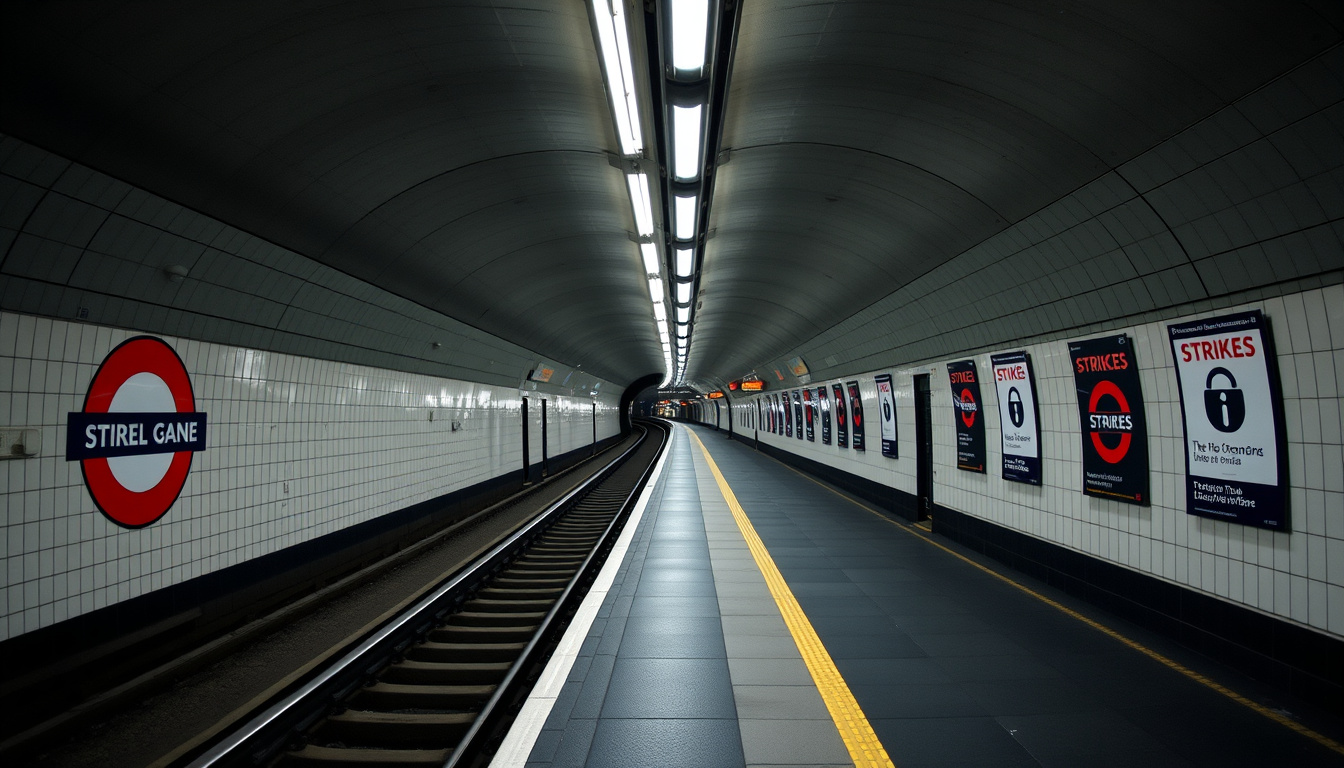
Amid ongoing pay disputes, six 24-hour strikes set for 2026will disrupt the entire London Underground network starting April 21, with Overground lines spared.
Frequently asked questions
When is the next Tube strike?
The next scheduled strike is May 19–20, 2026, followed by May 21–22. June strikes are set for June 16–17 and June 18–19, unless the action is suspended or extended.
Are there Tube strikes today?
Check TfL’s official strikes page at tfl.gov.uk/campaign/strikes for live updates. After the April strikes concluded, no action was scheduled until May 19, 2026.
What are the Tube strike dates?
The confirmed schedule: April 21–22 and April 23–24 (completed), May 19–20, May 21–22, June 16–17, and June 18–19, 2026. All strikes run from 12:00 midday to 11:59 am the following day.
How long do Tube strikes last?
Each RMT strike runs 24 hours, from 12:00 midday to 11:59 am the next day. Disruption typically extends beyond those official hours as services recover.
Which Tube lines are affected?
All Tube lines face reduced service. The Piccadilly and Circle lines close completely. Metropolitan line runs only Baker Street–Aldgate. Central line runs only White City–Liverpool Street. The Elizabeth line, DLR, and Overground are unaffected.
What travel advice during strikes?
Use the Elizabeth line, DLR, or Overground as alternatives. Check tfl.gov.uk/campaign/strikes before travelling. Avoid the Piccadilly line if you need Heathrow access on strike days. Expect crowded stations and longer journey times.
How much do Tube drivers earn?
Base salaries range from approximately £52,000 to £75,000 depending on grade and experience. The £100,000 figure cited by the RMT reflects total compensation packages for senior drivers including extensive overtime and shift premiums — not a standard salary.
Related stories





Sofia Lindberg leads fact-checking, source verification and corrections at Insight Britain.