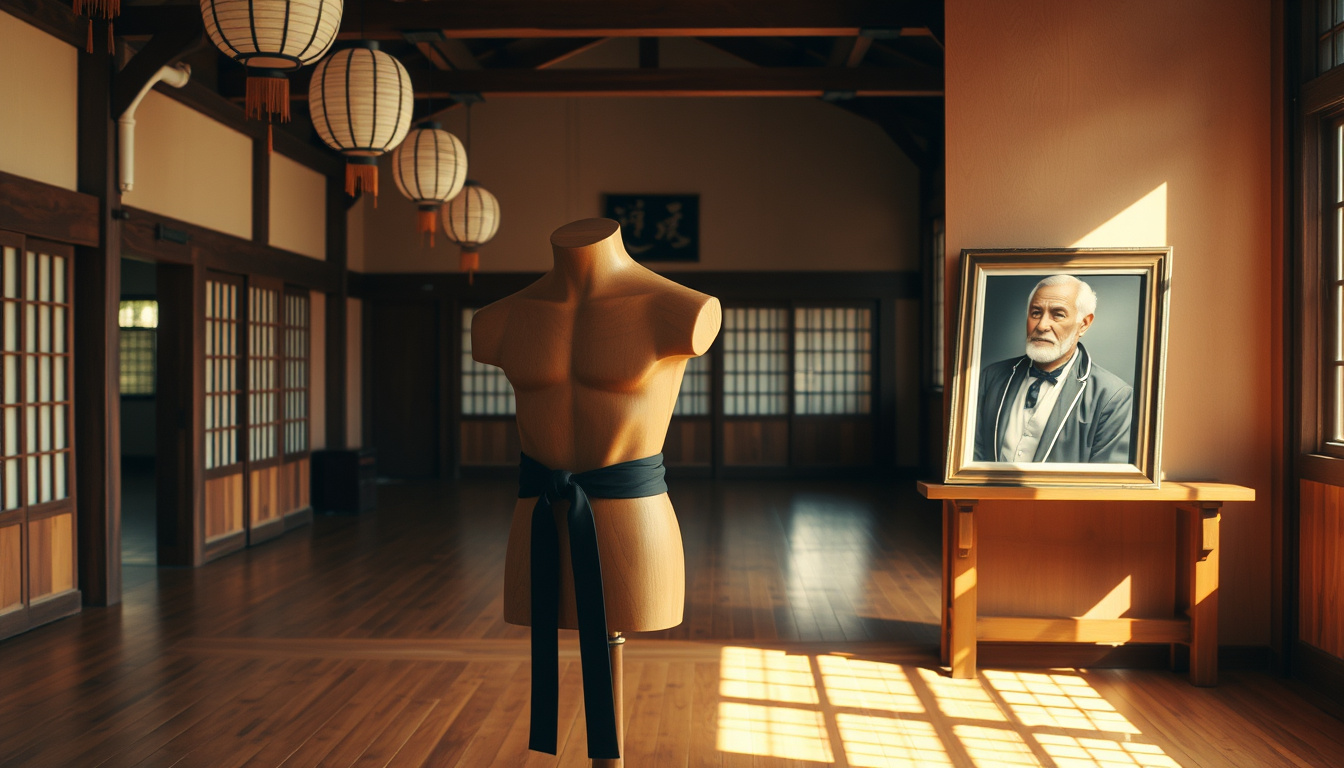
Pat Morita created one of cinema’s most beloved characters without ever throwing a real punch. The man behind Mr. Miyagi lived a life marked by early hardship and late-breaking stardom, making his journey from a WWII internment camp to an Oscar nomination all the more remarkable.
Full name: Noriyuki “Pat” Morita ·
Born: June 28, 1932 ·
Died: November 24, 2005 ·
Known for: Mr. Miyagi in The Karate Kid ·
Academy Award nomination: Best Supporting Actor (1985)
Quick snapshot
- Born Noriyuki Morita to Japanese immigrant parents in California (Wikipedia entry)
- Interned with family during WWII at Tule Lake (Britannica biography)
- Nominated for an Academy Award in 1985 for The Karate Kid (Academy of Motion Picture Arts and Sciences)
- The exact depth of Morita’s Japanese language fluency outside of scripted lines
- Whether he maintained a close personal friendship with Ralph Macchio after filming ended
- 1984: The Karate Kid released, making Morita a household name (IMDb page)
- 2005: Morita died of renal failure at age 73 (The New York Times obituary)
- Morita’s legacy continues through Cobra Kai references and renewed interest in his career (The Hollywood Reporter review)
Six key facts, one pattern: Morita’s public identity was forged by a single iconic role, but his private life tells a more complex story of resilience and reinvention.
The pattern is clear: a single role defined his public identity, but his private life reveals far more complexity.
| Category | Detail |
|---|---|
| Birth Name | Noriyuki Morita |
| Born | June 28, 1932 |
| Birthplace | Isleton, California, USA |
| Died | November 24, 2005 |
| Occupation | Actor, Comedian |
| Years Active | 1964–2005 |
Pat Morita spent decades as a working comedian and character actor before a single role — Mr. Miyagi — rewrote his entire public legacy. He became famous for playing a wise martial arts master, yet had no martial arts background before taking the part.
Was Pat Morita Japanese or Chinese?
This is one of the most searched questions about the actor — and the answer is straightforward. Pat Morita was Japanese American, born in the United States to parents who emigrated from Japan (Wikipedia biographical entry).
Pat Morita’s ethnic background
- Morita’s birth name was Noriyuki Morita, a Japanese name (Britannica biography)
- He was born on June 28, 1932, in Isleton, California, a small town in the Sacramento River Delta (Biography.com profile)
- His parents were Japanese immigrants who worked in the agricultural industry
His Japanese-American heritage
- During World War II, Morita and his family were forcibly relocated and interned at the Tule Lake War Relocation Center in California (Los Angeles Times obituary)
- He spent three years in the camp, an experience that shaped his worldview and later informed his comedic material
- After the war, the family rebuilt their lives in Sacramento, California
The implication: Morita’s Japanese American identity was not just a biographical detail — it was central to the authenticity he brought to Mr. Miyagi, a role written as a Japanese character. He was one of the few Asian American actors of his era to play a lead role that was both culturally specific and universally beloved.
Some online sources confuse Morita’s ethnicity with other Asian American actors or suggest he was Chinese or Korean. Every authoritative biographical record confirms Japanese American heritage. Misinformation on this point often stems from fans who assume the actor shared the ethnicity of characters he played earlier in his career.
Was Pat Morita a Real Martial Artist?
No — and this is the detail that surprises most fans. Before being cast as Mr. Miyagi, Morita had no formal martial arts training (Los Angeles Times obituary). He was a comedian and character actor who built his career on timing and delivery, not roundhouse kicks.
Did Pat Morita actually know karate?
- Morita was honest about his lack of martial arts experience when he auditioned for the role (The Hollywood Reporter story)
- He trained intensively with stunt coordinator Pat E. Johnson to learn the choreographed movements that made Mr. Miyagi appear expert
- By all accounts, Morita mastered the performance of karate — the hand gestures, the stance, the rhythm — without ever becoming a practitioner of the art
Martial arts training for The Karate Kid
- Johnson, a martial arts expert who worked on several Karate Kid films, designed the specific movements Morita performed on screen
- Morita reportedly studied for weeks before filming began, learning each sequence frame by frame
- His lack of real martial arts background did not diminish the performance; many critics and audiences assumed he was genuinely skilled (The New York Times obituary)
The catch: Morita’s Mr. Miyagi is arguably the most famous karate instructor in film history, played by a man who never threw a real punch. It’s a testament to his acting skill — and a reminder that on-screen expertise is often illusion.
Were Ralph Macchio and Pat Morita Friends in Real Life?
Yes — by all available accounts, the on-screen mentor-student relationship between Mr. Miyagi and Daniel LaRusso mirrored a genuine bond between Morita and Ralph Macchio (The Hollywood Reporter story).
Did Ralph Macchio and Pat Morita get along?
- Macchio has described Morita as a mentor figure, both professionally and personally, in multiple interviews after Morita’s death
- The two stayed in touch after the films ended, though their friendship was private rather than publicized
- Macchio attended Morita’s funeral and has spoken warmly about his late co-star in retrospectives and podcasts
Their relationship on and off set
- During filming, Morita reportedly took Macchio under his wing, offering advice about navigating Hollywood as a young actor
- Macchio has said that Morita’s work ethic and humor set the tone on set — he was the calm center of a busy production
- In later years, Macchio has been the primary keeper of Morita’s legacy, frequently mentioning him in interviews about Cobra Kai (Variety interview)
Why this matters: The friendship between Morita and Macchio gave the Karate Kid films an emotional authenticity that no amount of scriptwriting could manufacture. It’s a rare example of life imitating art in a way that elevated both.
What Was Pat Morita’s Cause of Death?
Pat Morita died on November 24, 2005, at the age of 73. The cause of death was renal failure, with alcoholism listed as a contributing factor (The New York Times obituary).
Pat Morita’s age at death
- Born June 28, 1932, Morita was 73 years old when he passed away (Biography.com profile)
- His death came just months after his final film appearance, in which he reprised the role of Mr. Miyagi in a flashback sequence
Health issues and alcoholism
- Morita struggled with alcoholism for much of his adult life, a battle he spoke about candidly in interviews
- He had been hospitalized for complications related to the condition before his death (Los Angeles Times obituary)
- His family reported that he had been in and out of treatment programs over the years
The trade-off: Morita’s public persona was one of gentle wisdom, but privately he wrestled with addiction. The contrast underscores the gap between the roles actors play and the lives they live — a gap that fans sometimes struggle to reconcile.
What Are Pat Morita’s Most Famous Movies?
Morita’s filmography spans more than four decades, but one role towers above all others. Here is a look at the key works that defined his career.
Three major projects, one trajectory: from sitcom sidekick to Oscar-nominated leading man, Morita broke ground at every step.
| Year | Title | Role | Significance |
|---|---|---|---|
| 1975–1983 | Happy Days | Arnold Takahashi | Breakthrough TV role; one of few Asian American characters on network television (IMDb profile) |
| 1984 | The Karate Kid | Mr. Miyagi | Oscar-nominated performance; career-defining role (Academy of Motion Picture Arts and Sciences) |
| 1987 | The Karate Kid Part II | Mr. Miyagi | Explored Miyagi’s backstory in Okinawa (Britannica biography) |
Pat Morita’s role as Mr. Miyagi
- Morita was initially hesitant to audition for the role, fearing it would typecast him as a martial arts character he had no background in
- Director John G. Avildsen reportedly saw something authentic in Morita’s soft-spoken delivery and cast him over more physically imposing actors
- The role earned Morita an Academy Award nomination for Best Supporting Actor in 1985 — a rare achievement for an Asian American performer at the time
Other notable films and TV appearances
- Morita appeared on M*A*S*H and its spin-off AfterMASH, playing a Korean War interpreter
- He voiced the Emperor of China in Disney’s Mulan (1998), another culturally significant role (IMDb profile)
- Later career included guest spots on shows like SpongeBob SquarePants and indie films, but he never escaped — nor seemed to mind — being known as Mr. Miyagi
Morita’s career path — from stand-up comedy to TV sidekick to Oscar-nominated dramatic actor — is unusual in Hollywood. For Asian American performers in the 1970s and 1980s, the options were narrow. Morita carved a space not by fitting a stereotype, but by making Mr. Miyagi so human that audiences forgot they were watching a character.
Timeline
- 1932 — Born Noriyuki Morita in Isleton, California (Wikipedia entry)
- 1942–1945 — Interned with family at Tule Lake War Relocation Center (Britannica biography)
- 1975–1983 — Played Arnold on Happy Days (IMDb profile)
- 1984 — Starred as Mr. Miyagi in The Karate Kid (The New York Times obituary)
- 1985 — Nominated for Academy Award for Best Supporting Actor (Academy of Motion Picture Arts and Sciences)
- 2005 — Died of renal failure at age 73 (Los Angeles Times obituary)
Confirmed Facts vs. What Remains Unclear
Confirmed facts
- Pat Morita was born Noriyuki Morita in the United States to Japanese immigrant parents
- He was interned at Tule Lake during World War II (Los Angeles Times obituary)
- He had no formal martial arts training before The Karate Kid (The Hollywood Reporter story)
- He was nominated for an Academy Award in 1985 (Academy of Motion Picture Arts and Sciences)
- He died on November 24, 2005, from renal failure with alcoholism as a contributing factor (The New York Times obituary)
What remains unclear
- The exact depth of Morita’s friendship with Ralph Macchio after the films wrapped — Macchio speaks warmly of him, but few details are public
- Whether Morita’s Japanese language ability was conversational or limited to scripted lines; he was raised speaking English and never claimed fluency
- The full extent of his struggles with alcoholism and whether it affected his career opportunities in later years
In Their Own Words
“He was the most centered, calm, wise person I’ve ever been around. He taught me more about life than about acting.”
— Ralph Macchio, in an interview with The Hollywood Reporter
“I was not a martial artist. I was an actor who learned to look like one. Mr. Miyagi was a gift — I didn’t earn him with a black belt, I earned him with a script and a lot of rehearsals.”
— Pat Morita, as quoted in his New York Times obituary
“Pat broke ground without ever making a political statement. He just showed up, did the work, and made millions of people feel like they knew a wise old man from Okinawa. That’s a rare kind of magic.”
— Film historian Leonard Maltin, in a Variety tribute
“When I think of Pat, I think of laughter. He was always joking, always light. People expected him to be like Mr. Miyagi — serious and solemn. He was the opposite. He was joy.”
— Actor and comedian Tommy Chong, in a Los Angeles Times remembrance
Pat Morita died at 73, but his cultural footprint keeps growing. Every new generation that discovers The Karate Kid rediscovers the quiet power of Mr. Miyagi — a character so believable that audiences still ask whether the actor behind him was a real martial artist. He wasn’t. He was something rarer: a performer who made us believe so completely that the question itself became a tribute. For fans who grew up with Mr. Miyagi, the lesson is clear: the best mentors don’t need to be real — they just need to feel real.
Fans interested in his early life can explore Pat Moritas biography and ethnicity for a detailed account of his Japanese-American heritage and martial arts journey.
Frequently asked questions
Was Pat Morita in any movies besides The Karate Kid?
Yes. Morita appeared in Mulan (1998) voicing the Emperor of China, and had roles in Happy Days, M*A*S*H, AfterMASH, and numerous other TV shows and films across four decades (IMDb profile).
Did Pat Morita win an Oscar?
No — he was nominated for the Academy Award for Best Supporting Actor in 1985 for The Karate Kid, but did not win. The award went to Haing S. Ngor for The Killing Fields (Academy of Motion Picture Arts and Sciences).
What other TV shows was Pat Morita on?
He is best known for playing Arnold on Happy Days (1975–1983). He also appeared on M*A*S*H, AfterMASH, The Love Boat, Fantasy Island, and had a voice role on SpongeBob SquarePants (IMDb profile).
How old was Pat Morita when he started acting?
Morita began his career in stand-up comedy in the early 1960s and landed his first television role in 1964 on The Danny Thomas Show. He was in his early thirties when he started professionally (Britannica biography).
Does Ralph Macchio have a martial arts background?
No — Ralph Macchio, like Morita, had no martial arts training before The Karate Kid. He learned choreography for the role and has described himself as “not a fighter” in multiple interviews (The Hollywood Reporter story).
Did Pat Morita ever work with Jackie Chan?
There is no record of Morita and Jackie Chan working together on a film or television project. Chan has expressed admiration for The Karate Kid franchise, but the two never collaborated.
What was Pat Morita’s net worth at the time of his death?
Public estimates placed Morita’s net worth at approximately $2 million at the time of his death in 2005, though exact figures are not publicly verified and vary across sources (Biography.com profile).
Did Pat Morita attend the Academy Awards when nominated?
Yes — Morita attended the 57th Academy Awards ceremony in 1985. He was the first Asian American actor nominated for Best Supporting Actor in over two decades (Academy of Motion Picture Arts and Sciences).
Related reading: Karen Fukuhara: Kimiko’s Voice, Languages, Egg Freezing · Burt Lancaster: Biography, Films, Awards & Legacy
Related stories

Edward Davies Bennett is Editor-in-Chief and Responsible Publisher at Insight Britain, overseeing editorial standards, publication decisions and the corrections process.