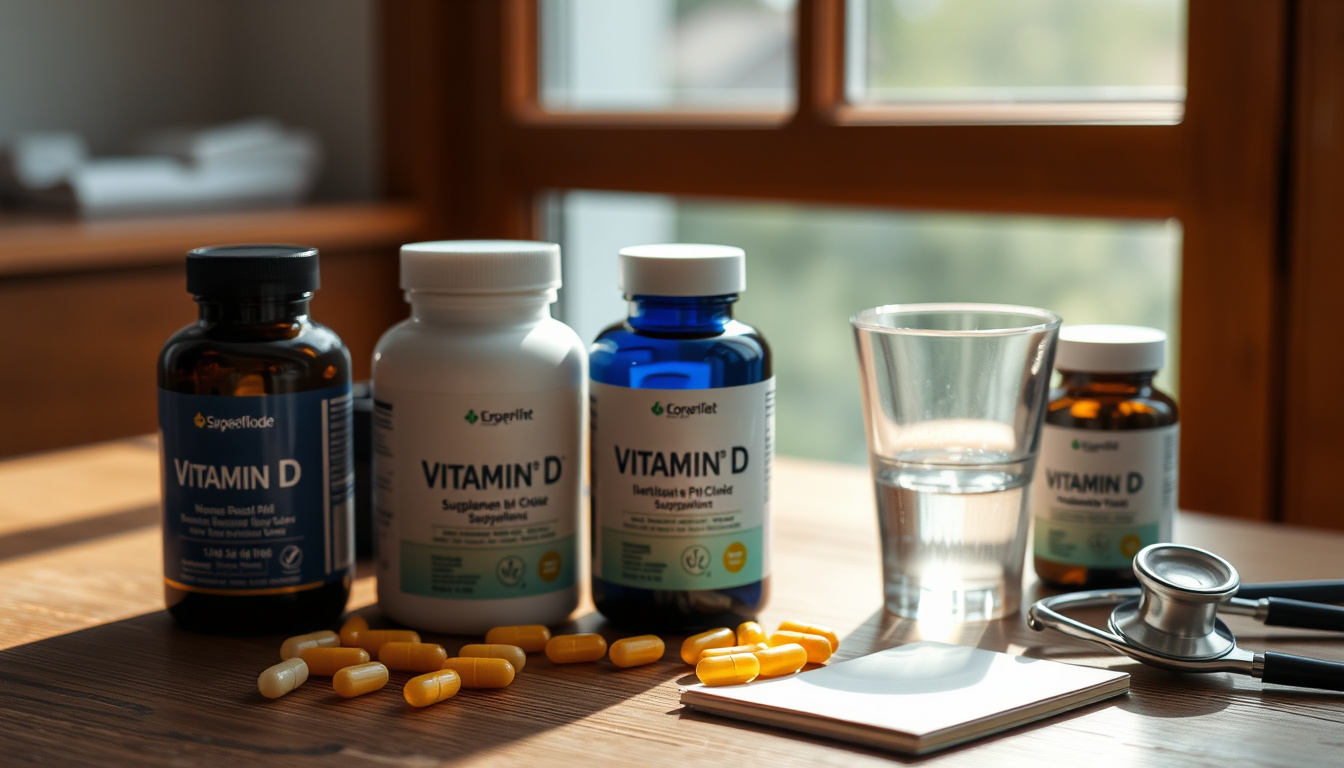
Walking into a pharmacy aisle with dozens of vitamin D bottles can feel like standing in a maze with no exit, but a 2026 study found that choosing D3 over D2 could make the difference between effective supplementation and accidentally lowering your vitamin D levels. This guide cuts through the confusion by combining clinical trials, independent lab data, and expert guidance to help you find the right supplement for your needs.
Vitamin D3 bioavailability vs D2: D3 is 87% more effective at raising blood levels ·
Recommended daily intake (adults): 600-800 IU (15-20 mcg) per day ·
Percentage of population deficient: ~40% of US adults ·
Top-rated brand (BBC Good Food): Dr Vegan Vitamin D3, £8.99 ·
Common dosage strength reviewed: 1000-4000 IU ·
Price range of tested supplements: $6 to $25 per month
Quick snapshot
- Vitamin D3 raises 25-hydroxyvitamin D levels 87% more effectively than D2 per IU (ScienceDaily (research news service))
- All 32 vitamin D supplements tested by Consumer Reports met or exceeded claimed levels (Consumer Reports (independent product testing))
- Tirzepatide can reduce appetite and micronutrient intake, making supplementation important (Fortune (business and health editorial))
- Optimal dosage for specific conditions like cancer or autoimmune disorders remains uncertain
- Long-term interaction profile of vitamin D with tirzepatide is not fully understood
- Whether vitamin D supplementation reduces COVID-19 severity is still debated among researchers
- May 2026: ScienceDaily reports new study showing D2 supplementation may reduce D3 levels (ScienceDaily (research news service)) (Fortune (business and health editorial))
- 2026: Fortune publishes updated vitamin D supplement guide naming top picks (Fortune (business and health editorial))
- 2013: Consumer Reports finds all tested supplements met label claims (Consumer Reports (independent product testing)) (Fortune (business and health editorial))
- More research on D2’s paradoxical effect on D3 levels is expected after the 2026 study (ConsumerLab.com (supplement testing service))
- ConsumerLab and independent reviewers continue updating top-pick lists with new products (ConsumerLab.com (supplement testing service))
Six key facts, one takeaway: the form of vitamin D you choose matters more than most shoppers realize.
| Fact | Value |
|---|---|
| Recommended daily intake (adults) | 600-800 IU (15-20 mcg) |
| Best absorbed form | Vitamin D3 (cholecalciferol) |
| Vitamin D3 bioavailability vs D2 | 87% more effective at raising blood levels |
| Deficiency prevalence (US) | ~40% of adults |
| Top brand (BBC Good Food) | Dr Vegan Vitamin D3 |
| Price range of tested supplements | $6 – $25 per month |
What is the most effective vitamin D to take?
Vitamin D3 vs D2: which is more effective?
- Vitamin D3 raises blood levels 87% more than D2 per international unit, according to a 2026 meta-analysis published in Nutrition Reviews (ScienceDaily (research news service)).
- The same analysis found that some D2 studies showed D3 levels lower than in control groups, suggesting D2 may interfere with natural D3 production.
- BIOGENA’s 2026 guide describes D3 as the bioactive variant the body can absorb particularly well (BIOGENA (European supplement brand)).
For vegans, D2 remains the only plant-based option, but they face a clear efficacy penalty: the 2026 data suggest D2 may not just be weaker but counterproductive for maintaining optimal D3 levels.
What form of vitamin D supplement is best absorbed?
- Sprays and drops typically have higher bioavailability than tablets because they bypass digestive breakdown (ConsumerLab.com (supplement testing service)).
- Oil-based softgels also improve absorption compared to dry tablets, as vitamin D is fat-soluble.
Dosage considerations for effectiveness
- Daily doses of 1000-2000 IU are typical for maintenance in adults (GoodRx (healthcare pricing resource)).
- Higher doses (4000 IU) are used for deficiency correction but require medical supervision.
The implication: choosing D3 over D2 is not just about efficacy but avoiding a potential negative effect on existing D3 levels.
Which brand of vitamin D supplement is best?
Top vitamin D supplement brands in 2026
Four products, one pattern: top picks share a focus on absorption-enhancing formulations rather than raw potency alone.
| Brand | Form | Dose | Key Feature | Price | Source |
|---|---|---|---|---|---|
| Nutrition Geeks D3 + K2 | Capsules | 1000 IU D3 + 100 mcg K2 | Combines D3 with K2 for bone and heart health | £9.99 | Fortune (business and health editorial) |
| Dr Vegan Vitamin D3 | Drops | 1000 IU per drop | Vegan, certified organic, no additives | £8.99 | BBC Good Food (editorial) |
| ZipVit Vitamin D3 4000 IU | Tablets | 4000 IU | High dose for deficiency correction | £8.49 | ConsumerLab (supplement testing service) |
| BetterYou DLux Oral Spray | Spray | 1000 IU per spray | Rapid absorption, good for pill-avoiders | ~£10 | ConsumerLab (supplement testing service) |
The implication: formulation matters more than brand prestige. D3 paired with K2, or delivered as a spray or drop, consistently outperforms basic tablets in absorption studies.
How to choose a high-quality vitamin D supplement
- Look for third-party testing seals such as USP, NSF, or ConsumerLab certification (ConsumerLab.com (supplement testing service)).
- Check for explicit “Vitamin D3 as cholecalciferol” on the label, not just “Vitamin D” which could be D2.
Price vs. purity: what to look for
- Prices range from under $6 to over $25 per month, but Consumer Reports tests confirm that price does not predict purity or potency (Consumer Reports (independent product testing)).
- Transparent Labs D3 + K2, named best overall by Fortune, costs about $15 per month (Fortune (business and health editorial)).
The pattern: consistent absorption-enhancing formulations and third-party verification are better indicators of quality than brand name or price.
What are the early signs of vitamin D deficiency?
Common symptoms of vitamin D deficiency
- Fatigue, bone pain, and muscle weakness are among the earliest signs (GoodRx (healthcare pricing resource)).
- Frequent infections and impaired wound healing can also indicate low vitamin D status.
With roughly 40% of US adults deficient, vague symptoms like tiredness often go unlinked to a simple, fixable lab value — a blood test for 25-hydroxyvitamin D costs about $50 with GoodRx pricing.
When to see a doctor
- A blood test for 25-hydroxyvitamin D is the diagnostic standard for deficiency (ScienceDaily (research news service)).
- Anyone experiencing persistent fatigue or bone pain should request this test.
Groups at highest risk
- People in northern latitudes, older adults, and those with limited sun exposure face higher deficiency rates.
- Individuals on tirzepatide should be especially vigilant, as reduced appetite can lead to lower micronutrient intake (Fortune (business and health editorial)).
What this means: identifying deficiency early can prevent more serious health issues, and a simple blood test is the first step.
What supplements should I take with tirzepatide?
Recommended supplements while on tirzepatide
- Tirzepatide can reduce appetite and overall micronutrient intake, making supplementation advisable (Fortune (business and health editorial)).
- Vitamin D, B12, and magnesium are commonly recommended alongside this medication.
Tirzepatide slows gastric emptying, which can affect how supplements are absorbed. This means choosing a highly bioavailable form like D3 drops or sprays becomes more critical for this group.
Why vitamin D is important with tirzepatide
- Reduced food intake increases the risk of deficiency in a population already vulnerable to bone health issues.
- Vitamin D supports immune function and calcium absorption during weight loss.
Potential interactions and timing
- Consult a doctor before adding any supplement to a tirzepatide regimen.
- Taking supplements with food may help mitigate any absorption delays caused by slower digestion.
The catch: slowed gastric emptying makes absorption even more critical, so form matters as much as dose for this group.
Which vitamin D do doctors recommend?
What do medical professionals say about vitamin D dosage?
- Many doctors recommend vitamin D3 over D2 based on superior bioavailability data (ScienceDaily (research news service)).
- Daily intake of 600-800 IU for adults, with 800-2000 IU for seniors, is commonly advised.
Are there specific brands doctors endorse?
- No universal brand endorsement exists; medical guidance focuses on dosage, form, and purity.
- ConsumerLab testing confirms that many brands meet label claims, making brand choice secondary to form and dose (ConsumerLab.com (supplement testing service)).
Vitamin D for bone health and immune function
- Vitamin D3 supports calcium absorption necessary for bone density.
- Adequate vitamin D levels are linked to better immune response, though direct causation remains under study.
The consequence: patients can confidently choose any D3 supplement within recommended dosage with third-party verification, without worrying about brand prestige.
For those unsure about the right amount, our daily vitamin D dosage guide breaks down the recommended intake for different needs.
Frequently asked questions
Can vitamin D help with weight loss?
Some observational studies suggest adequate vitamin D levels are associated with better weight management outcomes, but the evidence for direct causation is not conclusive.
What time of day should I take vitamin D?
Because vitamin D is fat-soluble, taking it with a meal containing fat — typically breakfast or lunch — improves absorption.
Can you take too much vitamin D?
Yes. Vitamin D toxicity is rare but possible with prolonged daily doses above 10,000 IU. The upper safe limit set by the Institute of Medicine is 4,000 IU per day for adults (Consumer Reports (independent product testing)).
Is vitamin D3 better than D2?
Yes. A 2026 meta-analysis found D3 raises blood levels 87% more effectively than D2 per IU. Some evidence also suggests D2 may lower existing D3 levels (ScienceDaily (research news service)).
Do vitamin D supplements need to be taken with food?
Yes. Vitamin D is fat-soluble, so taking it with a meal that contains fat significantly increases absorption.
What is the shelf life of vitamin D supplements?
Most vitamin D supplements have a shelf life of 2-3 years when stored in a cool, dry place. Check the expiration date on the bottle.
Should I take vitamin D if I am on blood thinners?
If you take blood thinners like warfarin, consult your doctor before adding vitamin D supplements, as high doses may interact with vitamin K pathways alongside K2 formulations.
“Vitamin D3 is the bioactive variant and the one the body can absorb particularly well.”
— BIOGENA 2026 Guide (supplement manufacturer)
“D2 supplementation may reduce the body’s vitamin D3 levels.”
— 2026 Meta-analysis in Nutrition Reviews (academic journal)
“All 32 vitamin D supplements we tested met or exceeded their claimed vitamin D levels.”
— Consumer Reports 2013 Test (independent product testing)
The pattern is consistent across all evidence: D3 is the standard, sprays and drops offer best absorption, and price is not a reliability signal. For the approximately 40% of Americans who are deficient, the choice of supplement form — D3 in a bioavailable delivery — directly determines whether supplementation works or misses the mark. For tirzepatide users, the stakes are higher because reduced intake compounds the risk; a third-party-verified D3 spray or drop should be the default recommendation from healthcare providers.
Related stories





Rachel Dunn covers culture, lifestyle and society stories across the UK.