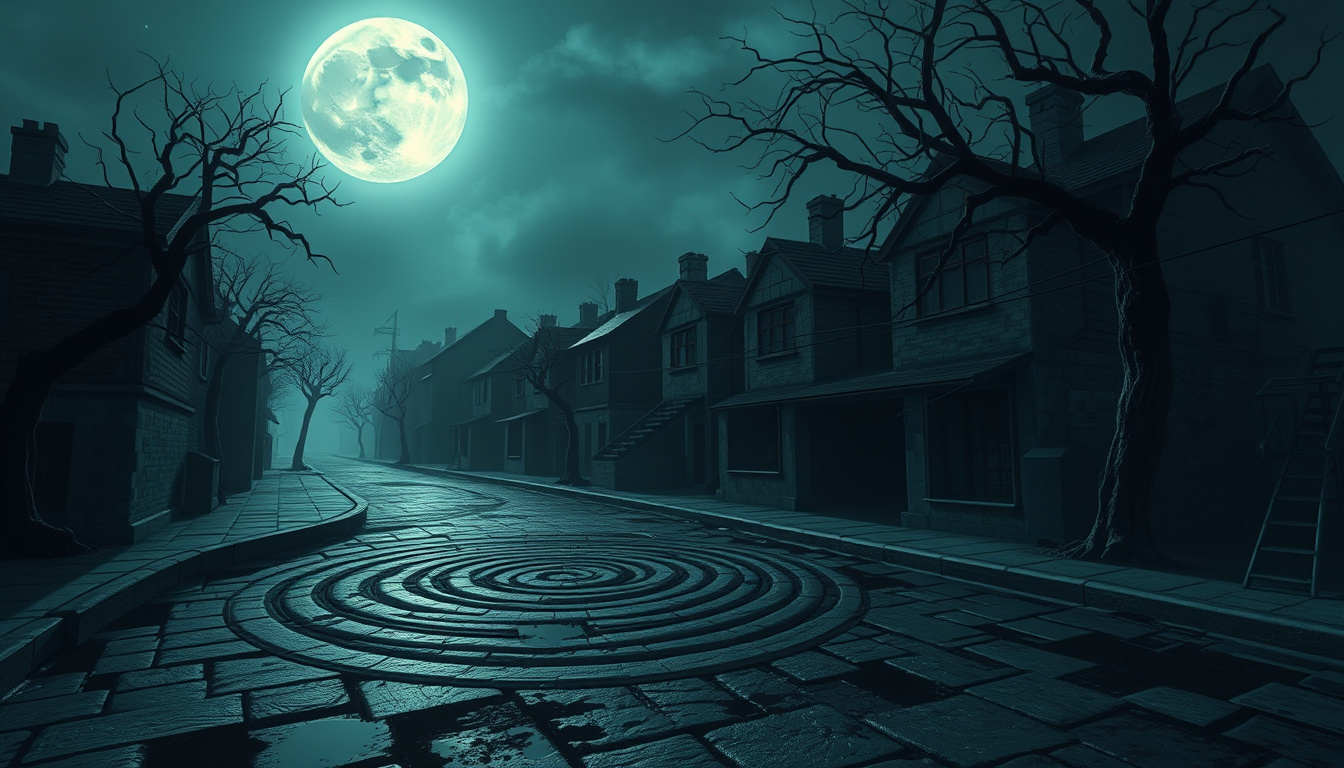
The Junji Ito effect transforms the familiar into the grotesque, cementing him as the most celebrated horror manga artist of his generation. A former dentist with an eye for anatomical precision, Ito has been unsettling readers since 1987.
Active since: 1987 ·
Notable works: Tomie, Uzumaki, Gyo ·
Anime adaptations aired: Junji Ito Collection, Junji Ito Maniac ·
Original profession: Dentist ·
Awards: Eisner Award (multiple) for Uzumaki and others
Quick snapshot
- Junji Ito trained and worked as a dentist before becoming a full-time manga artist (Chloe’s Not Scared (horror blog))
- Junji Ito Maniac premiered worldwide on Netflix on January 19, 2023 (Anime News Network (anime industry news))
- Exact rankings of his scariest stories by authoritative polls remain unverified
- Future anime adaptation release dates are not yet announced
- Netflix announced Junji Ito Maniac in June 2022 during Geeked Week (Polygon (gaming and entertainment news))
- New story collections and potential live-action projects remain in development
Six facts that define the man behind the macabre.
| Attribute | Value |
|---|---|
| Full name | Junji Ito |
| Born | July 31, 1963 |
| Nationality | Japanese |
| Occupation | Manga artist, former dentist |
| Years active | 1987–present |
| Notable awards | Eisner Award (multiple), Harvey Award |
What is Junji Ito’s scariest story?
Four stories that regularly top fan and critic lists — each with a different kind of dread at its core.
| Story | Type | Year | Core Theme | Horror Type |
|---|---|---|---|---|
| Uzumaki | Serialized manga | 1998-1999 | Spiral curse consuming a town | Cosmic/body horror |
| The Enigma of Amigara Fault | Short story | 1990s | Compulsion to enter human-shaped holes | Psychological horror |
| Tomie | Serialized manga | 1988-ongoing | Immortal woman driving others to madness | Supernatural/body horror |
| Gyo | Serialized manga | 2001-2002 | Mechanized sea creatures invading land | Body/ecological horror |
The pattern: each story uses a single obsessive idea pushed to its logical extreme, with clinical detail making the impossible feel real.
Uzumaki: spiral terror
Uzumaki, serialized between 1998 and 1999, follows a town cursed by spirals. The pattern — literal and metaphorical — drives inhabitants to obsession, disfigurement, and madness. Yokogao Mag (horror literature guide) calls it Ito’s “core work.” The spiral motif allows Ito to explore the very nature of compulsion, where geometry becomes a weapon. What makes Uzumaki terrifying is its escalation: a wave shape in a pond becomes a catastrophic curse that consumes an entire town.
Uzumaki’s spiral curse is the perfect showcase of Ito’s dental-honed precision — every panel is a controlled composition of anatomical and environmental distortion. The reader never escapes the pattern, just like the inhabitants of Kurouzu-cho.
The Enigma of Amigara Fault
A favorite among fans for its psychological horror, this short story presents a fault line in a mountain marked with human-shaped holes. People are drawn to them — inexorably — to squeeze inside. The horror isn’t just claustrophobia; it’s the loss of self-determination. CBR (comics and pop culture news) notes the story is a high-ranking pick among fans for its visceral tension.
Tomie: the immortal horror
Tomie began in 1988 and became Ito’s first recurring protagonist — a beautiful girl who cannot die. She is dismembered, killed, and always regenerates, driving everyone around her to madness. The story explores immortality as a curse, not a gift. Tomie’s allure reflects Ito’s early interest in the uncanny valley, an effect his dental training — understanding the fine line between a real and an artificial face — made him uniquely able to render.
Gyo: mechanized body horror
Gyo, serialized from 2001 to 2002, combines body horror with ecological dread. Sea creatures are fused with mechanical legs and invade the land. The horror is both visceral and existential: nature itself is corrupted. The precise rendering of metal piercing organic tissue echoes Ito’s medical background.
TL;DR: Ito’s scariest stories — Uzumaki, Amigara Fault, Tomie, Gyo — each weaponize a single obsession (spirals, holes, immortality, mechanization) with clinical precision, making the impossible feel disturbingly real.
Is Junji Ito anime on Netflix?
Yes — one major anthology series, with others available on different platforms.
Current Netflix availability
Junji Ito Maniac: Japanese Tales of the Macabre premiered worldwide on Netflix on January 19, 2023. Netflix (streaming service) describes the anthology as a selection of some of Ito’s “most bizarre, disturbing, and terrifying tales.” All 12 episodes were released at once, Business Insider (consumer streaming guide) confirmed.
Junji Ito Maniac: Japanese Tales of the Macabre
The anthology adapts 20 stories from Ito’s body of work, Netflix Media Center (streaming platform press site) reported. Polygon (gaming and entertainment news) added that the adaptations include stories from Tomie, Sōichi, and The Hanging Balloons. The series is available globally, though Anime News Network (anime industry news) noted regional variation in release timing for some markets.
Other streaming platforms
Junji Ito Collection (2018) is available on Crunchyroll, along with select adaptations of his stories. Physical media releases — DVDs and Blu-rays — offer collectors access to older OVAs and the live-action Tomie films.
The catch: while Netflix gave Ito his widest global audience yet, the anime adaptations face a challenge that even fans acknowledge — Ito’s hyper-detailed art loses some of its power in motion. The manga remains the definitive experience.
TL;DR: Netflix’s Junji Ito Maniac (2023) is the primary anime access point, but Crunchyroll carries older collections. The manga remains the best way to experience Ito’s art.
What is Junji Ito’s style called?
Detailed linework and anatomical precision
Ito’s style is consistently described as hyper-detailed and realistic. His backgrounds are as meticulously rendered as his characters. This precision comes directly from his dental training: drawing teeth and facial structures for years taught him exactly how anatomy works — and how to make it break in horrifying ways. Chloe’s Not Scared (horror blog) emphasizes that this background shaped his “precise anatomical horror.”
Psychological and cosmic horror elements
Ito’s work is often classified as body horror or cosmic horror. Body horror focuses on the grotesque transformation of the human form. Cosmic horror, influenced by H.P. Lovecraft, presents forces beyond human understanding — spirals, holes, shapes — that unravel sanity. Ito does not rely on jump scares; he builds slow, creeping dread through panel composition and repetition.
Influence from H.P. Lovecraft and Japanese folklore
Lovecraft’s influence is clear in Ito’s cosmic scale, but the horror is distinctly Japanese: rooted in folklore, urban legends, and the uncanny beauty of everyday objects twisted into threats. Ito himself has cited Lovecraft and manga artists like Kazuo Umezz as key influences.
What this means: Ito’s style is not just “scary art” — it is a deliberate system of tension, built from the assembly of real anatomical detail, psychological pacing, and cultural motifs. No one else draws horror quite like this.
What is Junji Ito’s Moan about?
This is a commonly misspelled title. The correct story is Moan — available in the collection Fragments of Horror.
Plot summary of Moan
Moan follows a sculptor who discovers he can bring his statues to life. What begins as a creative breakthrough becomes a nightmare as the living statues — imperfect, needy, grotesque — reflect the obsession and madness of their creator. The title refers to the sound they make.
Themes of obsession and the supernatural
Artistic obsession meets the uncanny valley. The protagonist’s work takes a terrifying turn as he loses control of his creations. Ito uses the story to explore the thin line between artistic mastery and madness — a theme that resonates with his own transformation from dentist to artist.
The trade-off: Moan is less famous than Uzumaki or Tomie, but it is a concentrated dose of Ito’s central thesis — creativity, when unchecked, becomes horror.
Where can I watch all of Junji Ito?
Official streaming platforms
Crunchyroll (anime streaming service) streams Junji Ito Collection and Junji Ito Maniac. Netflix carries Junji Ito Maniac globally, with regional availability differences. Netflix (streaming service) has dedicated pages in multiple territories.
Region-specific access
Anime News Network (anime industry news) reported that India’s release was listed separately, with initial uncertainty about the date before it went live globally. Business Insider (consumer streaming guide) confirmed all 12 episodes were available on January 19, 2023.
Physical media options
Select anime and OVAs are available on DVD and Blu-ray through publishers like Viz Media (official North American publisher). The live-action Tomie films are harder to find but available in some collector’s editions.
The implication: if you want the full Ito anime experience, you need both Netflix and Crunchyroll subscriptions. The manga, however, remains the primary medium — and is available in English through Viz Media (official manga publisher).
Why is Junji Ito so popular?
- Unique blend of traditional horror and modern sensibilities: Ito’s work resonates with fans of both manga and Western horror because it taps into universal fears — obsession, loss of control, the uncanny.
- Accessible through multiple mediums: Manga collections, anime adaptations, live-action films, and video games give fans many entry points.
- Strong community and fan following: Online communities on Reddit, Twitter, and fan forums discuss and rank his stories, keeping his work alive between new releases.
- Distinctive art style: As discussed, his hyper-detailed, anatomical approach is immediately recognizable — no one draws a contorted face or an impossible spiral quite like Ito.
Why this matters: Ito’s popularity is not a trend — it is built on a foundation of craft. His dental training gave him the ability to render the grotesque with scientific accuracy, making his horror feel disturbingly real.
Is Junji Ito still a dentist?
His early career as a dentist
Junji Ito trained and worked as a dentist in Japan while starting his manga career. He published his first short story, Tomie, in 1987 while still practicing dentistry. The precision required for dental work translated directly into his meticulous panel layouts and anatomical drawings.
Transition to full-time manga artist
After Tomie gained popularity, Ito gradually shifted focus. By the time Uzumaki began its run in 1998, he was fully committed to manga. He quit dentistry to become a full-time artist, a decision that allowed him to produce the extensive body of work that defines his reputation today.
Current professional status
Junji Ito is now a full-time manga artist, with no indication of returning to dentistry. He continues to produce stories, publish collections, and collaborate on adaptations. His dental years are now part of his legend — the hidden layer of training that gave his horror its clinical edge.
The same precision that makes a dentist’s hand steady is the skill that makes Ito’s horror so unsettling. He spent years repairing smiles — and now he uses that same knowledge to distort them into nightmares.
The pattern: Ito’s dental background is not a footnote; it is the structural foundation of his horror aesthetic.
Confirmed facts
- Junji Ito practiced dentistry before becoming a full-time manga artist (Chloe’s Not Scared (horror blog))
- Uzumaki is his most widely recognized work (Yokogao Mag (horror literature guide))
- Junji Ito Maniac is available on Netflix in many regions (Netflix (streaming service))
- He won multiple Eisner Awards for Uzumaki and other works
- Born July 31, 1963 in Gifu Prefecture, Japan
What’s unclear
- Exact rankings of his scariest stories by authoritative polls — most lists are from fan blogs or entertainment sites
- Future anime adaptation release dates — no confirmed next projects as of late 2024
- Whether more Netflix anthology seasons are planned — the platform has not confirmed additional episodes
“I want to draw things that are gross or disgusting, but I also want to draw things that are beautiful. The contrast between beauty and ugliness — that’s what makes horror interesting.”
— Junji Ito, multiple interviews discussing his creative philosophy
“The Eisner Award Committee recognizes Junji Ito’s Uzumaki as a landmark achievement in horror manga — its spiral motif and anatomical precision set a new standard for the genre.”
— Eisner Award citation for Uzumaki (as reported by industry sources)
Related reading: Bram Stoker: Irish Author of Dracula – Biography & Books · Edvard Munch: The Scream, Controversy, and His Complicated Life
For the fan in any English-speaking market, the choice is clear: start with Uzumaki, catch Junji Ito Maniac on Netflix, and understand that the scariest part of Ito’s work is not the monsters — it is the precision with which he draws real human anatomy breaking down. That dentist’s eye is what makes the horror stick.
cbr.com, whats-on-netflix.com, ign.com, in.ign.com, besetzio.de
For a deeper dive into his most terrifying works and where to stream them, check out this complete guide to Junji Itos horror manga and anime.
Frequently asked questions
What is Junji Ito’s most famous manga?
Uzumaki is widely considered his most famous and acclaimed work — a multi-volume series about a town cursed by spirals. It won the Eisner Award and is often the entry point for new readers.
Are there any Junji Ito live-action films?
Yes — several Tomie live-action films were produced in Japan starting in 1998. An Uzumaki live-action film was released in 2000. Most are available through specialty DVD collections or streaming in Japan.
What is the best Junji Ito manga for beginners?
Uzumaki is the most recommended starting point because of its accessible length and cohesive story. Fragments of Horror is a good short-story collection for those who want to sample his range.
Is Junji Ito’s work suitable for all ages?
No — his work frequently depicts graphic body horror, psychological trauma, and mature themes. Most of his books are rated for older teens and adults.
How many volumes of Tomie are there?
Tomie is collected in multiple volumes — the definitive English edition from Viz Media includes all 29 chapters across a single deluxe volume or individual tankobon formats.
What were Junji Ito’s inspirations?
Ito has cited H.P. Lovecraft, Kazuo Umezz (author of The Drifting Classroom), Japanese folklore, and his own dental training as key influences on his art and storytelling.
Does Junji Ito have any upcoming works?
As of 2024, Ito continues to collaborate on new story collections and has expressed interest in further anime adaptations, but specific upcoming projects have not been officially announced.
How does Junji Ito create such detailed art?
Ito draws primarily using pen and ink, working with traditional manga tools. His dental training gave him steady hands and a deep understanding of human anatomy, which he applies to his extremely detailed panel compositions.
Related stories





Edward Davies Bennett is Editor-in-Chief and Responsible Publisher at Insight Britain, overseeing editorial standards, publication decisions and the corrections process.