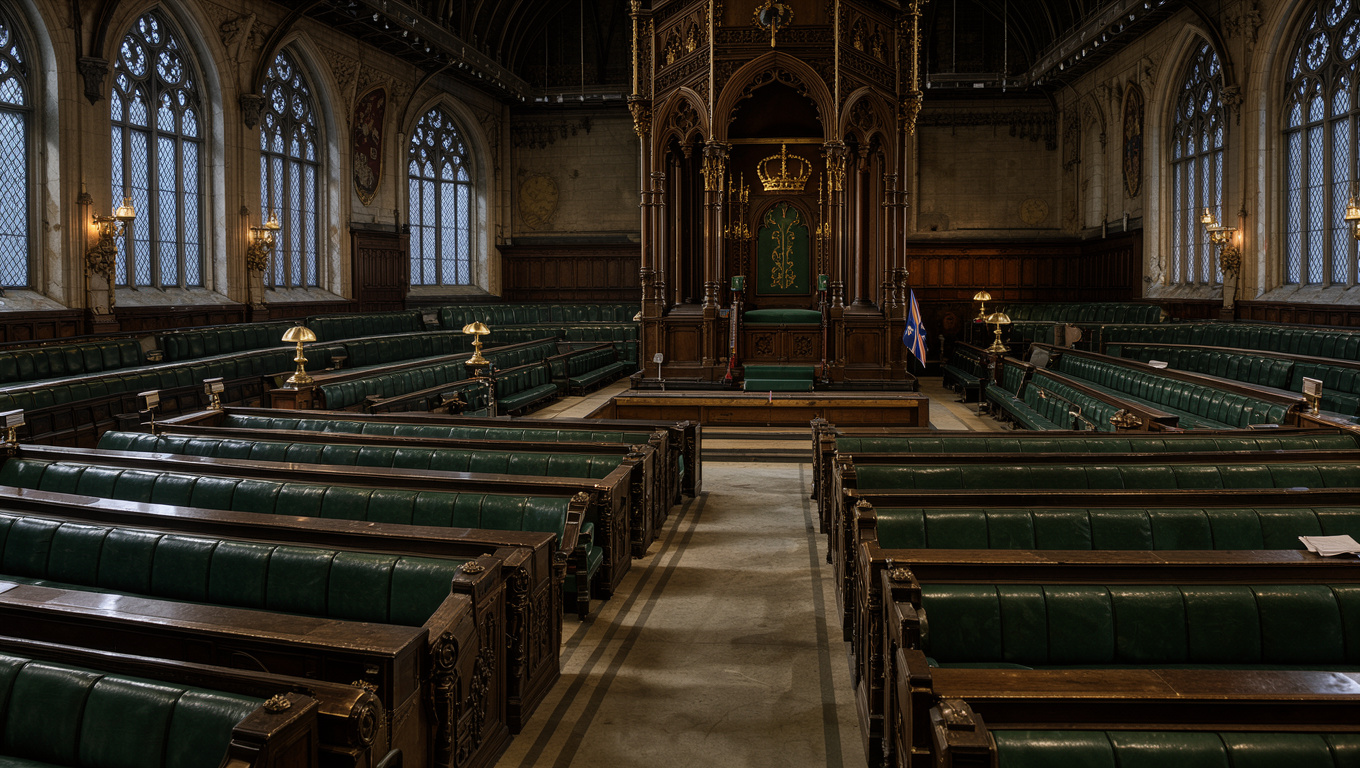
Few British prime ministers still split a room the way Margaret Thatcher does, and that is why her record keeps getting argued over long after she left Downing Street. This piece follows the flashpoints of her 1979 to 1990 premiership, from her first day as prime minister on 4 May 1979 (Churchill Archives Centre, Cambridge archive) through the miners’ strike, the poll tax and the November 1990 leadership revolt, and shows where the evidence runs out.
Years as prime minister: 1979–1990 · Years as Conservative Party leader: 1975–1990 · Born: 13 October 1925, Grantham · Died: 8 April 2013 · Historic first: First woman to serve as UK prime minister
Quick snapshot
- Thatcher became prime minister on 4 May 1979 (Churchill Archives Centre) (Margaret Thatcher Foundation biography)
- The Conservatives won a 43-seat majority at the 1979 general election (Margaret Thatcher Foundation biography)
- Sources disagree on pit closures, with 20 of 174 pits the best-supported figure (Wikipedia Iron Lady article)
- Thatcher won the first leadership ballot but not by the margin party rules required (Margaret Thatcher Foundation) (Wikipedia Iron Lady article)
- The poll tax was introduced in Scotland in 1989 and in England and Wales in 1990 (World History Encyclopedia)
- Geoffrey Howe resigned as Deputy Prime Minister on 1 November 1990 (Margaret Thatcher Foundation) (World History Encyclopedia)
- On 22 November 1990 Thatcher said she would not contest the second ballot (Politics.co.uk profile)
- She resigned as prime minister on 28 November 1990 and John Major succeeded her (Museum of the Prime Minister)
Seven markers, one pattern: most of her hardest moments cluster in two short windows, the 1984–85 strike and the November 1990 exit.
| Field | Value |
|---|---|
| Born | 13 October 1925, Grantham (Churchill Archives Centre) |
| Prime minister | 4 May 1979 to 28 November 1990 |
| Miners’ strike | 6 March 1985 to 3 March 1985 (Politics.co.uk) |
| Community Charge (poll tax) | Scotland 1989; England and Wales 1990 (World History Encyclopedia) |
| Conservative majority, 1979 | 43 seats |
| Died | 8 April 2013 (Churchill Archives Centre) |
| Historic first | First woman to serve as UK prime minister (GOV.UK prime ministers history) |
Why was Margaret Thatcher so controversial?
Much of the anger came from jobs. GOV.UK’s history of her premiership records very high unemployment in her first two years, and says the figure rose dramatically during her years in power (GOV.UK).
Two fights then turned that anger into a national argument, and both are still cited in debates about her record.
What did the 1984–85 miners’ strike involve?
- The strike began on 6 March 1984 after the National Union of Mineworkers, led by Arthur Scargill, called it without a national ballot, and the High Court declared it illegal (Politics.co.uk).
- The National Coal Board proposed closing 20 of 174 state-owned pits and cutting 20,000 jobs (Wikipedia premiership summary).
- The strike ended on 3 March 1985 when NUM delegates voted to end it, after almost a year and without a deal (Museum of the Prime Minister article).
The implication: a year-long dispute that ended with no settlement left the policy question open, and that is why the strike still frames arguments about her record.
Why did the poll tax provoke opposition?
- The Community Charge replaced domestic rates with a flat charge on every adult resident, a design widely regarded as regressive (World History Encyclopedia).
- A London demonstration on 31 March 1990 turned into rioting around Trafalgar Square (Museum of London protest history).
A strike that ran from 6 March 1984 to 3 March 1985 ended without a deal, so the policy fight outlived the picket lines (Museum of the Prime Minister).
The catch: the poll tax turned a debate about government spending into a debate about fairness, and that shift explains why opponents kept the issue alive after the strike ended.
Why was Margaret Thatcher removed as PM?
What triggered the 1990 leadership challenge?
- Geoffrey Howe resigned as Deputy Prime Minister on 1 November 1990, and his resignation speech opened the way for Michael Heseltine’s challenge (Britannica entry on the Thatcher government).
Once the challenge was live, the arithmetic moved quickly. Thatcher announced on 22 November 1990 that she would not contest the second ballot, and John Major won 185 votes in the vote held on 27 November (Politics.co.uk).
The trade-off she faced was stark: stay and risk a split party, or leave and protect the party’s chances at the polls.
Did Queen Elizabeth and Margaret Thatcher get along?
Prime ministers traditionally hold a regular audience with the monarch, and Thatcher held these with Elizabeth II throughout her premiership (Britannica entry on the Thatcher government).
Only the audience system is documented here, so it is the only part of the relationship presented as established.
The sources reviewed point to a formal working relationship. Stories of a close personal friendship lack the named sourcing that would make them count, so they appear in the unclear list below.
What this means: the documented relationship was institutional, and claims that go further belong in the unclear column until a named source backs them.
What is Margaret Thatcher best known for?
Her governments pursued privatisation, deregulation, trade union reform, tax cuts and market mechanisms in health and education, with the aim of reducing the role of government (GOV.UK).
Economic reform and military success are treated separately here, so each can be judged on its own evidence.
Argentina’s 1982 invasion of the Falkland Islands and the British military response strengthened her domestic standing (Britannica entry on the Thatcher government).
The pattern: her reputation rests on a mix of economic reform and a single military victory, which is why the two are often argued about together.
Was Thatcher good or bad for the UK?
Historians and voters remain sharply divided on her record, and the verdict depends on which year and which survey you choose.
Rankings of prime ministers vary by survey, year and method, so any claim about the best or most liked prime minister needs its survey named before it counts.
The trade-off: a ranking tells you what a panel valued, not what the country experienced, so judge her record by the documented events in this article.
Timeline
- 4 May 1979: Becomes prime minister, the first woman to hold the office (Churchill Archives Centre)
- 6 March 1985: Miners’ strike begins (Politics.co.uk)
- 3 March 1985: Miners’ strike ends without a deal (Museum of the Prime Minister)
- 1989 and 1990: Community Charge introduced in Scotland, then England and Wales (World History Encyclopedia)
- 1 November 1990: Geoffrey Howe resigns as Deputy Prime Minister (Margaret Thatcher Foundation)
- 22 November 1990: Thatcher says she will not contest the second ballot (Politics.co.uk)
- 28 November 1990: Thatcher resigns as prime minister (Museum of the Prime Minister)
The pattern: the final month of her premiership ran from Howe’s resignation on 1 November to her own on 28 November, 27 days later, so the timeline turns on one month more than on the eleven years before it.
Clarity check
Confirmed facts
- Thatcher was prime minister from 4 May 1979 (Churchill Archives Centre)
- She resigned on 28 November 1990 after the leadership challenge (Museum of the Prime Minister)
What’s unclear
- The exact pit closure count, since sources give 20 and 21
- Why Thatcher was at the Ritz when she died, which none of the sources reviewed documents
- Claims that the Queen had a favourite prime minister or a ‘best friend’ among her circle
- Any personal closeness between Elizabeth II and Thatcher beyond formal duties
What this means: the pit count, the Ritz detail and the Queen’s personal circle stay open until a named record settles them.
In their own words
“Having consulted widely among colleagues, I have concluded that the unity of the Party and the prospects of victory in a General Election would be better served if I stood down.”
Margaret Thatcher, resignation statement, as published by Museum of the Prime Minister
“the one great blunder of the Thatcher years”
Nigel Lawson, former Chancellor of the Exchequer, on the poll tax, as recorded in Wikipedia’s premiership summary
Voters weighing her legacy have a clear test: check each claim against a named record, or accept a ranking without knowing which survey produced it.
Related reading: Theresa May prime minister tenure · Priti Patel political career
bbc.com, simple.wikipedia.org, studocu.com, parkeur.app, chronicles.historiqly.com
Frequently asked questions
Where did Margaret Thatcher die and when?
She died on 8 April 2013 in London (Churchill Archives Centre).
Where and when was Margaret Thatcher born?
She was born on 13 October 1925 in Grantham, Lincolnshire (Churchill Archives Centre).
Was Margaret Thatcher the first female prime minister of the UK?
Yes. She was the first woman to serve as UK prime minister (GOV.UK prime ministers history).
How long did Margaret Thatcher serve as prime minister?
She served from 4 May 1979 to 28 November 1990, a tenure of 11 years and 208 days (Museum of the Prime Minister).
Why was Margaret Thatcher at the Ritz when she died?
None of the sources reviewed for this article document a reason, so no explanation is offered here.
Related stories



Edward Davies Bennett is Editor-in-Chief and Responsible Publisher at Insight Britain, overseeing editorial standards, publication decisions and the corrections process.