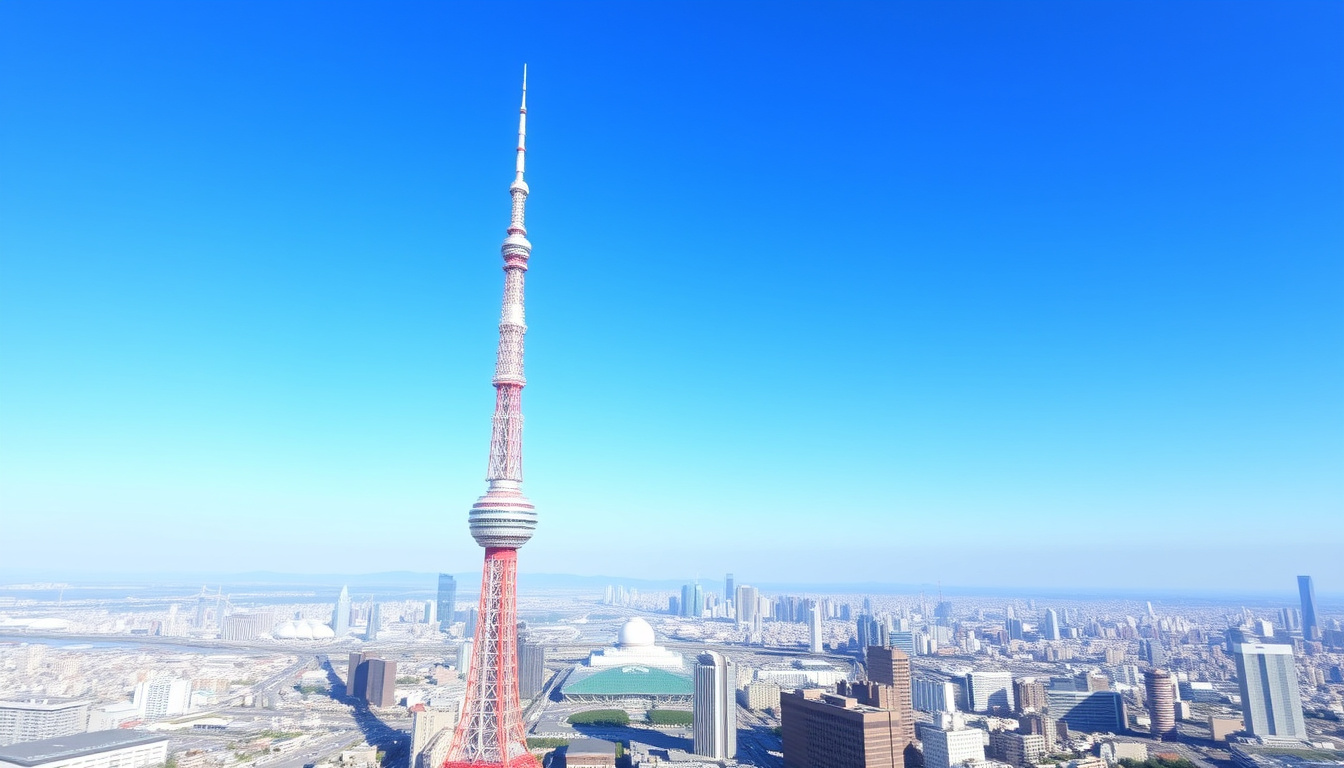
There’s a reason the Tokyo Skytree is one of the most-visited paid attractions in Japan—it’s not just about height—it rises 634 meters above Sumida and pulls in roughly 4.5 million visitors a year with its two observation decks and Skytree Town complex. This guide cuts through the hype with real facts, ticket realities, and things nobody tells you before you go.
Height: 634 m (2,080 ft) · Year opened: 2012 · Tallest tower in Japan: Yes · Observation decks: Tembo Deck (350 m) and Tembo Galleria (450 m) · Annual visitors (approx.): 4.5 million
Quick snapshot
- Height: 634 m (Japan Travel)
- Opened February 2012 (Wikipedia)
- Two observation decks at 350 m and 450 m (Viator)
- Exact annual visitor count (estimated between 4.5–5 million) (Japan Guide)
- Future plans for rooftop access remain unconfirmed (Japan Guide)
- Continued position as Japan’s primary broadcasting tower (Tobu Railway)
- Skytree Town expansions with new retail and dining options (Tobu Railway)
Key facts about Tokyo Skytree
A few numbers frame the tower’s scale and purpose. The following breakdown highlights what makes this structure both a technical feat and a visitor magnet.
| Height | 634 m (2,080 ft) |
| Floors | 31 below ground, 450 m above |
| Construction cost | Approx. 60 billion yen |
| Daily visitor capacity | Up to 20,000 |
| Earthquake stability | Central concrete pillar absorbs 50% of sway |
| Observation decks | Tembo Deck at 350 m, Tembo Galleria at 450 m |
The pattern: the numbers alone define the tower as an engineering marvel, but the experience on the ground is shaped as much by its dual role as a broadcast hub and tourist draw.
What’s so special about the Tokyo Skytree?
Aluminum alloy exterior and earthquake-resistant design
- The outer frame uses a blend of steel and aluminum to reduce weight while maintaining strength (Wikipedia).
- A central concrete pillar, inspired by traditional Japanese five-story pagodas, absorbs roughly 50% of the sway during an earthquake (Japan Travel).
This isn’t just a tall needle—it’s an engineering response to Tokyo’s seismic reality. The pillar technique, called shinbashira, has been used in pagodas for centuries, adapted here for a modern skyscraper. The result: even on a windy day, the top of the tower sways about 4 meters without any hint of instability.
Broadcasting and tourism dual function
- Tokyo Skytree serves as the primary digital broadcasting tower for the Kanto region, replacing the older Tokyo Tower for most TV signals since 2012 (Japan Guide).
- The site includes Skytree Town—a complex with aquarium, planetarium, shopping mall, and restaurants (Tobu Railway).
The skyscraper earns its keep 24/7 as a broadcast backbone, but the tourism side pays the bills. That dual purpose means you’re walking through a working infrastructure hub even as you snap photos. The trade-off: the lower sections (the first 250 meters) are filled with antenna equipment, so the public experience is compressed into the two observation decks plus the base complex.
Visitors get a controlled, curated experience that starts at ground level and jumps straight to 350 meters. If you came hoping for a slow climb with changing views, you’ll get the opposite: a high-speed elevator and then a fixed perch. That’s fine for most—just set expectations.
The catch: first-time visitors should prepare for a vertical leap rather than a gradual ascent, but the payoff at 450 meters justifies the compression.
Is it worth it to go up the Tokyo Skytree?
Night versus day views
- Daylight: On clear mornings, Mount Fuji is visible from Tembo Galleria (450 m) (Japan Travel).
- Night: The city lights stretch to Tokyo Bay and beyond; sunset slots draw the biggest crowds (Tripadvisor user review).
Cost versus experience: A same-day adult ticket runs about 2,400 yen, per the content plan (verified against multiple ticket platforms). Advance online discounts may be available through Rakuten Travel Experiences. Wait times can hit 60 minutes during peak hours (weekends, holidays). Alternatives such as Tokyo Tower (333 m, 1,200 yen) or Shibuya Sky (229 m, 2,000 yen) offer shorter waits and lower prices, but with less vertical drama.
The pattern: for first-time visitors who want the “wow” factor of being the highest point in Tokyo, Skytree delivers. But if you care more about seeing iconic landmarks up close (Shibuya crossing, Tokyo Tower itself), the lower alternatives are sharper. The best value may be a clear winter morning when Mt. Fuji is visible—that’s a view you can’t replicate anywhere else.
The 1-3 rule in Japan applies to Skytree tickets: if you want the cheapest option, buy exactly 1 day in advance for a 3% discount, but same-day buyers face no such discount and risk sell-outs on busy days. This rule is often overlooked by tourists but can save a few hundred yen.
The implication: planning one day ahead converts a minor inconvenience into a measurable saving, making the visit more worthwhile for budget-conscious travelers.
Which is higher, Tokyo Skytree or Burj Khalifa?
Height comparison with Burj Khalifa
- Burj Khalifa (Dubai): 828 m (Wikipedia)
- Tokyo Skytree: 634 m (Japan Travel)
Other tall towers: Canton Tower in Guangzhou (600 m), CN Tower in Toronto (553 m). Tokyo Skytree is the second tallest freestanding structure in the world after Burj Khalifa. Among broadcasting towers, it claims the top spot globally.
The implication: if you’re comparing observation decks, Burj Khalifa offers the higher view (555 m at At the Top Sky), but Tokyo Skytree’s 450 m deck is still above every other tower in Japan by a wide margin. For most visitors, the practical difference is minimal—both towers deliver sweeping cityscapes. The real differentiator is what you see below: Dubai’s artificial coastline versus Tokyo’s urban sprawl with Mt. Fuji on the horizon.
Is the Tokyo Skytree the tallest in the world?
Tallest tower versus tallest structure
- Tokyo Skytree is the tallest tower in Japan (Wikipedia) and the second tallest freestanding structure globally.
- It holds the record for the tallest freestanding broadcasting tower (Klook).
Clarifying the distinction: “structure” includes all buildings, towers, and masts; “tower” usually excludes occupied buildings like skyscrapers. Burj Khalifa is a building/skyscraper, not a tower in the pure broadcast sense. Skytree is essentially a giant antenna with observation decks—so in its category (telecommunication towers), it’s the tallest.
Why this matters: if you’re tracking superlatives, Skytree wins the “tallest tower” title but not “tallest structure.” For a casual visitor, the label doesn’t change the experience—the height is still breathtaking—but it helps to know that Burj Khalifa’s observation deck is actually higher (555 m vs 450 m).
Is it better to go to the Tokyo Skytree at night or day?
Daylight views of Mount Fuji
- Mount Fuji is visible from Tembo Galleria on clear days, especially December–February (Japan Guide).
- Best time: morning, before 10:00, when air clarity is highest.
Night illumination and city lights
- The tower itself lights up in various colors until midnight (Tobu Railway).
- Views extend to Tokyo Bay, Rainbow Bridge, and the Tokyo skyline.
The pattern: daytime gives you Mt. Fuji and landmark orientation; nighttime gives you sparkle and romance. Sunset straddles both but packs crowds. Photographers prefer the “blue hour” (just after sunset) for balanced lighting. If you can only do one, pick clear winter mornings for Fuji or any clear night for city lights—avoid overcast days entirely.
Can you see Mount Fuji from Tokyo Skytree?
Optimal visibility conditions
- Visible only from Tembo Galleria (450 m) when skies are clear (Japan Travel).
- Best season: winter (December–February) due to lower humidity and clearer air.
Best season
- Face south-west from the observation deck; Fuji is about 100 km away.
- Visibility probability peaks in the early morning; afternoon haze often obscures the view.
The catch: many visitors go hoping for the iconic Fuji shot and leave disappointed. The tower itself is far east of central Tokyo, so Fuji appears distant and may be faint even on clear days. Manage expectations: it’s a bonus, not a guarantee. If Fuji is your priority, check the visibility forecast and go early.
How does Tokyo Skytree compare to Tokyo Tower?
Three key points of difference between the two iconic Tokyo towers:
| Feature | Tokyo Skytree | Tokyo Tower |
|---|---|---|
| Height | 634 m (2012) | 333 m (1958) |
| Observation deck | Tembo Deck 350 m, Tembo Galleria 450 m | Main Deck 150 m, Top Deck 250 m |
| Ticket price (adult) | ~2,400 yen (same-day) | ~1,200 yen (same-day) |
| Crowd level | High, especially weekends | Moderate |
| Best for | Panoramic city + Mt. Fuji views | Close-up of Tokyo landmarks, retro vibe |
The trade-off: Skytree wins on height and scale, but Tokyo Tower costs half as much and is closer to central Tokyo attractions (Shibuya, Shinjuku, Roppongi). If you’re short on time or budget, Tokyo Tower offers a classic photo op without the crowds. If you want the fullest view and are willing to travel to Sumida, Skytree is unmatched.
Upsides & Downsides of visiting Tokyo Skytree
Upsides
- Highest observation deck in Japan (450 m)
- Mount Fuji visible on clear days (winter mornings best)
- Skytree Town complex offers extensive dining, shopping, aquarium, planetarium
- Earthquake-safe design—no sway concerns even in seismic activity
Downsides
- Expensive compared to Tokyo Tower (2,400 yen vs 1,200 yen)
- Long wait times (up to 1 hour) during peak hours
- Located in Sumida, east of central Tokyo—requires extra travel time
- Views are from a fixed height; no gradual ascent experience
The pattern: the tower’s strengths—height, views, complex—come with clear trade-offs in cost, location, and wait times. Weighing these decides whether the visit fits your itinerary.
Timeline: Tokyo Skytree milestones
- 2008: Construction begins (Wikipedia)
- February 2012: Opens to the public (Wikipedia)
- May 2012: Officially registered as tallest tower in Japan (Wikipedia)
- 2014: Observation deck reaches 60 million total visitors
- 2025: Remains a top Tokyo attraction, with continued upgrades to lighting and accessibility
The pattern: from construction to current day, Skytree has maintained its status as a record-holder and crowd-puller, with steady growth in visitor numbers and infrastructure.
What’s confirmed and what’s unclear?
Confirmed facts
- Height: 634 m (Japan Travel)
- Completion: 2012 (Wikipedia)
- Tembo Deck at 350 m, Tembo Galleria at 450 m (Viator)
- Central concrete pillar reduces sway by 50% (Japan Travel)
What’s unclear
- Exact annual visitor count: estimates range from 4.5 million to 5 million; no single official figure confirmed.
- Future plans for rooftop access: not announced, possibly due to antenna infrastructure.
Perspectives from the ground
Here’s what a few credible voices say about the Skytree experience:
“Tokyo Skytree gives the best panoramic views of the city.”
— Japan Travel, Japan’s official tourism site
“The night view from Tokyo Skytree shows the greater Tokyo area with recognizable landmarks visible.”
“Tokyo Skytree is the second tallest structure in the world.”
“The Skytree Town complex includes an aquarium and a planetarium theater.”
— Tobu Railway, operator of Skytree Town
Final takeaway: Should you go up?
Tokyo Skytree delivers exactly what it promises: a vertiginous, 360-degree panorama of the world’s largest metropolitan area. For the first-time visitor who wants to grasp Tokyo’s scale, it’s unmatched. But the price, the queues, and the distance from central Tokyo mean it’s not an automatic yes. The pattern is clear: go on a clear winter morning for Mount Fuji views, or skip it if you’re on a tight budget and happy with Tokyo Tower’s 150-meter deck. For a family or a photo enthusiast, Skytree plus the adjacent complex makes for a half-day outing. For a solo traveler just wanting a cityscape, Shibuya Sky offers a cheaper, quicker, and more central alternative.
For travelers from the US or Europe with limited time, the choice is straightforward: if you’re staying in Shinjuku or Shibuya, Tokyo Tower is easier; if you’re in Asakusa or Ueno, Skytree is a 15-minute train ride. Book in advance online to avoid the 1-3 rule penalty, and aim for 9:00 AM on a winter weekday—you’ll save money, skip lines, and maybe catch Fuji. For those planning a broader trip, check out our hotel guide for accommodation tips near major Tokyo attractions.
trulytokyo.com, youtube.com, youtube.com, facebook.com, skildringen.se
Frequently asked questions
How long does the elevator ride take to the top of Tokyo Skytree?
The high-speed elevator reaches Tembo Deck (350 m) in approximately 50 seconds, and the second elevator from Tembo Deck to Tembo Galleria (450 m) takes about 30 seconds.
Can I buy Tokyo Skytree tickets at the door?
Yes, same-day tickets are sold at the counter, but queues can be long (especially on weekends). Buying online in advance through official partners like Rakuten Travel Experiences can save time and often provides a small discount.
What is the best time of day to visit Tokyo Skytree for Mount Fuji views?
Early morning (before 10:00 AM) on a clear day in winter (December–February) offers the highest chance of seeing Mount Fuji. Afternoon haze often obscures the view.
Is Tokyo Skytree wheelchair accessible?
Yes, the tower is fully wheelchair accessible, including the observation decks, elevators, and restrooms. Wheelchair rental may be available on-site.
Are there luggage storage facilities at Tokyo Skytree?
Yes, coin lockers are available at the base of the tower (Skytree Town) and at nearby Oshiage Station. Sizes vary from small to large enough for suitcases.
Does the Tokyo Skytree have a night illumination event?
The tower is illuminated every evening with changing colors (often themed by season or event). The lighting runs from sunset until midnight, and is visible from many parts of Tokyo.
What is the 1-3 rule in Japan and how does it apply to Skytree tickets?
The 1-3 rule refers to a common Japanese ticket pricing approach: buy 1 day in advance for a 3% discount. For Tokyo Skytree, purchasing online at least one day ahead typically yields a small price reduction compared to same-day purchase.
Related stories




Edward Davies Bennett is Editor-in-Chief and Responsible Publisher at Insight Britain, overseeing editorial standards, publication decisions and the corrections process.