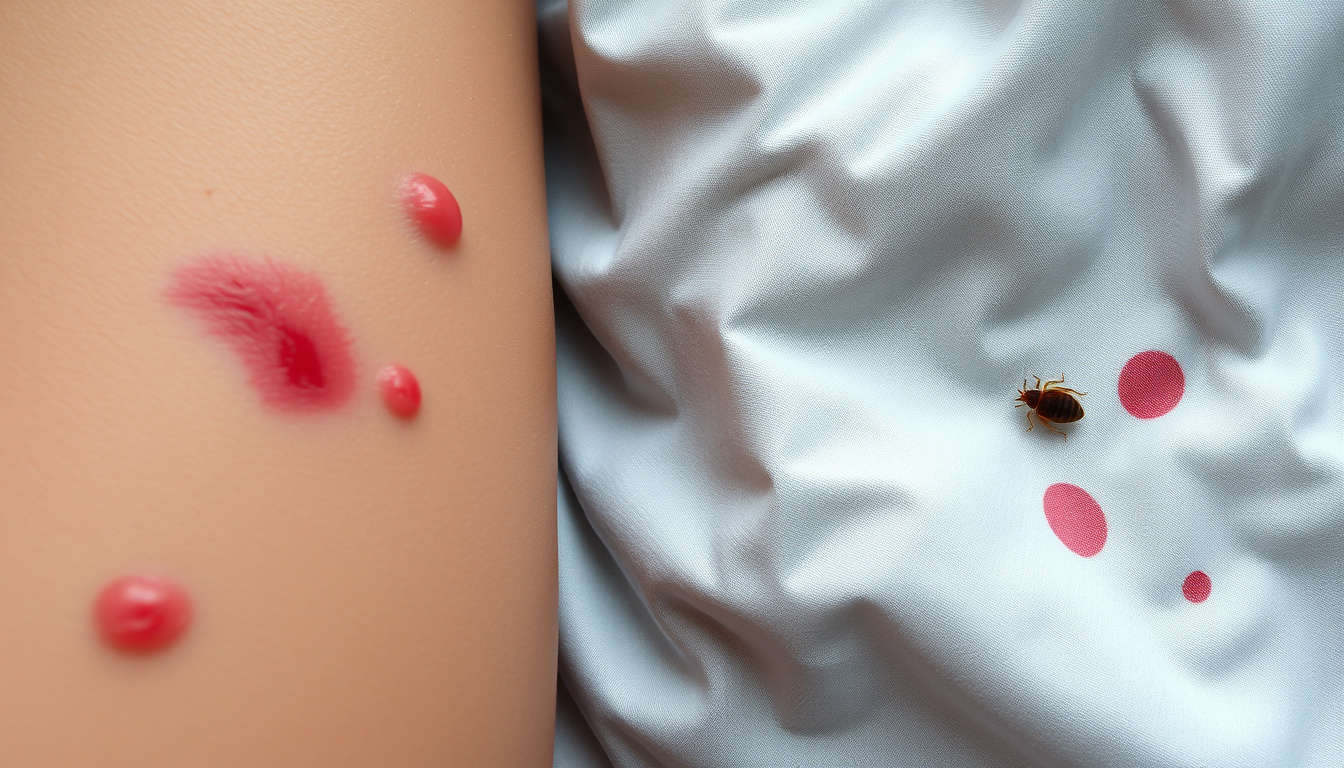
Waking up with an itchy bump — or a neat row of three — is unsettling, especially when you can’t spot the culprit. Bed bug bites are famously tricky to identify because they look different depending on your skin tone and other factors. This guide walks through exactly what to look for, from bite patterns to hidden signs in your bed.
Percentage of people who develop visible welts: 70% · Average number of bites per feeding: 3 to 5 in a cluster · Time for bite reaction to appear: 1 to 9 days · Female bed bug egg-laying per day: 1 to 5 · Common bite locations: Face, neck, arms, hands
Quick snapshot
- Red/purple bumps that may be flat or raised (Orkin)
- Often in lines or clusters of three (Healthline)
- Itching that may be delayed up to 9 days (Healthline)
- Raised welts possible in allergic individuals (Healthline)
Here are key statistics and identification tips.
| Label | Value |
|---|---|
| Common name | Cimex lectularius |
| Bite reaction rate | 70% of people develop visible welts (Medical News Today) |
| Bite feed pattern | Every 5-10 days |
| Egg-laying capacity | 1-5 eggs per day |
| Inspection tip | Look for blood spots on mattress seams |
What do bed bug bites look like?
Appearance on light and dark skin
- On lighter skin, bed bug bites usually appear pink or red (Medical News Today).
- On black or brown skin, the same bite may look purple, deep brown, or faint pink.
- The color shift makes them easy to miss or misdiagnose as eczema or a bruise.
Common bite patterns
- Bites often occur in a line or zigzag — sometimes called the “breakfast, lunch, dinner” pattern.
- Clusters of three to five bumps are a hallmark of bed bug feeding.
- Bites typically appear on exposed skin: face, neck, arms, hands, and legs.
How to distinguish from other rashes
- Unlike allergic hives, bed bug bites stay localized and don’t spread randomly.
- They lack a central blister or weeping, unlike poison ivy.
- The delayed itch (hours to days) sets them apart from a mosquito bite, which itches quickly.
Skin tone changes everything: what looks red on one person may be purple on another. If you see a line of small bumps on exposed skin — and no signs of fleas or mosquitoes — bed bugs are the likely cause.
The pattern: When bites appear in a linear cluster on exposed skin, bed bugs are the prime suspect.
How do you tell if a bite is from a bed bug?
Key features of bed bug bites
- Bites are usually painless at the moment — bed bugs inject an anesthetic (Orkin).
- Within hours to days, itching and raised bumps develop.
- No central puncture mark (unlike flea bites, which have a small red dot).
Timing of bite reactions
- Reactions can appear from a few seconds up to 9 days after the bite (Medical News Today).
- Mosquito bites, by contrast, swell within minutes.
Absence of visible bugs
- Bed bugs are nocturnal and hide in crevices, so you rarely see the insect itself.
- Instead, look for shed skins, tiny eggs, or blood spots on sheets (CDC).
Because you won’t feel the bite, you may dismiss it as a spider bite or allergy. The delayed reaction is the biggest clue — if bumps appear the morning after sleeping in a new place, suspect bed bugs.
The catch: Without visible bugs, the delayed itch is your strongest clue.
What could be mistaken for bed bug bites?
Three common look-alikes, one key distinction: pattern. Bed bug bites almost always form lines or clusters, while mosquito bites land randomly and flea bites target the ankles. For other health concerns, see our guide on lower abdominal pain in females or symptoms of low iron.
| Feature | Bed bug bites | Mosquito bites | Flea bites |
|---|---|---|---|
| Pattern | Line or cluster of 3-5 | Random, isolated | Clusters, often around ankles |
| Appearance | Red/purple bump, flat or raised | Puffy white or reddish | Small red bump with halo |
| Timing | Delayed up to 9 days | Itches within minutes | Rapid (< 1 hour) |
| Location | Face, neck, arms, hands | Any exposed skin | Lower legs, ankles |
The implication: Pattern and timing are the deciding factors.
What are the first signs of bedbugs?
Visual evidence
- Rust-colored stains on sheets from crushed bugs (CDC).
- Tiny pale eggs or shed skins in mattress seams.
- Dark spots of bed bug excrement.
Physical symptoms
- Itchy welts on your upper body (face, neck, arms) after waking up.
- Mild burning sensation in some people.
Early detection methods
- Use a flashlight to inspect mattress seams and headboard crevices.
- Place bed bug interceptors under bed legs.
- Look for a musty odor from bed bug scent glands (CDC).
The implication: Early detection depends on thorough inspection rather than bite symptoms alone.
What part of the body do bed bugs bite the most?
Exposed skin during sleep
- Face, neck, arms, hands, and legs are most common.
- Bites rarely appear on soles of feet or palms.
Areas less protected by clothing
- Bed bugs prefer skin that isn’t covered by pajamas or sheets.
- They follow blood vessels close to the surface.
Common bite maps
- Most bites concentrate on the upper body because people sleep with faces and arms exposed.
- People who sleep face-down often get bites on the back of the neck.
The pattern: Upper body exposure during sleep explains the typical bite distribution.
Confirmed facts
- Bed bug bites are usually not serious medically
- Bites are often grouped in lines or clusters (Orkin)
- 70% of people have a visible reaction (Medical News Today)
What’s unclear
- Why some people show no reaction at all.
- Exact number of bites per feeding session.
- Long-term psychological effects of infestations.
“Bed bug bites are usually painless initially and may not cause any symptoms for up to 9 days.”
“On black or brown skin, bed bug bites may look purple and be harder to see.”
— Medical News Today (health news site)
“A classic bed bug bite pattern is a line or zigzag of three or more bites, sometimes called the ‘breakfast, lunch, dinner’ pattern.”
— CDC (public health agency)
The ability to spot bed bug bites early — especially if you have darker skin — can save weeks of misdiagnosis and delayed treatment. For anyone waking up with itchy lines on their arms or neck, the smart move is to inspect your mattress and headboard for the real evidence: stains, eggs, or the bugs themselves. Ignoring the signs won’t make them go away; a quick inspection might.
For travelers seeking a quick reference, our comprehensive bed bug bites identification guide covers symptoms and relief options in detail.
Frequently asked questions
Can bed bugs transmit diseases?
No. According to the GoodRx, bed bugs are not known to transmit infectious diseases. Their primary impact is on sleep and mental well-being.
How long before bed bug bites heal?
Most bites heal within one to two weeks (GoodRx). Scratching can prolong healing and cause infection.
Do bed bug bites require medical attention?
Rarely. Over-the-counter hydrocortisone cream and antihistamines are usually enough. See a doctor if signs of infection (redness, warmth, pus) appear (NHS).
What kills bed bugs on contact?
Heat above 120°F (49°C) kills all life stages. Commercial sprays with pyrethroids are available, but resistance is common. The CDC recommends integrated pest management.
Can you have bed bugs without seeing them?
Yes. Early infestations often go unnoticed. Look for shed skins, tiny eggs, and blood spots on sheets (NHS).
How to prevent bed bug bites while sleeping?
Use a zippered mattress encasement, wash bedding in hot water weekly, and avoid placing luggage on hotel beds (GoodRx).
Are bed bug bites worse at night?
Itching can intensify at night, partly because you’re more aware of the sensation. Bed bugs themselves feed when you’re asleep, but the bite reaction is continuous.
Related stories




Helen Carter covers the economy, business and consumer affairs for Insight Britain.