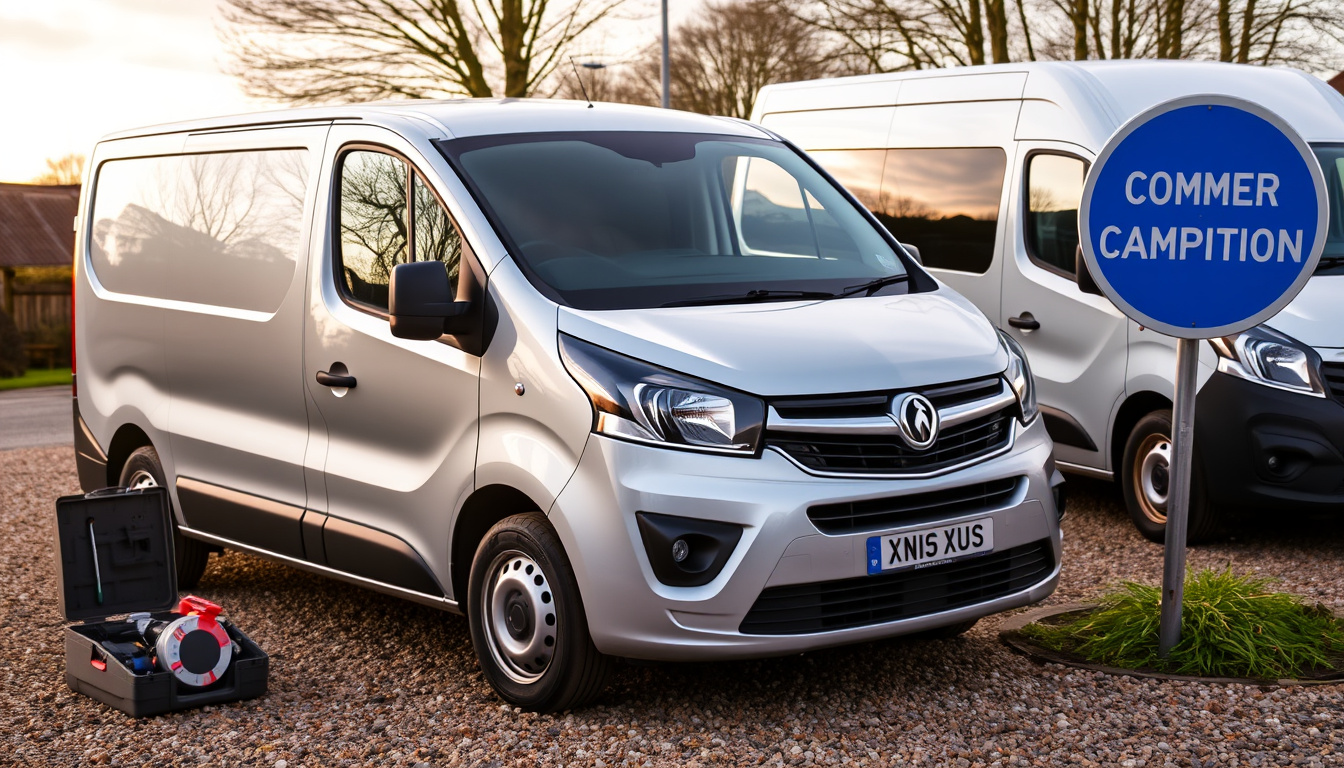
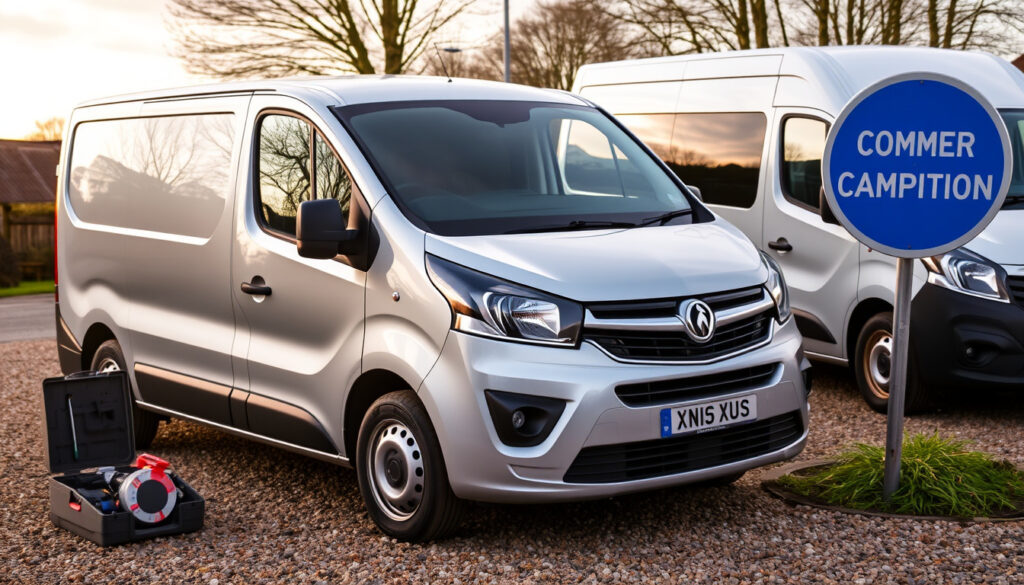
Anyone who has spent time looking for a used van in the UK has probably noticed the Vauxhall Vivaro is everywhere. It’s a common sight on building sites, delivery routes, and camper conversions. This guide brings together owner reports, mechanic insights, and official data to give you a clear picture of what it’s actually like to live with a Vivaro – the good, the bad, and the costly.
Years in production: 2001–present (three generations) ·
Average lifespan: 200,000 miles with proper maintenance ·
Most common problem: Timing chain failure (first generation) ·
Owner reliability rating: 3.5 / 5 from surveys ·
Payload capacity (max): 1,200 kg ·
Fuel economy (combined): 35–40 mpg (2.0L diesel)
Quick snapshot
- Timing chain issues are common in early models (ClickMechanic (van repair marketplace))
- Vivaro shares platform with Renault Trafic (VanTribe (van owner community))
- Payload capacity reaches 1,200 kg (ClickMechanic (van repair marketplace))
- Exact failure rate of timing chain across all model years
- Real-world fuel economy varies significantly with load and driving
- 2001–2014: First generation (based on Renault Trafic II)
- 2014–2019: Second generation (new platform, Euro 6 engines)
- 2019–present: Third generation (updated design, more tech)
- Used market prices expected to remain stable due to strong demand from tradespeople
- Camper conversion popularity continues to drive interest in high-roof models
Six key specs define the Vivaro’s core identity – here’s how they stack up.
| Specification | Value |
|---|---|
| Engine | 2.0L turbo diesel (Euro 6) |
| Power | 120–145 hp |
| Transmission | 6-speed manual |
| Seats | 2–9 (depending on configuration) |
| Load volume | 5.1–6.0 m³ |
| Kerb weight | 1,800 kg |
What are common Vivaro problems?
What is the most common problem with the Vauxhall Vivaro?
- Timing chain failure on first-generation models (2001–2014) – according to ClickMechanic (van repair marketplace), if not addressed promptly it can lead to significant engine damage.
- Injector issues – water ingress through windscreen seals can corrode injectors, reports What Car? (UK car review authority).
- EGR valve clogging – a common complaint on diesel versions, per ClickMechanic.
- Turbocharger faults that can trigger limp mode, noted by VanTribe (van owner community).
- Gear linkage problems and clutch sticking reported by owners, also from VanTribe.
The pattern: these problems concentrate heavily on pre-2014 models, with the timing chain carrying the highest financial risk.
Are Vauxhall Vivaro reliable?
Reliability is a mixed picture. What Car? (UK car review authority) says that apart from the bonnet catch recall and injector water ingress, reported problems on the 2014–2019 Vivaro are few and the engines are strong. Haynes (DIY repair guide publisher) adds that faulty air temperature and mass airflow meters can illuminate the malfunction indicator light, and some oil filler caps carried incorrect information. Owner surveys give it 3.5 out of 5 – decent but not class-leading.
Early Vivaro owners face a real risk of timing chain failure before 100,000 miles. But the second-generation models (2014–2019) show a jump in build quality, partly thanks to the Renault collaboration. The catch: you need to check service history carefully – missed oil changes punish the chain.
What’s better, Ford Transit or Vauxhall Vivaro?
The numbers in this comparison reveal which van suits which kind of buyer.
Which van has the least problems?
Comparing these two UK favourites reveals clear trade-offs in reliability, running costs, and payload.
| Metric | Vauxhall Vivaro | Ford Transit |
|---|---|---|
| Reliability rating (owner surveys) | 3.5 / 5 | 3.7 / 5 |
| Fuel economy (combined) | 35–40 mpg (2.0L diesel) | 33–38 mpg (2.0L EcoBlue) |
| Max payload | 1,200 kg | 1,500 kg (depends on variant) |
| Typical repair cost (timing chain) | £800–£1,200 | £1,000–£1,500 |
| Resale value (3‑year old) | 55–60% of new price | 50–55% of new price |
| Common problems | Timing chain, EGR, injector water ingress | DPF issues, EGR, turbo actuator |
The pattern: the Transit lifts more but costs more to fix. The Vivaro holds its value better and drinks slightly less fuel, but its early engines are more fragile. For a business that maxes out payload daily, the Transit wins. For mixed use and lower running costs, the Vivaro edges ahead.
If you’re comparing used models, the Vivaro’s timing chain is the single biggest financial risk. A Transit with a blocked DPF might be cheaper to sort than a Vivaro with a snapped chain.
How long will a Vivaro last?
With routine maintenance – especially timely oil changes and timing chain replacement at 80,000 miles – many owners report reaching 200,000 miles without major issues. ClickMechanic (van repair marketplace) notes that injector and EGR problems can cut short a poorly maintained engine. The biggest threat to longevity is the timing chain on pre‑2014 vans: if it fails, the engine is often a write-off. Second-generation models (2014 onwards) are more robust, but still require a chain replacement interval around 80,000–100,000 miles.
Corrosion is another factor. CarCostCheck (MOT data analyst) highlights that brake pipes, exhaust mountings, subframe, and body mountings are common corrosion sites – especially on vans used in winter salt. A thorough pre‑purchase inspection should include a ramp check.
The implication: a Vivaro can hit 200,000 miles, but only if the owner stays ahead of the timing chain and corrosion.
What are the dimensions and configurations of the Vauxhall Vivaro?
Vauxhall Vivaro 9 seater
The Vivaro Double Cab can seat up to nine passengers, making it a popular minibus for schools, sports teams, and airport transfers. The three‑row layout offers rear bench seats with lap belts. Load space behind the third row is limited, but it still carries a useful payload of around 800 kg in passenger configuration.
Vauxhall Vivaro camper conversion
The Vivaro’s boxy shape and high‑roof option make it a favourite base for campervan conversions. A typical conversion includes a pop‑top roof, kitchen unit, and fold‑down bed. The load volume of up to 6.0 m³ gives enough space for a compact motorhome layout. Owners praise the driving feel and fuel economy compared to larger panel‑van conversions.
Six dimensions, one story: the Vivaro is a mid‑sized van that fits standard UK parking spaces while offering a usable load bay.
| Dimension | Value |
|---|---|
| Length | 4,899 mm (short wheelbase) – 5,398 mm (long wheelbase) |
| Width (including mirrors) | 2,284 mm |
| Height (standard roof) | 1,971 mm |
| Height (high roof) | 2,498 mm |
| Wheelbase (short) | 3,098 mm |
| Wheelbase (long) | 3,498 mm |
The catch: the high-roof version adds interior space but restricts entry to some multi-storey car parks – worth checking your regular routes.
Upsides
- Strong resale value – holds value better than Ford Transit
- Low running costs – good fuel economy and affordable parts
- Comfortable ride – one of the best‑driving vans in its class
- Versatile configurations – from panel van to 9‑seater minibus
Downsides
- Timing chain vulnerability on first‑generation models
- Injector flooding from windscreen seal leaks
- Corrosion issues on brake pipes and subframe (older vans)
- Gear linkage and clutch problems reported by owners
Where to find Vauxhall Vivaro for sale?
Used Vivaros are abundant on major platforms: Auto Trader, eBay Motors, and dedicated van sites like Vantrader. Typical prices for a 2015‑2019 model with 60,000–80,000 miles range from £8,000 to £14,000, depending on condition and spec. First‑generation vans (2001–2014) can be found for as little as £2,000, but buyers should budget for a timing chain inspection immediately.
Buying tips: always request a full service history, look for evidence of timing chain replacement, and check for water ingress around the windscreen base. A pre‑purchase inspection by a specialist van mechanic is a small investment that can save thousands.
What the owners and mechanics say
“Many owners report timing chain failure before 100,000 miles in first‑generation models. It’s the one thing that can kill the engine.”
— Vivaro owner, discussion on VanTribe (van owner community)
“Regular oil changes and timing chain replacement at 80,000 miles can prevent major engine damage. The second‑generation engines are much better.”
— Mechanic quoted by Honest John (UK car advice platform)
For a UK small business owner, the choice between a Vivaro and a Transit is clear: if you need maximum payload and don’t mind higher running costs, the Transit pulls ahead. But if you value lower fuel bills, better resale, and a comfortable daily driver, the Vivaro – especially a well‑maintained second‑generation model – is the smarter buy. The risk lies in the timing chain; check that service record before you sign.
Related reading: **UK Jobs 2025: How to Get a Job, In-Demand Careers & Salary Guide** · **Dartboard Buying Guide 2025: Types, Prices & Dimensions**
Frequently asked questions
Does the Vauxhall Vivaro have a timing chain or belt?
Most Vivaro diesel engines use a timing chain, not a belt. The chain is designed to last the engine’s life, but on first‑generation models it often fails early – especially if oil changes were missed.
What is the towing capacity of a Vauxhall Vivaro?
Depending on the variant and engine, the Vivaro can tow up to 2,000 kg (braked trailer). Always check the specific model’s VIN plate.
Is the Vauxhall Vivaro a good base for a campervan?
Yes – its boxy shape, high‑roof option, and car‑like driving manners make it one of the most popular campervan bases in the UK. The 6.0 m³ load volume is ample for a compact layout.
How much does a Vauxhall Vivaro weigh?
Kerb weight is around 1,800 kg for a standard panel van. Gross vehicle weight (GVW) varies by model, typically 2,800–3,000 kg.
What engine options are available for the Vauxhall Vivaro?
The main engine is a 2.0L turbo diesel with power outputs from 120 hp to 145 hp. Early models also offered a 1.9L diesel. Petrol options are rare in the UK.
Is the Vauxhall Vivaro easy to maintain?
Routine maintenance like oil changes and brake pads is straightforward. However, the timing chain replacement is a major job (engine out on some models). Access to the EGR and injectors is moderate.
What is the best year for a used Vauxhall Vivaro?
2016–2019 models (second generation) are widely considered the best buy. They have the improved Euro 6 engines, better build quality from the Renault partnership, and fewer timing chain issues.

Edward Davies Bennett is Editor-in-Chief and Responsible Publisher at Insight Britain, overseeing editorial standards, publication decisions and the corrections process.