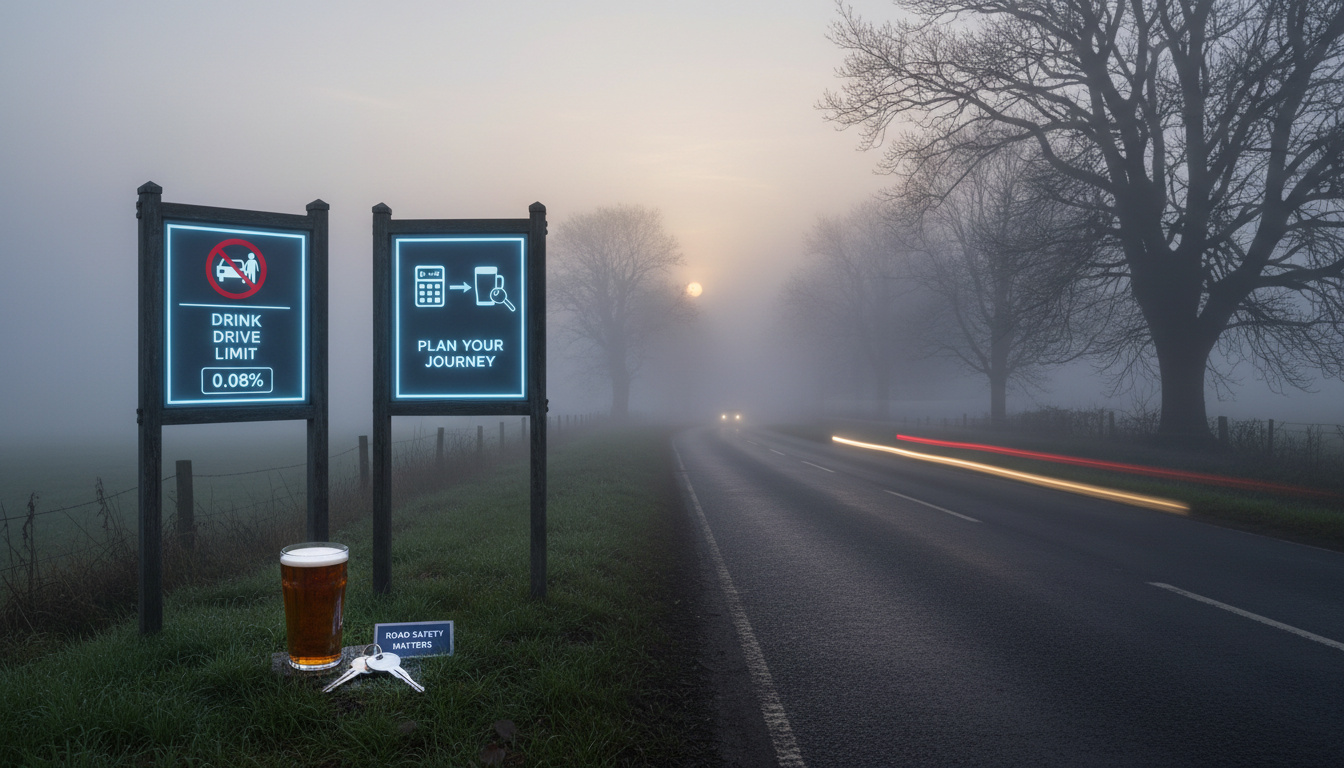
Blood alcohol concentration calculations remain one of the most searched traffic safety topics in the United Kingdom. Motorists frequently turn to online drink drive limit calculators to gauge whether they remain within legal thresholds before starting their engines. These digital tools promise quick estimates based on personal metrics, yet the output rarely tells the complete story of intoxication.
Understanding the legal boundaries requires more than entering weight and drink counts into a web form. England, Wales, and Northern Ireland maintain notably higher thresholds than Scotland, creating a postcode lottery for prosecution limits. Meanwhile, individual physiology varies dramatically, rendering calculator outputs potentially misleading.
This guide examines the mechanics behind BAC estimation tools, the scientific realities of alcohol metabolism, and the concrete limits enforced by UK traffic legislation. Whether navigating the morning-after scenario or planning a night out, accurate knowledge outweighs algorithmic approximation.
What is the drink drive limit in the UK?
80mg alcohol per 100ml blood (0.08% BAC)
50mg alcohol per 100ml blood (0.05% BAC)
Weight, gender, food intake, metabolic rate
Educational estimates only; not legal evidence
- No safe level exists for consuming alcohol before operating a vehicle, according to traffic safety authorities.
- Scotland diverged in 2014, reducing its blood alcohol limit by 37.5% to match European standards.
- Breath testing thresholds stand at 35 micrograms per 100ml in England and Wales, dropping to 22 micrograms in Scotland.
- Urine measurements permit higher milligram counts but require laboratory verification rather than roadside screening.
- Individual variation means calculated estimates cannot account for liver function, medication interactions, or genetic tolerance.
- Single drink risks remain significant for lighter individuals or those consuming high-strength craft beverages.
- Conviction consequences include mandatory driving bans affecting insurance premiums and employment prospects.
| Region | Blood (mg/100ml) | Breath (µg/100ml) | Urine (mg/100ml) |
|---|---|---|---|
| England & Wales | 80 | 35 | 107 |
| Scotland | 50 | 22 | 67 |
| Northern Ireland | 80 | 35 | 107 |
Police enforcement relies on breathalysers, though blood and urine tests provide alternative measurement methods. Drinkaware confirms that exceeding these limits carries penalties including unlimited fines and imprisonment.
How does a drink drive limit calculator work?
Digital BAC calculators employ the Widmark formula, a century-old equation estimating alcohol concentration based on volume consumed, body weight, and gender. Users input drink quantities, ABV percentages, consumption duration, and biological metrics to generate percentage readings.
The mathematical model assumes standard absorption rates and metabolic clearance. For a typical calculation, the formula divides alcohol in grams by body water weight—adjusted for gender—then subtracts hourly metabolism rates. DrinkFox implements this algorithm while displaying regional UK limits for comparison.
Are drink drive calculators accurate?
No digital calculator serves as admissible evidence in court. Police breathalysers provide the only measurement that determines prosecution. Individual factors like liver function, fatigue, and medication can skew actual BAC levels significantly below or above calculated estimates.
Accuracy varies considerably because standard formulas cannot capture personal metabolic idiosyncrasies. Stress, sleep deprivation, and recent food intake alter absorption rates unpredictably. Most tools carry explicit disclaimers stating they operate for educational purposes only.
How many drinks can you have before driving?
Authorities maintain that zero alcohol represents the only truly safe option. However, understanding typical scenarios helps contextualize risk. A 5% ABV pint contains roughly two units of alcohol, while a standard 175ml glass of wine at 13% ABV delivers similar quantities.
For an 80kg male consuming two pints with a meal, calculated BAC might remain below English limits after several hours. Conversely, a 60kg female drinking the same quantity could exceed Scottish thresholds immediately. Confused.com demonstrates how weight and timing dramatically alter outcomes.
Is 2 pints over the drink drive limit?
Two pints frequently push lighter individuals beyond legal boundaries, particularly in Scotland. Consumption within one hour typically produces higher initial peaks than drinking spread across three hours. Carbonated mixers accelerate absorption compared to still beverages.
Can I drive after 3 beers?
Three standard beers usually generate BAC readings between 0.05% and 0.08% for average-weight males, placing them at risk depending on regional jurisdiction. For most females, this quantity virtually guarantees exceeding limits across all UK regions. 30 Inches in CM – Exact Conversion and Key Uses illustrates how precise measurements matter in technical calculations.
Alcohol elimination proceeds at approximately 0.015% BAC hourly, meaning heavy night-time consumption can leave drivers impaired twelve hours later. Sleep does not accelerate metabolism; only time clears alcohol from the bloodstream.
What factors affect blood alcohol levels?
Physiological variables create substantial divergence between individuals consuming identical quantities. The Widmark constants used in calculations apply population averages that may misrepresent specific cases.
Body mass distributes alcohol across greater fluid volumes, generally producing lower concentrations in heavier persons. However, body composition matters more than raw weight—muscle tissue contains more water than fat, affecting dilution.
What is BAC for driving?
Blood Alcohol Concentration represents the percentage of ethanol present in bloodstream volume. Legal driving limits translate to 0.08% for England, Wales, and Northern Ireland, versus 0.05% for Scotland. Breath and urine measurements serve as proxy indicators with legally defined conversion ratios.
While textbooks cite 0.015% hourly clearance rates, clinical studies show actual metabolism ranges from 0.013% to 0.018% depending on age, liver health, and genetic enzyme production. Chronic drinkers may process alcohol faster due to enzyme induction, though this provides no legal protection.
How have UK drink driving limits changed over time?
-
Road Safety Act introduces the first nationwide breathalyzer testing and Blood Alcohol Concentration limits across Great Britain. -
Scotland reduces limits from 80mg to 50mg per 100ml blood, creating the current split between Scottish and English enforcement thresholds. -
Zero tolerance campaigns advocate for non-drinking driver programmes and improved public transport alternatives to eliminate alcohol-related traffic casualties.
What can drink drive calculators reliably predict?
| Established Information | Uncertain Variables |
|---|---|
| Standard Widmark formula calculations based on weight, gender, and drink volume | Individual liver enzyme efficiency and genetic alcohol dehydrogenase variations |
| Average metabolism rates of roughly one unit per hour | Fatigue levels, stress hormones, and concurrent medication effects |
| Regional legal limits and conversion ratios between blood, breath, and urine | Gastric emptying rates varying by food type and quantity |
| General trends showing increased BAC with higher ABV beverages | Tolerance developed through chronic consumption that masks impairment |
Why do drink drive limits vary by region?
Devolution enabled Scotland to set its own health policy regarding traffic safety. The 2014 reduction aligned Scottish standards with most European Union nations, reflecting evidence that impairment begins well before the 80mg threshold. What Causes Vaginal Thrush – Key Triggers and Risk Factors demonstrates how regional health guidelines adapt to local evidence bases.
England and Wales retain higher limits based on historical precedent, though safety advocates continue lobbying for harmonisation. GOV.UK publishes current penalty frameworks, including unlimited fines and six-month imprisonment terms for convictions.
Northern Ireland maintains alignment with England despite its devolved government, creating a tripartite system where 50mg, 80mg, and 80mg thresholds apply respectively. NIDirect confirms enforcement procedures mirror those across the Irish Sea.
What do traffic safety authorities recommend?
“There is no safe level of alcohol to drive. If you’ve drunk anything, don’t drive.”
— Drinkaware, via official guidance
“The only way to ensure you’re safe is not to drink any alcohol before driving.”
Should you rely on drink drive limit calculators?
Drink drive limit calculators provide educational context but cannot replace abstinence when planning to drive. The tools demonstrate how weight, gender, and timing interact with alcohol metabolism, yet individual biological variation renders any estimate potentially catastrophic. For absolute safety, designated drivers, public transport, or overnight stays eliminate the calculation entirely. 30 Inches in CM – Exact Conversion and Key Uses reminds us that precise measurement tools serve specific purposes, yet none override biological reality.
Frequently asked questions
Can I drive after one glass of wine?
One 175ml glass of 12% wine contains approximately two units. Depending on body weight and consumption speed, this may push lighter individuals over Scottish limits or leave them near English thresholds. Individual metabolism varies too widely to guarantee safety.
How long does alcohol stay in your system?
The body metabolizes roughly one unit hourly, though rates vary between 0.013% and 0.018% BAC depending on liver function and genetics. A heavy night out can leave traces detectable twelve to twenty-four hours later.
What’s the difference between blood and breath tests?
Breathalysers measure alcohol in exhaled air, providing immediate roadside results. Blood tests offer direct plasma measurement but require medical facilities. Urine testing serves as an alternative when other methods prove impractical, with legally defined conversion ratios for each method.
Can medication affect breathalyzer results?
Certain medications and medical conditions like acid reflux can theoretically affect readings, though police employ secondary testing to confirm results. Always declare relevant medical information during procedures.
Are the limits lower for new drivers?
While the UK does not mandate reduced BAC limits for novice drivers unlike some European countries, probationary license holders face standard limits. However, accumulating six penalty points within two years triggers license revocation regardless of offence type.
What happens if I refuse a breath test?
Refusing to provide a specimen without reasonable excuse constitutes a separate offence carrying penalties potentially harsher than those for excess alcohol, including automatic driving bans and unlimited fines.
Related stories


Rachel Dunn covers culture, lifestyle and society stories across the UK.