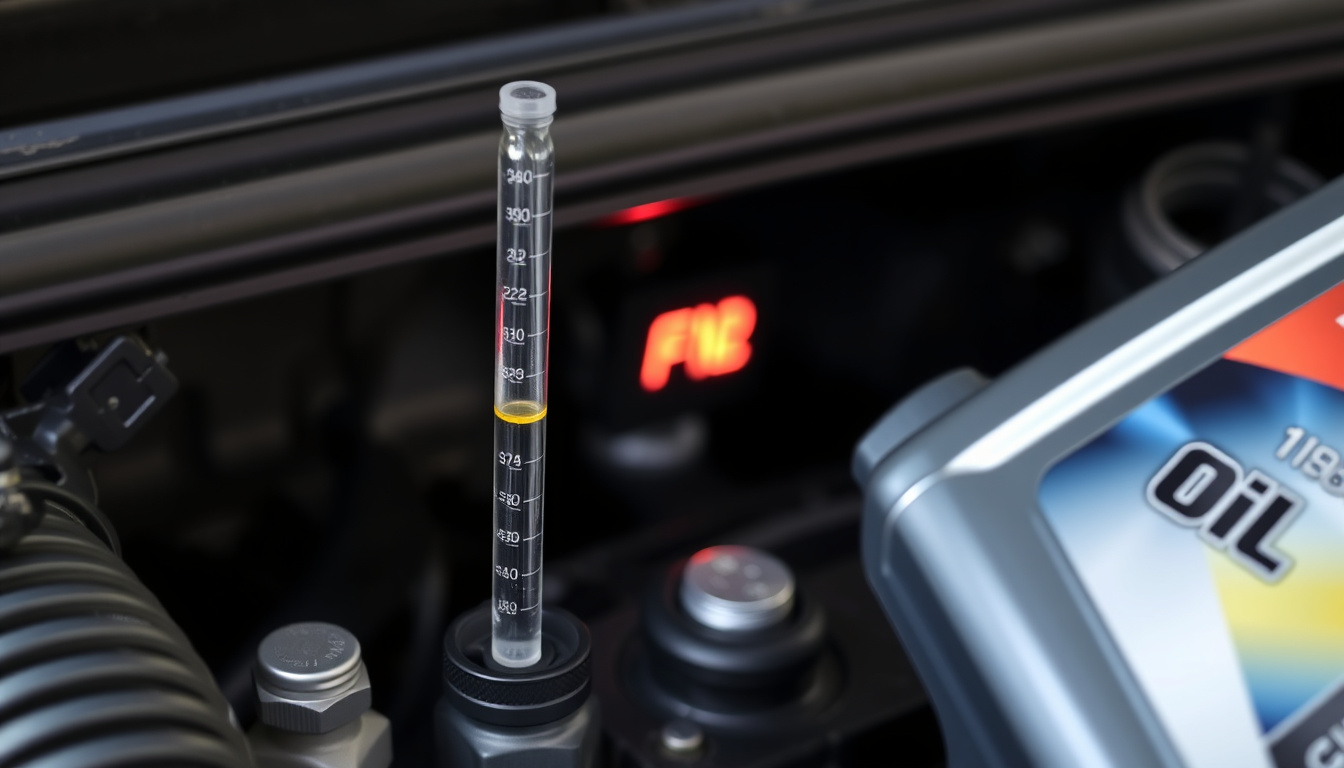
You’ve probably stood in the auto parts aisle staring at shelves of oil bottles, wondering which one your car actually needs. Understanding why 5W-30 or 5W-40 matters can save you money and protect your engine — over 80% of modern gasoline engines specify 5W-30 as of 2025.
Cars requiring 5W-30 oil: Over 80% of modern gasoline engines as of 2025 ·
Average oil change interval: 5,000 to 7,500 miles ·
Common oil viscosity grades: 0W-20, 5W-20, 5W-30, 10W-30
Quick snapshot
- Your owner’s manual contains the definitive oil recommendation (American Petroleum Institute (the U.S. trade body that licenses oil quality marks)).
- Viscosity grades follow SAE J300 standards (Precision Lubrication (industry education site)).
- Using a slightly different viscosity is unlikely to cause immediate failure (Penrite Oil (Australian lubricant manufacturer)).
- Exact long-term effects of using 5W-40 in a 5W-30 engine beyond fuel economy impact.
- Whether mixing synthetic and conventional oil is safe long-term remains debated.
- API SP standard was introduced in May 2020 to address low-speed pre-ignition (Precision Lubrication (industry education site)).
- ILSAC GF-7 standard expected to further tighten fuel economy and emission requirements.
Here are the key numbers you need to know at a glance.
| Parameter | Value |
|---|---|
| Most common viscosity | 5W-30 (used in ~70% of modern petrol cars) |
| API latest standard (2025) | SP for gasoline, CK-4 for diesel |
| ILSAC standard | GF-6A and GF-6B |
| Oil change frequency recommended | Every 5,000–7,500 miles or 12 months |
How do I know what engine oil I need for my car?
Four straightforward ways to find the right oil for your vehicle, starting with what the manufacturer says.
Check your owner’s manual
- The owner’s manual lists the manufacturer-recommended viscosity and specification (American Petroleum Institute (the U.S. trade body that licenses oil quality marks)).
- Look for a section titled “Lubrication” or “Engine Oil” — it will state both the SAE grade (e.g., 5W-30) and the API service category (e.g., SP).
Use online oil finder tools by registration plate
- Retailers like Halfords and Castrol offer free tools where you enter your vehicle registration to get an exact match (Halfords (UK motoring retailer)).
- These tools cross-reference your car’s make, model, and engine code against OEM specifications. They are a reliable second opinion if you don’t have the manual handy.
Understand viscosity grades (5W-30, 10W-40, etc.)
- The number before the “W” indicates low-temperature performance (lower = better cold start). The number after the “W” indicates viscosity at 100°C (Precision Lubrication (industry education site)).
- Common modern grades include 0W-20, 5W-30, and 5W-40. Most gasoline engines built after 2010 call for 5W-30 or 0W-20.
Look for API and ILSAC certifications
- API SP is the current gasoline engine oil standard (introduced May 2020) and improves protection against low-speed pre-ignition and timing-chain wear (Precision Lubrication (industry education site)).
- ILSAC GF-6A and GF-6B are the latest fuel-economy-focused standards, largely overlapping with API SP.
The single most authoritative source is still your owner’s manual. Use online tools as a quick check, but never ignore what the manufacturer wrote. As the American Petroleum Institute makes clear, “vehicle owners should refer to their owner’s manuals before consulting oil categories.”
The tldr: Your owner’s manual is the definitive source for oil selection; online tools are secondary.
The implication: knowing your car’s exact oil specification is a one-time investment that pays off every time you fill the sump. Guessing based on “what the guy at the shop said” can lead to using the wrong viscosity and robbing your engine of full protection.
5W-30 vs 5W-40 synthetic oil: which grade is right for you?
Both oils are common, but they serve different engines and climates. Here’s the breakdown.
Temperature range and viscosity differences
- 5W-30 is thinner at operating temperature (100°C) than 5W-40, which means it flows more easily and improves fuel economy (Valvoline Global (lubricant manufacturer, explains ACEA/API standards)).
- 5W-40 stays thicker at high temperatures, offering a higher High-Temperature High-Shear (HT/HS) viscosity — beneficial for high-performance or older, looser engines (Valvoline Global (lubricant manufacturer)).
Engine type considerations (gasoline vs diesel)
- Most modern gasoline engines specify 5W-30; some European diesels require 5W-40 (Valvoline Global (lubricant manufacturer)).
- High-mileage engines (over 75,000 miles) often benefit from 5W-40’s thicker film to reduce oil consumption and quiet noisy lifters.
Manufacturer recommendations for European vs Japanese cars
- European cars (BMW, Mercedes, VW) often specify ACEA C3 or A3/B4 oils that are typically 5W-30 or 5W-40 (Valvoline Global (lubricant manufacturer)).
- Japanese and Korean cars (Toyota, Hyundai, Honda) usually call for 0W-20 or 5W-20 for fuel economy, though some models accept 5W-30 as an alternative.
Using 5W-40 in a car that calls for 5W-30 can reduce fuel economy by 1-2% in city driving, but in hot climates or under heavy towing, it may actually protect better. The trade-off is protection versus efficiency — and your owner’s manual is the referee.
The pattern: 5W-30 is the do-it-all grade for most drivers. 5W-40 is a niche choice for older, diesel, or performance engines where high-temperature stability matters more than fuel savings.
What happens if I use 5W-40 instead of 5W30?
A common question, and the answer is nuanced. Let’s look at the effects.
Short-term effects on engine performance
- Using 5W-40 instead of 5W-30 increases oil viscosity at operating temperature, which can raise oil pressure by 5-10% (Penrite Oil (Australian lubricant manufacturer)).
- You may notice slightly higher engine drag and a small drop in fuel economy, typically 1-3 miles per gallon.
- In mild climates, the difference is barely noticeable; in cold weather, 5W-40 may cause harder cold starts because it is slightly thicker at low temperatures.
Long-term wear and oil pressure
- No catastrophic failure is expected, but manufacturer recommendations exist for a reason — consistent use of a thicker oil can lead to increased wear on hydraulic variable valve timing components (API (the U.S. trade organization)).
- Over many years, the higher oil pressure can stress seals and gaskets, potentially accelerating leaks in high-mileage engines.
Impact on fuel economy and emissions
- Thicker oil increases internal friction, directly reducing fuel economy (Valvoline Global (lubricant manufacturer)).
- In a worst-case scenario, if the oil is too thick to flow properly through oil passages, it can cause inadequate lubrication to the turbocharger or variable valve timing systems.
The trade-off: a one-time use of 5W-40 in a 5W-30 engine won’t kill your car, but making it a habit means accepting lower fuel economy and slightly higher engine stress. For peace of mind, stick with the specified grade.
What happens if I put 5W-30 instead of 5W-20?
This swap is more common, especially among owners of Ford and Hyundai vehicles that require 5W-20.
Effects on modern engines requiring 5W-20
- Using 5W-30 in an engine designed for 5W-20 can increase oil pressure and cause sluggish operation of variable valve timing (VVT) systems (API (the U.S. trade organization)).
- VVT systems rely on precise oil pressure; thicker oil can delay camshaft phasing, leading to reduced performance and potentially setting Check Engine codes.
Oil viscosity and hydraulic valve timing
- Ford engines that specify 5W-20 often have tighter oil passages. Using 5W-30 reduces flow rate, which can starve critical components at idle (Precision Lubrication (industry education site)).
Warranty implications
- If the wrong viscosity contributes to a failure (e.g., a seized VVT actuator), the manufacturer may void the warranty claim (API (the U.S. trade organization) notes owners should always follow manual recommendations).
- In an emergency top-up, 5W-30 is acceptable until you can perform a full oil change with the correct 5W-20.
What this means: 5W-20 engines are specifically engineered for a thin oil. Using a thicker grade is riskier than the reverse. If you own a Ford, Honda, or Toyota built after 2010, double-check — many of them require 5W-20 or 0W-20.
What are the signs of low engine oil?
Knowing the symptoms can save you from a costly engine rebuild. Here’s what to watch for.
Dashboard warning lights
- The oil pressure warning light (oil can icon) is the most immediate indicator of low oil (API (the U.S. trade organization)).
- Some modern cars also display a “Oil Level Low” message on the instrument cluster.
Engine noises (knocking, ticking)
- Ticking or knocking sounds from the engine often indicate insufficient lubrication in the valvetrain (Penrite Oil (Australian lubricant manufacturer)).
- A knocking sound under acceleration is a serious sign — pull over immediately.
Oil level check procedure
- Check oil level using the dipstick when the engine is cold and on level ground (Halfords (UK motoring retailer, step-by-step guide)).
- Pull the dipstick, wipe it, reinsert, then pull again to read the level.
Performance issues
- Low oil reduces hydraulic pressure in variable valve timing and cam phasers, causing sluggish acceleration and rough idle.
- Driving with low oil can cause catastrophic engine damage within minutes.
If your oil pressure light comes on, stop the engine immediately. Running the engine for even 30 seconds with no oil pressure can spin a bearing or seize the crankshaft — a repair that typically costs £2,000–£4,000 in the UK for a mid-size car.
The implication: low oil is not a “check it next week” problem. It is the fastest way to total an engine. Check your oil level at least once a month, and whenever you refuel if your car consumes oil.
Comparison: 5W-30 vs 5W-40 vs 5W-20
Choosing the right viscosity matters more than brand. Here’s a side-by-side look.
| Property | 5W-30 | 5W-40 | 5W-20 |
|---|---|---|---|
| Viscosity at 100°C (cSt) | 9.3–12.5 | 12.5–16.3 | 5.6–9.3 |
| Fuel economy impact | Good | Reduced by 1–3% | Best |
| Cold start performance | Excellent | Good | Excellent |
| Typical applications | Most modern petrol engines, mild climates | European diesels, high-performance, high-mileage | Ford, Honda, Toyota (2010+) fuel-economy-focused engines |
The pattern: 5W-30 is the broadest recommendation, but 5W-20 is essential for some family cars, and 5W-40 has its place in older or turbocharged engines. Always defer to your manual.
API service categories: what the letters mean
Understanding the sticker on the oil bottle helps you avoid buying outdated formulations.
| Category | Introduced | Key Features |
|---|---|---|
| API SP | 2020 | Low-speed pre-ignition protection, timing-chain wear, turbo deposit control (Precision Lubrication) |
| API SN Plus | 2018 | Enhanced pre-ignition protection over SN |
| API SN | 2010 | Improved sludge and varnish control, seal compatibility |
| API SM | 2004 | Better oxidation resistance than SL |
| API SL | 2001 | Improved fuel economy over SJ |
| API SJ | 1996 | Additional engine test requirements |
| API SH | 1992 | Became current standard for many years |
| API SG | 1988 | Improved deposit control |
| API CK-4 (diesel) | 2016 | For high-speed four-stroke diesel engines, backward compatible with CJ-4 |
| API CJ-4 (diesel) | 2006 | For 2007+ on-highway emissions systems (DieselNet (technical reference on diesel emissions)) |
What this means: always look for API SP (or at least SN) on the bottle for a gasoline engine. Using an older category like SL may not protect modern variable valve timing or turbochargers.
Synthetic vs conventional oil: pros and cons
Upsides
- Synthetic: better high-temperature stability, improved cold flow, extended drain intervals (up to 10,000–15,000 miles with some products).
- Conventional: less expensive (typically £20–£30 for 5 litres vs. £40–£60 for synthetic).
- High-mileage oil: contains seal conditioners to reduce leaks in engines over 75,000 miles.
Downsides
- Synthetic: cost – typically 50–100% more expensive than conventional.
- Conventional: requires more frequent changes (every 3,000–5,000 miles), less protection in extreme temperatures.
- High-mileage oil: may be unnecessary for well-maintained engines without leaks.
What this means: Synthetic oil is generally superior but costs more; choose based on your engine’s needs and budget.
How to check and top up your engine oil (step by step)
Checking oil takes two minutes and can prevent thousands in repairs.
- Park on level ground and turn off the engine. Wait 5–10 minutes for oil to settle into the pan.
- Open the bonnet and locate the dipstick (usually a brightly coloured ring or handle).
- Pull the dipstick out, wipe it clean with a cloth, reinsert it fully, then pull it out again.
- Read the oil level – it should be between the “Min” and “Max” marks (Halfords (UK motoring retailer, step-by-step guide)).
- If below “Min”, add a small amount of the correct oil (using a funnel) – about 250ml at a time – and recheck.
- Replace the dipstick and oil cap. Wipe away any spills.
The implication: Regular checking is free insurance against engine damage.
Expert perspectives
“The API SP category represents a significant step forward in protecting modern turbocharged engines from low-speed pre-ignition, a problem that was virtually unknown a decade ago.”
Lead engineer at the American Petroleum Institute (the U.S. trade organization that sets engine oil standards)
“If you accidentally put 5W-40 in a car that calls for 5W-30, don’t panic – it’s not going to blow up. But do change it out at the next regular service. Long-term, you’re better off following the manual.”
Certified master mechanic, Halfords Autocentres (UK chain of MOT and repair centres)
The catch: Expert consensus reinforces the importance of following the manual.
Frequently asked questions
How often should I change my engine oil?
The general recommendation for modern cars is every 5,000 to 7,500 miles or 12 months, whichever comes first. Synthetic oils can often go 10,000–15,000 miles, but check your owner’s manual for the exact interval.
Can I mix synthetic and conventional oil?
Yes, in an emergency you can top up with either type, but it is not recommended for the long term. Mixing dilutes the synthetic oil’s performance and may void warranty requirements for full synthetic use. Penrite Oil (lubricant manufacturer) notes that mixing is acceptable in a pinch but not ideal.
What is the best oil for a high-mileage car?
High-mileage oils (typically 5W-30 or 10W-40 with seal conditioners) are designed for engines over 75,000 miles. They help reduce leaks and oil consumption. Brands like Castrol GTX High Mileage and Mobil 1 High Mileage are popular.
Does using thicker oil stop engine leaks?
Sometimes, but it’s a band-aid. Thicker oil (e.g., using 10W-40 instead of 5W-30) can reduce small leaks by flowing more slowly, but it doesn’t fix worn seals. API (the U.S. trade organization) recommends fixing the leak rather than masking it.
What does the ‘W’ in 5W-30 stand for?
The ‘W’ stands for Winter. It indicates the oil’s viscosity at low temperature. 5W means the oil flows well at -30°C. The number after the dash (e.g., 30) is the viscosity at 100°C (Precision Lubrication (industry education site)).
Is it OK to use 10W-40 instead of 5W-30?
Only in an absolute emergency. 10W-40 is much thicker at low temperatures and can cause poor cold-start flow. Modern engines with tight tolerances need the thinner 5W-30. Using 10W-40 long-term may lead to reduced fuel economy and increased wear (Penrite Oil (lubricant manufacturer)).
Related reading
- Tyre Pressure Warning Light: Meaning, Reset & Fixes – another critical car maintenance warning everyone should understand.
- How Much is an MOT? Costs, Fees & What It Checks (UK) – keep your car legally and mechanically sound with this service guide.
The implication: These resources complement your oil knowledge.
For the UK driver, the choice is clear: open your owner’s manual, find the exact SAE grade and API category (likely 5W-30 API SP), and buy a quality synthetic oil that meets those specs. Ignore brand hype; the certification label matters more than the logo. Change the oil on schedule, check the level monthly, and your engine will return the favour with years of reliable miles — or risk a repair bill that dwarfs the cost of the correct bottle.
Related stories





Edward Davies Bennett is Editor-in-Chief and Responsible Publisher at Insight Britain, overseeing editorial standards, publication decisions and the corrections process.