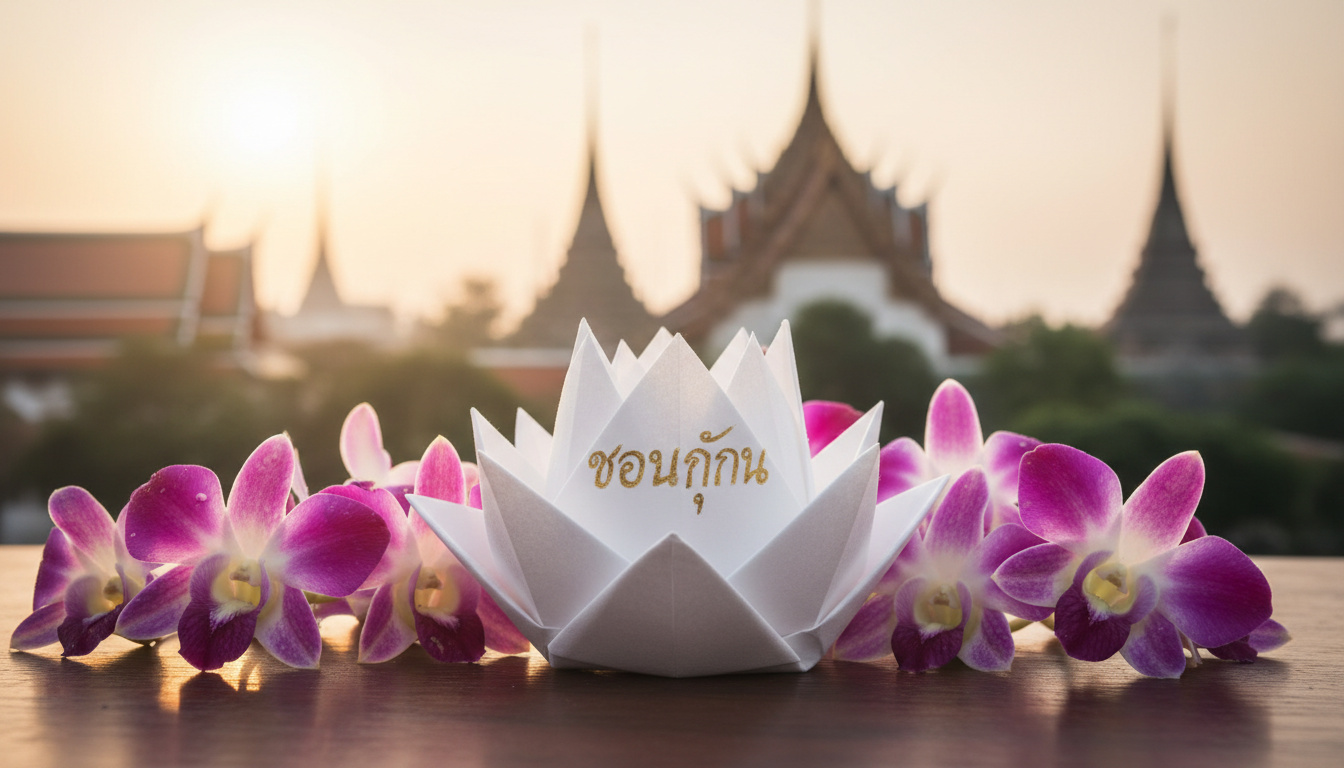
Expressing gratitude in Thai starts with the phrase ขอบคุณ, romanized as khop khun or kop khun. This versatile expression forms the base for both casual and polite thanks, adjusted by gender-specific particles.
Speakers add ครับ for males or ค่ะ for females to convey politeness in formal settings like with colleagues or superiors. Informal versions suit friends and family.
Understanding these variations enhances interactions in Thailand, where politeness plays a key role in daily communication.
How to Say Thank You in Thai
| Basic | Formal Male | Formal Female | Informal |
|---|---|---|---|
| ขอบคุณ khop khun |
ขอบคุณครับ kop khun krap |
ขอบคุณค่ะ kop khun ka |
ขอบใจ kop jai |
- The base phrase ขอบคุณ works neutrally but requires particles for politeness.
- Males use ครับ to signal respect.
- Females use ค่ะ as their politeness marker.
- Informal ขอบใจ fits peers or juniors.
- Particles maintain tone for bosses or colleagues.
- Gestures like wai accompany spoken thanks.
- Romanization varies but pronunciation stays consistent.
| English | Thai Script | Romanized | Gender/Use |
|---|---|---|---|
| Thank you | ขอบคุณ | khop khun | Neutral base |
| Male polite | ขอบคุณครับ | kop khun krap | Males |
| Female polite | ขอบคุณค่ะ | kop khun ka | Females |
| Informal | ขอบใจ | kop jai | Friends/younger |
| Thank you very much (male) | ขอบคุณมากครับ | kop khun mak krap | Males |
| Thank you very much (female) | ขอบคุณมากค่ะ | kop khun mak ka | Females |
| Most respectful | ขอบพระคุณ | khob pra khun | Authority figures |
| No problem (reply, male) | ไม่เป็นไรครับ | mai pen rai krap | Males |
Thank You in Thai Pronunciation and Romanization
Common romanizations include khop khun or kop khun for ขอบคุณ. Males say kop khun krap; females say kop khun ka.
Variations like khob or kop reflect different transliteration systems. Core sounds remain the same across sources such as Fluent in 3 Months and Thai Explorer.
Spellings differ: khop, kop, or khàwp. Listen to audio for accuracy on sites like Forvo.
Listening Resources
Pronounce with a soft tone. Check Omniglot or Thai-Language.com for guides.
Formal vs Informal Thank You in Thai
Formal thanks use particles ครับ or ค่ะ with ขอบคุณ. Informal options like ขอบใจ apply to friends or younger people.
Formal Usage
Suitable for bosses or strangers. Heighten with นะ for extra respect, as in kop khun na krap.
Informal Usage
Females may add จ้า to ขอบใจ for close contacts. Avoid with elders.
Match formality to relationship. Use formal unless very familiar, per YouTube tutorial.
Thank You in Thai for Males and Females
Male speakers end with ครับ: kop khun krap. Female speakers use ค่ะ: kop khun ka.
Particles show respect regardless of listener’s gender. For girls or females speaking, stick to ka.
These endings fit conversational tones with colleagues or superiors.
Thank You Very Much and Common Replies in Thai
Add มาก after khun for “very much”: kop khun mak krap/ka. Repeat for emphasis: kop khun mak mak.
Sincere form repeats จริง: kop khun jing jing krap/ka. Most respectful is ขอบพระคุณ for authorities.
Respond to thanks with mai pen rai (no problem), adding krap or ka. Casual: mai pen rai alone, from YouTube. For more information on how to receive these notifications, learn Як налаштувати сповіщення Google. Як налаштувати сповіщення Google
Accompany with wai gesture: hands pressed together in a bow.
Standard Phrases and Variations in Thai Thank You
| Reliable Basics | Areas of Variation |
|---|---|
| Base: ขอบคุณ (khop khun) | Casual slang beyond kop jai |
| Male: krap; Female: ka | Exact tones in Google Translate |
| Very much: mak | Regional dialects |
| Replies: mai pen rai | Non-standard informal for all genders |
Cultural Context of Thank You in Thai
Politeness permeates Thai interactions. Particles like krap and ka signal respect in greetings and thanks.
Wai gesture reinforces verbal expressions, especially to elders. Use fits travel and daily life.
Combine with phrases like hello for fuller communication. Tools like Translate Norwegian to English aid learning, though Thai needs tone awareness.
Sources and Key Quotes
“The particles ครับ (krap) for males and ค่ะ (ka) for females serve as politeness markers.”
“Informal: ขอบใจ (kop jai) – used with friends or younger people.”
YouTube
Key Takeaways on Thank You in Thai
Master khop khun with krap/ka for politeness. Add mak for very much, reply mai pen rai. Gestures like wai enhance sincerity. Check Time in Saudi Arabia for travel timing, but focus tones here. Practice via reliable audio sources.
What is thank you in Thai Google translate?
Google Translate renders ขอบคุณ as “thank you,” but misses tone nuances and particles. Verify with native audio.
Thank you in Thai to a girl?
Use kop khun ka if female speaker, regardless of listener. Males say kop khun krap.
Thank you very much in Thai male?
ขอบคุณมากครับ (kop khun mak krap).
Informal thank you in Thai?
ขอบใจ (kop jai) for friends; females add จ้า optionally.
Most polite thank you in Thai?
ขอบพระคุณ for parents or teachers; add na for extra respect.
Gesture for thank you in Thai?
Wai: press hands together and bow slightly.
Reply to thank you in Thai?
Mai pen rai krap/ka (no problem).
Related stories





Oliver Sutton is News Editor at Insight Britain, overseeing the daily news list, headline review and commissioning.